Close Menu
    Latest Category
    • Finance
    • Tech
    • EU Law
    • Energy
    • About
    • Contact
    EUbusiness.com | EU news, business and politicsEUbusiness.com | EU news, business and politics
    Login
    • EU News
    • Focus
    • Guides
    • Press
    • Jobs
    • Events
    • Directory
    EUbusiness.com | EU news, business and politicsEUbusiness.com | EU news, business and politics
    Home » MEPs propose ban on glyphosate herbicide by 2020

    MEPs propose ban on glyphosate herbicide by 2020

    npsnps19 October 2017
    — Filed under: Agriculture Environment EU News European Parliament Food & Drink Headline1
    Share
    Facebook Twitter LinkedIn Pinterest Email
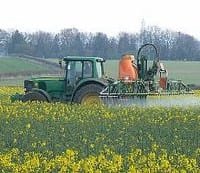
    MEPs propose ban on glyphosate herbicide by 2020

    Photo by Brian Robert Marshall

    (BRUSSELS) – MEPs on the European Parliament’s Environment Committee backed Wednesday a full ban on glyphosate-based herbicides by December 2020 and immediate restrictions on the use of the substance.

    The committee opposes the EU Commission’s proposal to renew the controversial herbicide licence for 10 years. Instead, MEPs say the EU should draw up plans for a phase-out of the substance, starting with a complete ban on household use and a ban in use for farming when biological alternatives (i.e. “integrated pest management systems”) work well for weed control.

    Glyphosate should be completely banned in the EU by 15 December 2020, even with the necessary intermediate steps, MEPs say.

    Glyphosate is an active substance widely used in herbicides. Since its patent expired in 2000, glyphosate has been marketed by various companies and several hundred plant protection products containing glyphosate are currently registered in Europe for use on crops.

    Glyphosate is widely used in agriculture, and also in forestry, urban and garden applications. People are exposed to glyphosate primarily by living near sprayed areas, through home use, and through diet. Glyphosate residues have been detected in water, soil, food and drinks and non-comestible goods, as well as in the human body.

    The EU risk assessment process of renewing the substance’s licence was mired in controversy, as the UN cancer agency on the one side and EU food safety and chemicals agencies on the other pointed to different conclusions regarding its safety.

    Moreover, the release of the so-called ‘Monsanto Papers’ (Monsanto is the owner and producer of Roundup®, of which glyphosate is the main active substance), internal documents from the company, shed doubt on the credibility of some studies used in the EU evaluation on glyphosate safety, say MEPs.

    The EU’s authorisation procedure, including the scientific evaluation of substances, should be based only on published, peer-reviewed and independent studies commissioned by competent public authorities, MEPs say. EU agencies should be beefed up in order to allow them to work in this way.

    They also reiterate that all the scientific evidence that has been the basis for the positive classification of glyphosate and the proposed re-authorisation should be disclosed, given the overriding public interest.

    The full House will now vote on the resolution on 24 October in Strasbourg. EU member states will vote on a Commission proposal to renew the marketing authorisation of glyphosate the following day.

    A European Citizen’s initiative calling for a ban on the herbicide reached more than a million signatures in less than a year and will trigger a public hearing in Parliament in November.

    European Parliament research: EU’s Pesticide Risk Assessment System: The Case of Glyphosate

    Add A Comment
    Leave A Reply Cancel Reply

    You must be logged in to post a comment.

    nps
    • Website

    Related Content

    New European Bauhaus - La Marjal Floodable Urban Park. Alicante

    EU awards 2026 New European Bauhaus prizes for sustainable and inclusive projects

    European Central Bank governing council meeting - Photo © European Central Bank 2026

    ECB faces tough decision in October as equities begin to wilt under high interest rates

    Nature butterfly - Image by Day from Pixabay

    WWF urges EU to maintain its nature ambitions at biodiversity COP and at home

    Sponsor: WWF14 October 2026
    Law standards regulations - Image by Pixabay

    Less burden, better investment: SMEunited’s message to EU leaders

    Sponsor: SMEunited14 October 2026
    E-waste - Image by Thomas from Pixabay

    12.3 kg of e-waste per person collected in EU

    Military helicopter - Photo by Dominik Gryzbon on Pexels

    EU disburses €2.86 bn to Ukraine for drones, missiles and urgent battlefield needs

    LATEST EU NEWS
    New European Bauhaus - La Marjal Floodable Urban Park. Alicante

    EU awards 2026 New European Bauhaus prizes for sustainable and inclusive projects

    16 October 2026
    European Central Bank governing council meeting - Photo © European Central Bank 2026

    ECB faces tough decision in October as equities begin to wilt under high interest rates

    15 October 2026
    E-waste - Image by Thomas from Pixabay

    12.3 kg of e-waste per person collected in EU

    14 October 2026
    Military helicopter - Photo by Dominik Gryzbon on Pexels

    EU disburses €2.86 bn to Ukraine for drones, missiles and urgent battlefield needs

    14 October 2026
    AI artificial intelligence chatbot - Image by Tim Witzdam from Pexels

    42 per cent of smaller European companies use AI

    14 October 2026

    Subscribe to EUbusiness Week

    Get the latest EU news

    CONTACT INFO

    • EUbusiness, 117 High Street, Chesham Buckinghamshire, HP5 1DE, United Kingdom
    • +44(0)20 8058 8232
    • service@eubusiness.com

    INFORMATION

    • About Us
    • Advertising
    • Contact Info

    Services

    • Cookie Policy
    • Terms
    • Disclaimer

    SOCIAL MEDIA

    Facebook
    eubusiness.com © EUbusiness Ltd 2026

    Type above and press Enter to search. Press Esc to cancel.

    Sign In or Register

    Welcome Back!

    Login to your account below.

    Lost password?