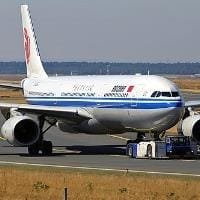
Air China Airbus A330-Photo Kambui
(BRUSSELS) – The EU strengthened aviation relations with China Monday, signing an agreement on civil aviation safety and a horizontal aviation agreement in a boost for EU trade in aircraft and related products.
The agreements follow up on an EU-China Summit on 9 April with the EU hoping it will serve to boost the competitiveness of the EU’s aeronautical sector and enhance overall EU-China aviation relations. This is part of the Commission’s ‘Aviation Strategy for Europe’, designed to generate growth for European business, foster innovation and let passengers profit from safer, cleaner and cheaper flights.
“The EU firmly believes that nations working together makes the world a stronger, safer and more prosperous place for all,” said Commission president Jean-Claude Juncker: “Today we took a first big step in this direction by signing two aviation agreements with China that will create jobs, boost growth and bring our continents and peoples closer together.”
China is one of the European Union’s most important strategic partners, added the Transport Commissioner Violeta Bulc: “We are mutually interested in better connecting Europe and Asia and making it easier to move goods, services and people between Europe and China.”
She said the agreements would boost the European Union’s trade in aircraft and related products, and ensure the highest levels of air safety.
The main objective of the bilateral civil aviation safety agreement (BASA) is to support worldwide trade in aircraft and related products. This agreement will remove the unnecessary duplication of evaluation and certification activities for aeronautical products by the civil aviation authorities, and therefore reduce costs for the aviation sector. The BASA will also promote cooperation between the EU and China towards a high level of civil aviation safety and environmental compatibility.
The second agreement signed today is a so-called horizontal aviation agreement. It marks China’s recognition of the principle of EU designation, whereby all EU airlines will be able to fly to China from any EU Member State with a bilateral air services agreement with China under which unused traffic rights are available. Up until now, only airlines owned and controlled by a given Member State or its nationals could fly between that Member State and China.
The conclusion of a horizontal agreement will bring bilateral air services agreements between China and EU Member States into conformity with EU law – a renewed legal certainty which the EU executive says will be beneficial to airlines on both sides.
EU - China aviation agreements - background guide