Open frontiers and affordable transport have given Europeans unprecedented levels of personal mobility. Goods are shipped rapidly and efficiently from factory to customer, often in different countries. The European Union has contributed by opening national markets to competition and by removing physical and technical barriers to free movement. But the EU recognises that today’s transport patterns and growth rates are unsustainable.
Advertisement
The ability to move people and goods quickly, efficiently and cheaply is a central tenet of the EUs goal for a dynamic economy and cohesive society. The transport sector generates 10% of EU wealth measured by gross domestic product (GDP), equivalent to about one trillion euro a year. It provides more than ten million jobs.
The removal of barriers to cross-border trade and travel has increased the volume of long-distance goods and passenger transport. This phenomenon is being repeated in the wake of the 2004 EU enlargement with significant increases, particularly of road freight, between the new members and the rest of the Union.
The constant growth in mobility puts severe strains on transport systems. Congestion on roads and at airports increases pollution, adding an estimated 6% to EU fuel consumption.
The need for common action
Although many aspects of transport policy come under national governments, it makes sense for the European single market to have a single transport infrastructure. In the last ten years, the EU has opened national transport markets across the Union to competition, particularly in the road and air sectors and, to a lesser extent, for rail.
As a result, trucks can operate in countries other than their own, so that they no longer return empty on international journeys. The liberalisation of air travel has brought more competition and lower fares as well as more connections between member states. In March 2003, a first package of measures to liberalise rail infrastructure took effect, opening about 70-80% of rail freight traffic over main lines to competition.
The EU also promotes major transport infrastructure projects, the so-called Trans-European Networks (TENs). Among the priority TENs projects are:
- the removal of bottlenecks on the main east-west inland waterway linking the Rhine, Main and Danube;
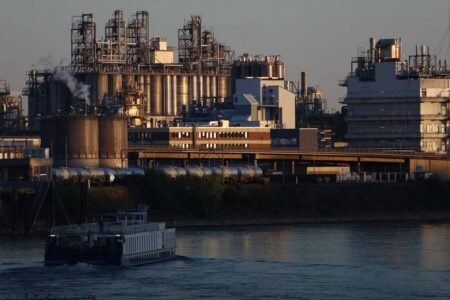
- a programme to regulate traffic on the busy shipping lanes off the EU coasts;
- several north-south and east-west rail upgrades.
A balancing act
Liberalisation alone has not been able to solve several deep-seated problems. Besides congestion, these include the dominance of road over other forms of transport, pollution, and the fragmentation of transport systems, including poor links to outlying regions or the lack of good connections between regional or national networks.
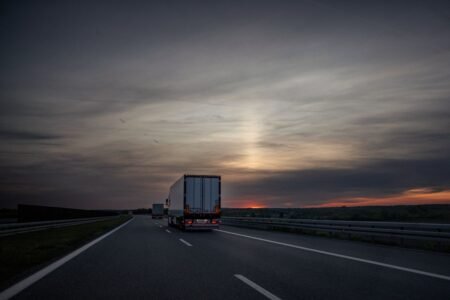
Road haulage now carries 44% of all goods transported in the EU, against 41% for short-sea shipping routes, 8% for rail and 4% for inland waterways. The imbalance is more marked for passenger transport where road (largely car journeys) accounts for 79% against rails 6% and 5% for air. Shifting goods and passengers from roads to less polluting forms of transport will be a key factor in any sustainable transport policy. Another will be the ability to integrate different modes of transport by combining road-rail, sea-rail or rail-air elements.
Congestion charging, where users pay for the scarce infrastructure they occupy on roads, at airports or elsewhere, is also being introduced. One example is the system put in place in London in 2003 which charges motorists for driving into the citys central district. Pilot programmes for similar systems are in place in several other major cities.
In a democratic market economy, a switch from road to rail (however desirable) cannot be imposed by the EU or implemented by government fiat. It is best done through a process of incentives, like targeted investments in other transport modes so that they can handle the overflow, and pricing schemes which reflect the real cost of road use and which encourage a natural migration from roads to alternative forms of transport. The purpose is to have fewer long-distance passengers or goods travelling by road and more by rail, and to replace some short-haul passenger flights by rail journeys.
Paying for pollution
Infrastructure charging also supports the idea of paying for pollution caused. The transport sector, principally road vehicles, is responsible for about 28% of all EU emissions of CO2, the main greenhouse gas. Better fuel efficiency, the use of alternative fuels and fuel taxation are all measures being introduced.
In the air transport sector, the inevitable expansion of airport capacities needs to be linked to new regulations to reduce noise and emissions caused by aircraft.
In the wake of oil spills like those of the Erika and the Prestige off the French and Spanish coasts, the European Commission is pressing for more rules on maritime safety, including tougher ship inspections, sanctions for pollution caused through gross negligence, and the accelerated phasing out of single-hulled tankers. Since these disasters, the Commission also publishes a list of sub-standard ships banned from EU ports, which is updated on a regular basis.
Action plan
In a 2001 White Paper on transport, the Commission set goals for each sector, some of which are already being implemented. For instance, the Council of ministers reached agreement in June 2004 to increase the compulsory rest periods for drivers of heavy trucks from eight to nine hours and to limit their total driving time per week to 56 hours. This is part of a wider safety programme to cut road deaths, currently more than 40,000 a year, by half by 2010. Other White Paper targets seek to:
- reverse the decline in rails share of passenger and freight transport. A freight train in the EU travels at an average speed of 18 kilometres per hour. Rail must improve speeds and service levels if it is to attract freight traffic from roads.
- reduce flight delays by creating an integrated European air traffic control structure.
- invest more in maritime and inland waterways. Improve port services and maritime safety standards.
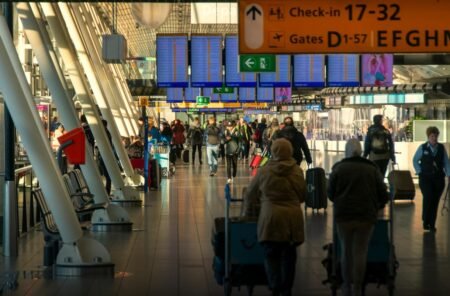
- mix modes to offer greater efficiency, less congestion, lower costs and cleaner air. Introduce integrated ticketing and baggage handling for dual mode journeys.
In another safety move, the European Commission published in March 2006 for the first time a list of 92 airlines which are banned from operating passenger or freight flights to or from EU airports. Most of the banned airlines are based in Africa.
EU Transport policy web links
European Commission Transport policy DG
Road transport
Rail transport
Maritime transport
Air transport
Trans-European networks
Satellite navigation
EU Transport Grants and Loans
EU Legislation in Force: Transport Policy
Recent case-law of the Court of Justice and the Court of First Instance : EU Transport policy
Further information on EU Transport Policy on Europa