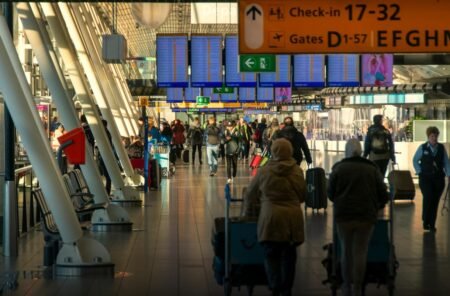
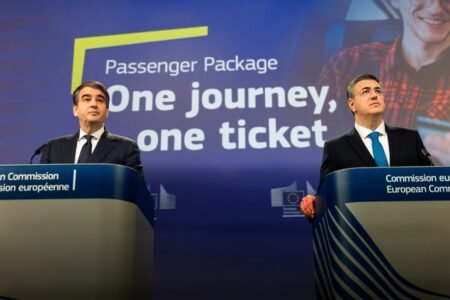
The EU Council and Parliament have agreed a deal to revise EU air passenger rights, maintaining compensation for three-hour delays, ensures faster reimbursement, fee-free child seating and flight price transparency.
The agreement – the first overhaul of these rules in over two decades – modernises and strengthens EU air passenger rights by clarifying existing provisions and reinforcing legal certainty for travellers, airlines, and enforcement authorities across the Union.
The political agreement includes the following key elements: clearer rules on compensation rights for delays and claims procedures; extraordinary circumstances; fare transparency and hand baggage; scope and passenger information; improved rights for passengers with reduced mobility and disabilities; and a ban on no-show policies for return flights.
The current standard level of protection for air passengers is maintained: passengers can claim compensation after a cancellation or a delay of 3 hours, amounting to €250 for flights of less than 1,500 km, €400 for flights between 1,500 km and 3,500 km, and €600 for flights above 3,500 km. This ensures continuity and predictability for both passengers and airlines. The main novelty is that, in the event of a disruption, airlines must proactively inform passengers within 96 hours of their rights and the procedure for claiming compensation. To ensure a more efficient handling of passengers’ requests for compensation, procedures are streamlined.
‘Extraordinary circumstances’ are set out in a list, and the rules on how they are applied have been refined, providing greater clarity and predictability for both passengers and airlines. This will contribute to more consistent interpretation and application of the rules on extraordinary circumstances across Member States.
The agreement strengthens transparency and comparability of air fares, including for hand baggage charges. Passengers will be better equipped to compare offers across airlines and booking platforms, enabling more informed choices. At the same time, airlines retain the freedom to determine their own pricing structures.
No-show policies for return flights are banned. This means that passengers who do not take the outbound journey cannot be denied boarding on the return flight. Airlines may not charge a fee for allowing passengers to board the return flight.
The scope of the Regulation remains unchanged: all flights departing from the European Union are covered, while flights to the EU remain covered when operated by EU carriers. To further enhance transparency, EU airlines can display an ‘EU Passenger Rights’ label, informing passengers of the rights applicable to their journey.
The agreement marks an important step forward in strengthening the rights of passengers with reduced mobility. They will receive improved support during disruptions, and their essential mobility equipment will be better protected.
The European Parliament and the Council now need to formally endorse the political agreement. Following adoption and publication in the Official Journal of the European Union, the revised rules will apply after 12 months.