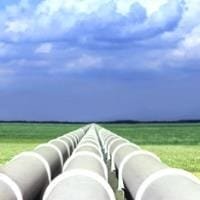
Gas supplies – Photo EC
(BRUSSELS) – The European Commission adopted a set of legislative proposals Thursday to decarbonise the EU gas market by facilitating the uptake of renewable and low carbon gases, including hydrogen.
The Commission is also proposing to reduce methane emissions in the energy sector in Europe and in the global supply chain.
The EU executive says the EU needs to decarbonise the energy it consumes to reduce greenhouse gas emissions by at least 55% by 2030 and become climate-neutral by 2050, and these proposals will help to deliver that goal.
“Europe needs to turn the page on fossil fuels and move to cleaner energy sources. This includes replacing fossil gas with renewable and low carbon gases, like hydrogen,” said EC vice president for the European Green Deal Frans Timmermans: “Today, we are proposing the rules to enable this transition and build the necessary markets, networks and infrastructure. To address methane emissions, we are also proposing a solid legal framework to better track and reduce this powerful greenhouse gas, helping us to fulfil the Global Methane Pledge and tackle the climate crisis.”
The Commission’s proposals (regulation and directive) create the conditions for a shift from fossil natural gas to renewable and low-carbon gases, in particular biomethane and hydrogen, and strengthen the resilience of the gas system. One of the main aims is to establish a market for hydrogen, create the right environment for investment, and enable the development of dedicated infrastructure, including for trade with third countries. The market rules will be applied in two phases, before and after 2030, and notably cover access to hydrogen infrastructures, separation of hydrogen production and transport activities, and tariff setting. A new governance structure in the form of the European Network of Network Operators for Hydrogen (ENNOH) will be created to promote a dedicated hydrogen infrastructure, cross-border coordination and interconnector network construction, and elaborate on specific technical rules.
The new rules will remove tariffs for cross-border interconnections and lowering tariffs at injection points. They also create a certification system for low-carbon gases, to complete the work started in the Renewable Energy Directive with the certification of renewable gases. This will ensure a level playing field in assessing the full greenhouse gas emissions footprint of different gases and allow Member States to effectively compare and consider them in their energy mix. In order to avoid locking Europe in with fossil natural gas and to make more space for clean gases in the European gas market, the Commission proposes that long-term contracts for unabated fossil natural gas should not be extended beyond 2049.
Consumer empowerment is a priority, and consumers may switch suppliers more easily, use effective price comparison tools, get accurate, fair and transparent billing information, and have better access to data and new smart technology. Consumers should be able to choose renewable and low carbon gases over fossil fuels.
Referring to current high energy prices, the Commission proposes to improve the resilience of the gas system and strengthen the existing security of supply provisions. In case of shortages, no household in Europe will be left alone, with enhanced automatic solidarity across borders through new pre-defined arrangements and clarifications on controls and compensations within the internal energy market. The proposal extends current rules to renewables and low carbon gases and introduces new provisions to cover emerging cybersecurity risks. Finally, it will foster a more strategic approach to gas storage, integrating storage considerations into risk assessment at regional level. The proposal also enables voluntary joint procurement by Member States to have strategic stocks, in line with the EU competition rules.
On tackling methane emissions, the Commission will require the oil, gas and coal sectors to measure, report and verify methane emissions, and proposes strict rules to detect and repair methane leaks and to limit venting and flaring. It also puts forward global monitoring tools ensuring transparency of methane emissions from imports of oil, gas and coal into the EU, which will allow the Commission to consider further actions in the future.
The proposal would establish a new EU legal framework to ensure the highest standard of measurement, reporting, and verification (MRV) of methane emissions. The new rules would require companies to measure and quantify their asset-level methane emissions at source and carry out comprehensive surveys to detect and repair methane leaks in their operations.
Finally, with respect to the methane emissions of the EU’s energy imports, the Commission proposes first, that importers of fossil fuels be required to submit information about how their suppliers perform measurement, reporting and verification of their emissions and how they mitigate those emissions. The Commission will establish two transparency tools that will show the performance and reduction efforts of countries and energy companies across the globe in curbing their methane emissions: a transparency database, where the data reported by importers and EU operators will be made available to the public; and a global monitoring tool to show methane emitting hot-spots inside and outside the EU, harnessing our world leadership in environmental monitoring via satellites.
As a second step, to effectively tackle emissions of imported fossil fuels along the supply chain to Europe, the Commission will engage in a diplomatic dialogue with our international partners and review the methane regulation by 2025 with a view to introducing more stringent measures on fossil fuels imports once all data is available.
Q&A on the gas markets and hydrogen package
Reducing methane emissions in the energy sector - background guide
Factsheet on the gas markets and hydrogen package