

The European Central Bank’s monetary policy committee will meet on October 29 to decide whether to hike rates for a second successive month or keep them unchanged. Expectations are high for the latter, with prediction market platforms pointing to a 91% chance that there will be no hike in October.
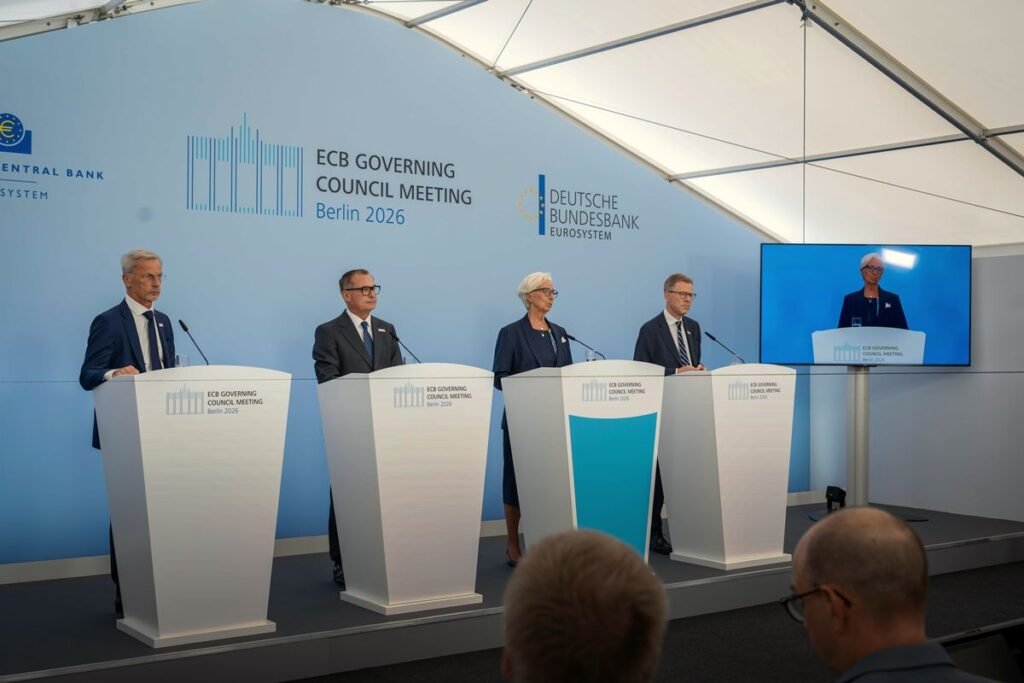
That seems to be the most popular view of the markets ahead of this month’s key Central Bank decisions. Yet, rising inflation continues to challenge that view.
In September, euro area inflation rose to 3.8%, compared to 3.2% in August, largely impacted by rising energy prices, which represented an 18.8% rise in the harmonized index of consumer prices, rising from 14.3% in August. Eurostat attributed the sharp rise in energy CPI to the conflict in the Middle East.
The ECB hiked rates in September when annual inflation in August stood at just 3.2%, so it makes sense to think the committee may continue the current tightening cycle in October.
So what could prevent a rate hike in October?
The ECB’s September rate hike affected EU markets differently. Each country has its own bond market, which means an ECB rate can result in higher sovereign bond yields in one country and lower yields in another, due to different economic circumstances.
For instance, the 10-year French government bond (OAT) recently hit a new all-time high of 4.9%, which analysts have attributed to concerns over France’s Fiscal outlook and draft budget.
On the other hand, German government bonds are being viewed by investors as a haven, with the 10-year Bund yield dropping to 3.4%.
The spread between the sovereign bonds is more than 1.4%, the widest since 2011, during the eurozone crisis. This level of fiscal fragmentation is hurting EU equity markets, even though some continue to demonstrate resilience. The French CAC 40 index is down nearly 10% since August 10, while the German DAX 30 index is down 4% since the start of September.
The current pullbacks come on the back of significant rallies, with the CAC 40 gaining more than 13% between March 20th and August 10th, while the DAX 30 rallied nearly 19% between March 20th and August 28th. Overall, CAC 40 is down 3.75% this year, while DAX 30 is up 2.65%.
Daniela Hathorn, senior market analyst at Capital.com, commenting on the relative strength EU equities demonstrated before the latest pullback: “European indices contain many multinational companies whose earnings depend more heavily on global demand than domestic European GDP. This helps explain why European equities have remained relatively resilient despite the deteriorating sovereign backdrop,” she shared in a bond markets analysis a week ago.
The seasonally adjusted GDP in the euro area grew by 0.6% in Q2 2026, on the back of a 0% growth rate in Q1, according to estimates published by Eurostat. Q2’s growth rate is the highest the euro area GDP has grown in a quarter since the second quarter of 2022.
Different EU member states experience varying growth rates, with Ireland, which posted a 10.2% growth rate, becoming an outlier in the mix. Only five other member states managed to post a growth rate of at least 1%, with several, including France, remaining flat.
Therefore, while rising inflation often calls for tightening, an assessment of the euro area economic situation, coupled with equity prices that are beginning to wilt under the pressure of higher interest rates, means the European Central Bank faces a tough decision on October 29, when the committee sits down to decide whether to continue tightening or keep rates unchanged.
The content and materials featured or linked to on EUbusiness.com are for your information only and do not constitute financial, legal or tax advice or recommendation and should not be considered as such.