

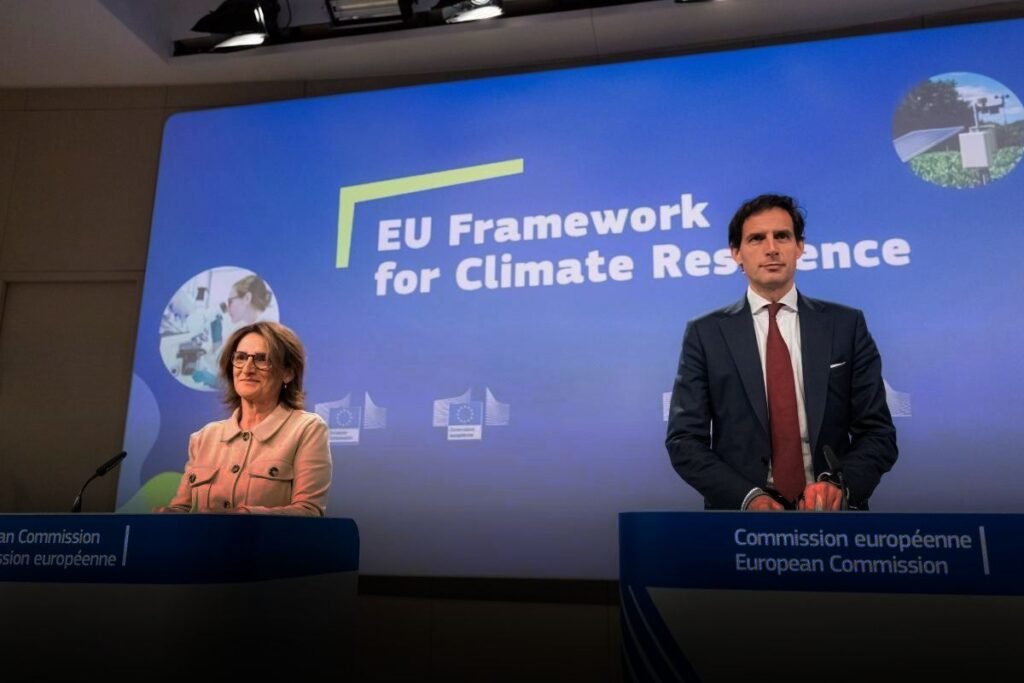
A new EU Framework for Climate Resilience, presented Tuesday by the European Commission, would strengthen Europe’s ability to prepare for climate risks, including a possible 3°C above pre-industrial levels by 2100.
Highlighting the serious consequences that climate change can have on people, businesses and infrastructure, the Commission points to the summer’s prolonged heatwaves and droughts, fuelling dangerous wildfires and driving some of Europe’s biggest rivers to historically low water levels, as well as devastating floods in past years.
Financially, estimated economic losses from climate damages from 2022-2025 stand at approximately €200 billion, or €50 billion per year. The 75 per cent of Europeans living in cities and urban areas have been feeling first-hand the impacts of climate change.
The Commission says building climate resilience is a strategic investment in Europe’s competitiveness, security, health and prosperity. “The Framework will strengthen preparedness, clarify responsibilities and equip public authorities, businesses and communities with practical tools to act, paying particular attention to the most vulnerable”, said EC executive vice-president Teresa Ribera.
The Framework Communication will embed climate resilience across all major policy areas, both domestic and international. It provides support to local and regional authorities to adapt through pilot projects and advisory services.
The Communication also underlines the role of businesses to scale up the resilience of European industry. Adapting Europe’s infrastructure and economy to future climatic conditions is expected to require investment of around €70 billion per year. However, the estimated return on investments in climate adaptation can reach more than 10 times their value in avoided loss and damage. The global market for climate adaptation solutions is projected to quadruple in size to €3.5 trillion by 2050, presenting a significant opportunity for European businesses to innovate, prosper and become technology leader for climate resilience solutions.
The proposed Climate Resilience Law provides a common reference trajectory for global warming. The current scientific evidence shows that the world is on a path to warm by 1.5 °C above pre-industrial levels by 2030, 2 °C by 2050, and 3 °C by 2100. This trajectory provides a shared baseline assumption against which Member States can assess future climate risks when making decisions.
The Climate Resilience Law will bring more efficiency and reduce the EU states’ administrative burden. National planning obligations and instruments are simplified by the introduction of one single national strategic plan. Improved and more regular climate risk assessments will also ensure consistency and comparability between EU and national assessments.
The Framework provides public authorities and businesses with practical tools to help for addressing EU’s ‘Destination Earth’ initiative, it will evolve to integrate supercomputing capabilities. The Navigator of Climate Resilience Tools, developed by the European Environment Agency, helps users find relevant climate resilience tools based on their location, sector, and the specific risks they face. The Solutions Explorer showcases practical adaptation solutions developed and tested through through the EU Mission on Adaptation to Climate Change.
Communication on the EU Climate Resilience Framework
European Climate Resilience Law
EU Climate Resilience Framework (policy page including all related documents)