Close Menu
    Latest Category
    • Finance
    • Tech
    • EU Law
    • Energy
    • About
    • Contact
    EUbusiness.com | EU news, business and politicsEUbusiness.com | EU news, business and politics
    Login
    • EU News
    • Focus
    • Guides
    • Press
    • Jobs
    • Events
    • Directory
    EUbusiness.com | EU news, business and politicsEUbusiness.com | EU news, business and politics
    Home » EU adopts strategy for sustainable bioeconomy

    EU adopts strategy for sustainable bioeconomy

    eub2eub217 March 2026Updated:18 March 2026 Agriculture
    — Filed under: EU News
    Share
    Facebook Twitter LinkedIn Pinterest Email

    The EU’s new bioeconomy strategy, adopted buy EU states, aims for a sustainable bioeconomy by 2040 and promotes the use of bio-based solutions across all relevant sectors as fossil-free alternatives.
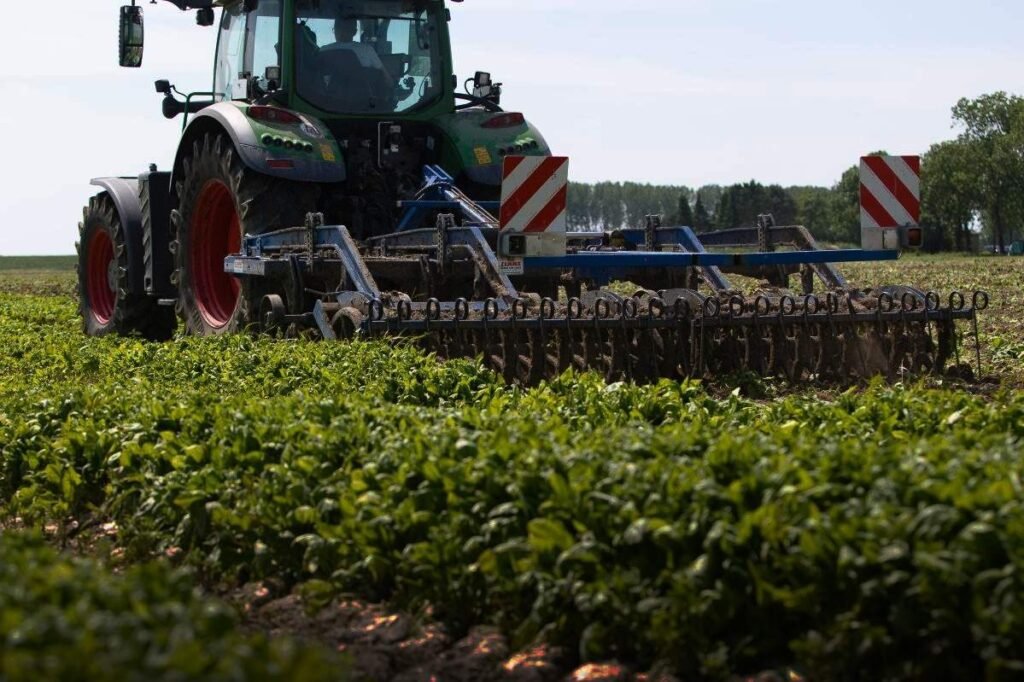
    Bioeconomy - farmer ploughing field - Photo by Frank Molter © European Union 2017

    Bioeconomy uses renewable biological resources such as plants, animals and microorganisms to produce food, energy and industrial goods.

    “The transformation led by bioeconomy is already tangible across Europe, from everyday bio-based products such as beeswax lip balm and linen textiles to cutting-edge materials like car parts from olive tree waste”, said Cyprus’ agriculture minister Maria Panayiotou, for the EU presidency: “With today’s Council conclusions, we say it loud and clear: competitiveness, sustainability and homegrown innovation must be at the core of the EU’s path toward a resilient bioeconomy by 2040 and Europe’s strategic autonomy.”

    According to the Council conclusions, it is important to efficiently implement existing EU law that is relevant to the bioeconomy and update national actions with the strategy. The Council backs more innovation and measures to support investment in sustainable bio-based solutions, including faster approvals and simplified rules, as well as leading global action in bioeconomy.

    Creating predictable demand for sustainable bio-based materials and technologies is essential to unlocking private investment. In this context, the Council stresses the need to identify and strengthen high-potential sectors (lead markets).

    These lead markets should not be limited to the ones listed in the EU bioeconomy strategy (e.g. bio-based plastics, chemicals, construction products, fertilisers) but could also be extended to additional sectors, including footwear and textile, paper, or the blue bioeconomy (e.g. the use of algae and sponges).

    According to recent reports, the EU is largely self-sufficient in biomass supply (at around 90%). IN fact, across the EU, the bioeconomy supports nearly one in twelve jobs, with a workforce of 17.1 million. In 2023, the total value of the EU bioeconomy was estimated at €2.7 trillion and bioeconomy is identified as the fastest-growing sector in the Union, while safeguarding the environment and supporting circularity.

    The Council now calls for ensuring sustainable biomass supply, as this is essential for the long-term viability of the bioeconomy. It calls on the EU’s member states to use biomass across value chains in a resource-efficient way that safeguards the environment and to promote the use of use of by-products, bio-waste and residues (secondary biomass).

    Council conclusions on the EU bioeconomy strategy

    EU bioeconomy strategy

    Add A Comment
    Leave A Reply Cancel Reply

    You must be logged in to post a comment.

    eub2
    • Website

    eub2 is the default publisher for EUbusiness.

    Related Content

    European Council - Photo © European Union 2026

    EU leaders manage to avoid shooting themselves in the foot

    Sponsor: WWF21 March 2026
    Renewable energy - Image by Maria Maltseva from Pixabay

    47 pct of EU’s electricity came from renewables in 2025

    EUnited logo

    Environment & Sustainability Officer, European Engineering Industries Association, EUnited

    Pollution - Image by ivabalk from Pixabay

    Leading environmental NGOs warn: Deregulation push threatens Europe’s long-term competitiveness, security and public health

    Sponsor: WWF17 March 2026
    Cargo Ship on Rhine River - Photo by Wolfgang Vrede on Pexels

    New state aid rules to boost sustainable transport in EU

    EDF logo

    Project Manager, Europe Methane, EDF

    LATEST EU NEWS
    Fitto - Mînzatu - Photo © European Union 2026

    EUR 34.6 bn cohesion funds reallocated to EU’s strategic priorities

    25 March 2026
    Health research - Photo by National Cancer Institute on Unsplash

    Brussels awards EUR 617m to doctoral programmes

    25 March 2026
    Trade port cargo - Image by Pexels from Pixabay

    EU trade in goods with Australia in 2025

    25 March 2026
    Sefcovic - von der Leyen - Albanese - Photo © European Union 2026

    EU and Australia conclude talks on trade agreement

    24 March 2026
    Putin - Image by svklimkin from Pixabay

    Brussels renews support for exiled and relocated journalists in the EU

    23 March 2026

    Subscribe to EUbusiness Week

    Get the latest EU news

    CONTACT INFO

    • EUbusiness, 117 High Street, Chesham Buckinghamshire, HP5 1DE, United Kingdom
    • +44(0)20 8058 8232
    • service@eubusiness.com

    INFORMATION

    • About Us
    • Advertising
    • Contact Info

    Services

    • Cookie Policy
    • Terms
    • Disclaimer

    SOCIAL MEDIA

    Facebook
    eubusiness.com © EUbusiness Ltd 2026

    Type above and press Enter to search. Press Esc to cancel.

    Manage Consent
    To provide the best experiences, we use technologies like cookies to store and/or access device information. Consenting to these technologies will allow us to process data such as browsing behavior or unique IDs on this site. Not consenting or withdrawing consent, may adversely affect certain features and functions.
    Functional Always active
    The technical storage or access is strictly necessary for the legitimate purpose of enabling the use of a specific service explicitly requested by the subscriber or user, or for the sole purpose of carrying out the transmission of a communication over an electronic communications network.
    Preferences
    The technical storage or access is necessary for the legitimate purpose of storing preferences that are not requested by the subscriber or user.
    Statistics
    The technical storage or access that is used exclusively for statistical purposes. The technical storage or access that is used exclusively for anonymous statistical purposes. Without a subpoena, voluntary compliance on the part of your Internet Service Provider, or additional records from a third party, information stored or retrieved for this purpose alone cannot usually be used to identify you.
    Marketing
    The technical storage or access is required to create user profiles to send advertising, or to track the user on a website or across several websites for similar marketing purposes.
    • Manage options
    • Manage services
    • Manage {vendor_count} vendors
    • Read more about these purposes
    View preferences
    • {title}
    • {title}
    • {title}

    Sign In or Register

    Welcome Back!

    Login to your account below.

    Lost password?