Close Menu
    Latest Category
    • Finance
    • Tech
    • EU Law
    • Energy
    • About
    • Contact
    EUbusiness.com | EU news, business and politicsEUbusiness.com | EU news, business and politics
    Login
    • EU News
    • Focus
    • Guides
    • Press
    • Jobs
    • Events
    • Directory
    EUbusiness.com | EU news, business and politicsEUbusiness.com | EU news, business and politics
    Home » EU looks to tackle poverty and homelessness

    EU looks to tackle poverty and homelessness

    eub2eub26 May 2026 Social Policy in the EU
    — Filed under: EU News Headline
    Share
    Facebook Twitter LinkedIn Pinterest Email

    The European Commission on Wednesday unveiled a social plan aimed at helping to fight poverty and homelessness, and promote the rights of people with disabilities across the EU.
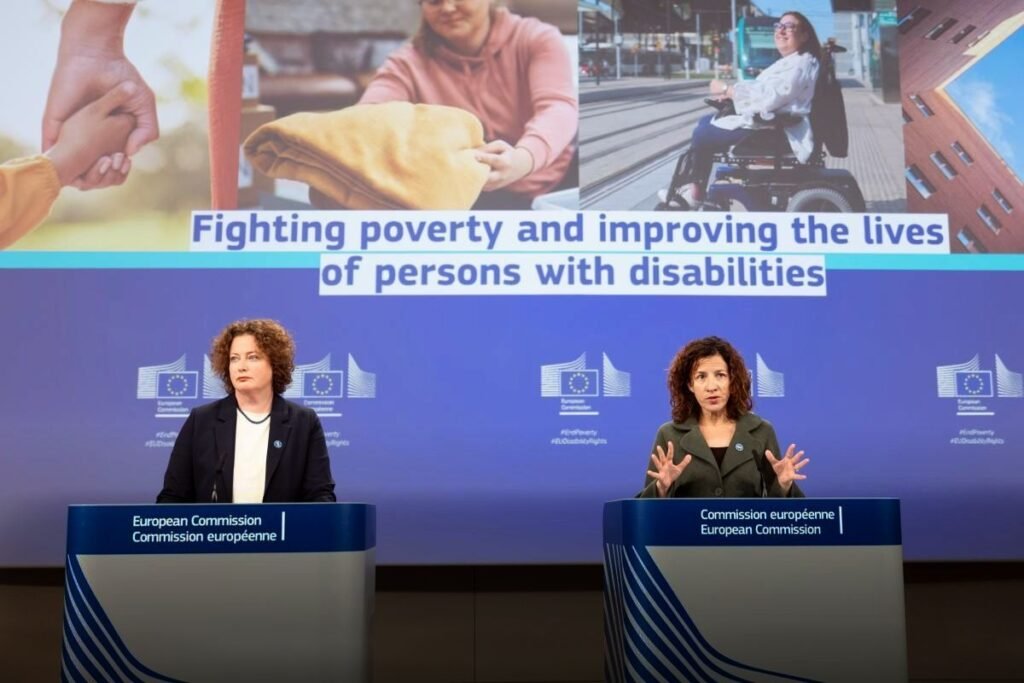
    Roxana Mînzatu - Photo by Lukasz Kobus © European Union 2026
    Roxana Mînzatu – Photo by Lukasz Kobus © European Union 2026

    The first-ever EU anti-poverty strategy includes a Commission plan to help end poverty in the EU by 2050; a proposal for a Council Recommendation on fighting housing exclusion; and two communications: one on breaking the cycle of child poverty, and one on reinforcing the strategy for the rights of persons with disabilities up to 2030.

    With 52% of Europeans citing the cost of living as their top concern, the EU is looking to tackle a housing crisis (lack of affordable housing is seen as an immediate and urgent problem by 40% of citizens, and 1 million are homeless); barriers to participation to a rapidly changing labour market; and poverty, affecting 1 in 5 Europeans – and 1 in 4 children.

    EC executive vice-president Roxana Mînzatu said the EU Anti-Poverty Strategy was “vital for our future: with strong policies and implementation in all Member States, it must help prevent people from falling into poverty and accelerate action for those already affected.”

    The EU anti-poverty strategy sets a path toward reducing the number of people at risk of poverty and social exclusion by at least 15 million by 2030, as well as helping eradicate poverty by 2050.

    It integrates three priorities: quality jobs for all, as quality employment is the first way out of poverty for those who can work; effective access to quality services and adequate income support; and coordinated action against poverty.

    The strategy lists a series of key actions to achieve these priorities. To break the cycle of poverty at every age, the Commission will, for instance, consult social partners on a possible new legal instrument to integrate persons excluded from the labour market. The strategy also lays out ways to support older people through adequate pensions. In addition, it stresses the need to join forces with national, regional and local governments, businesses and civil society to combat poverty, including by establishing a coalition against poverty later this year and a new structured dialogue to consult people experiencing poverty on relevant policies.

    W ith no meaningful decline in child poverty over the past five years, the European Child Guarantee is the EU’s main tool to support children in need, in particular through free and effective access to services like early childhood education, healthcare and school meals. The Commission is now proposing to strengthen the guarantee to address the social emergency of persistent child poverty and the needs of vulnerable children. The focus is on securing families’ access to quality jobs, childcare and strong safety nets and improving access of children to mentoring programmes and mental healthcare. The Commission will also pilot with Member States a European Child Guarantee Card to facilitate access to services and a coherent support for children in need. In addition, protecting children from online and offline threats, including exploitation and abuse, is key.

    As regards housing exclusion, a proposed Council Recommendation emphasises long-term solutions and prevention, to prevent housing exclusion and homelessness. It also promotes more social and affordable housing and takes a people-centred approach to support people finding a place to call home.

    Finally, to boost accessibility and inclusion for people with disabilities – over 1 in 5 Europeans, or 90 million people – full inclusion is seen as imperative both to ensure rights are respected and also to boost Europe’s economy and democracy. Barriers remain: only 55% are employed, compared with 77% of persons without a disability; 1.4 million persons with disabilities still live in institutional settings; and 1 in 3 are at risk of poverty, nearly double the EU average.

    The Commission is to step up actions, including the EU-wide roll out of the European Disability Card and Parking Card, launching an Alliance for Independent Living to replace institutions with community-based support, improving transport accessibility and investing in assistive technologies such as AI tools.

    Questions and answers on the anti-poverty package

    Questions and answers on enhancing the strategy for the rights of persons with disabilities up to 2030

    Factsheet on the anti-poverty package

    Factsheet on enhancing the strategy for the rights of persons with disabilities up to 2030

    Anti-poverty strategy

    Communication on European Child Guarantee

    Council recommendation on fighting housing exclusion

    Union of equality: Strategy on the rights of persons with disabilities 2021-2030 (easy-to-read version)

    Communication Enhancing the strategy for the rights of persons with disabilities up to 2030

    Mid-term report on the implementation of the Union of Equality Strategy for the Rights of Persons with Disabilities 2021-2030

    Synopsis Report – Enhancing the strategy for the rights of persons with disabilities up to 2030

    Add A Comment
    Leave A Reply Cancel Reply

    You must be logged in to post a comment.

    eub2
    • Website

    eub2 is the default publisher for EUbusiness.

    Related Content

    Fit pensioner - Photo by Centre for Ageing Better on Pexels

    EU life expectancy increases again to 81.5 years

    Woman business manager - Photo by LinkedIn Sales Solutions on Unsplash

    35 pct of managerial positions in EU held by women

    Cyber-bullying - Photo by Faye Tsui on Pexels

    EU action plan to protect young people against cyberbullying online

    TikTok-Image by Stefan Coders from Pixabay

    TikTok under EU pressure over addictive design that could harm children

    Grok - Photo by UMA media on Pexels

    Brussels orders probe into X over Grok sexual images

    Hadja Lahbib - Photo © European Union 2026

    New EU strategy to stand firm against racism

    LATEST EU NEWS
    Roxana Mînzatu - Photo by Lukasz Kobus © European Union 2026

    EU looks to tackle poverty and homelessness

    6 May 2026
    Antonio Costa - Nikol Pashinyan - Ursula von der Leyen in Armenia - Photo © European Union 2026

    EU forges deeper economic, security ties with Armenia

    5 May 2026
    Deforestation - Photo by Annie Spratt on Unsplash

    EU presses on with deforestation law but exempts leather imports

    4 May 2026
    Mercosur signing - Maros Sefcovic - Photo © European Union 2026

    EU-Mercosur interim trade deal to enter into provisional application

    30 April 2026
    Pet dog at vet - Image by Tima Miroshnichenko on Pexels

    Green light for first EU rules to protect cats and dogs

    28 April 2026

    Subscribe to EUbusiness Week

    Get the latest EU news

    CONTACT INFO

    • EUbusiness, 117 High Street, Chesham Buckinghamshire, HP5 1DE, United Kingdom
    • +44(0)20 8058 8232
    • service@eubusiness.com

    INFORMATION

    • About Us
    • Advertising
    • Contact Info

    Services

    • Cookie Policy
    • Terms
    • Disclaimer

    SOCIAL MEDIA

    Facebook
    eubusiness.com © EUbusiness Ltd 2026

    Type above and press Enter to search. Press Esc to cancel.

    Manage Consent
    To provide the best experiences, we use technologies like cookies to store and/or access device information. Consenting to these technologies will allow us to process data such as browsing behavior or unique IDs on this site. Not consenting or withdrawing consent, may adversely affect certain features and functions.
    Functional Always active
    The technical storage or access is strictly necessary for the legitimate purpose of enabling the use of a specific service explicitly requested by the subscriber or user, or for the sole purpose of carrying out the transmission of a communication over an electronic communications network.
    Preferences
    The technical storage or access is necessary for the legitimate purpose of storing preferences that are not requested by the subscriber or user.
    Statistics
    The technical storage or access that is used exclusively for statistical purposes. The technical storage or access that is used exclusively for anonymous statistical purposes. Without a subpoena, voluntary compliance on the part of your Internet Service Provider, or additional records from a third party, information stored or retrieved for this purpose alone cannot usually be used to identify you.
    Marketing
    The technical storage or access is required to create user profiles to send advertising, or to track the user on a website or across several websites for similar marketing purposes.
    • Manage options
    • Manage services
    • Manage {vendor_count} vendors
    • Read more about these purposes
    View preferences
    • {title}
    • {title}
    • {title}

    Sign In or Register

    Welcome Back!

    Login to your account below.

    Lost password?