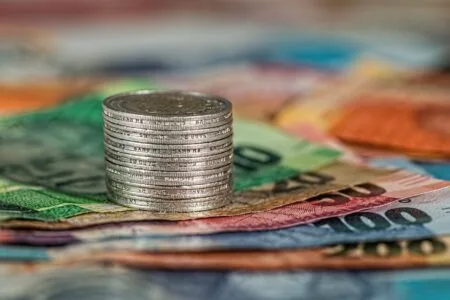


The euro (symbol: €; currency code: EUR) is the official currency of 20 of the 27 member states of the European Union which collectively make up the euro area, also known as the eurozone. The euro is divided into 100 euro cents.

Some EU countries have yet to meet the criteria required to join the euro area while Denmark has opted not to participate.
Within the euro area, the euro is the only legal tender. In the absence of a specific agreement concerning the means of payment, creditors are obliged to accept payment in euros.
The euro is the second-largest reserve currency as well as the second-most traded currency in the world after the United States dollar. As of December 2019, with more than €1.3 trillion in circulation, the euro has one of the highest combined values of banknotes and coins in circulation in the world.
The euro is managed and administered by the European Central Bank (ECB, Frankfurt am Main) and the Eurosystem, composed of the central banks of the eurozone countries. As an independent central bank, the ECB has sole authority to set monetary policy. The Eurosystem participates in the printing, minting and distribution of euro banknotes and coins in all EU member states, and the operation of the eurozone payment systems..
The euro offers many benefits for individuals, businesses and the economies of the countries that use it. These include:
- the ease with which prices can be compared between countries, which boosts competition between businesses, thereby benefiting consumers
- price stability
- the euro makes it easier, cheaper and safer for businesses to buy and sell within the euro area and to trade with the rest of the world
- improved economic stability and growth
- better integrated and therefore more efficient financial markets
- greater influence in the global economy
- a tangible sign of a European identity.
The benefits of the single currency are that the euro has eliminated the costs of exchange rate fluctuations within the euro area. This protects consumers and businesses within the euro area from costly swings in currency markets, which, in some countries, used to undermine confidence, discourage investment and cause economic instability. Before the euro, the need to exchange currencies meant extra costs, risks and a lack of transparency in transactions between countries. Using a single currency makes doing business and investing in the euro area easier, cheaper and less risky.
By making it easy to compare prices, the euro encourages trade and investment of all kinds between countries. It also helps individual consumers and businesses to secure the best prices.eliminated the costs of exchange rate fluctuations within the euro area. This protects consumers and businesses within the euro area from costly swings in currency markets, which, in some countries, used to undermine confidence, discourage investment and cause economic instability. Before the euro, the need to exchange currencies meant extra costs, risks and a lack of transparency in transactions between countries. Using a single currency makes doing business and investing in the euro area easier, cheaper and less risky.
By making it easy to compare prices, the euro encourages trade and investment of all kinds between countries. It also helps individual consumers and businesses to secure the best prices.
How a country joins the euro
In order to join the euro area, EU member states are required to fulfil so-called ‘convergence criteria‘.
These binding economic and legal conditions were agreed in the Maastricht Treaty in 1992 and are also known as ‘Maastricht criteria’. All EU Member States, except Denmark, are required to adopt the euro and join the euro area, once they are ready to fulfil them.
The Treaty does not specify a particular timetable for joining the euro area, but leaves it to member states to develop their own strategies for meeting the condition for euro adoption.
The European Commission and the European Central Bank jointly decide whether the conditions are met for euro area candidate countries to adopt the euro. After assessing the progress made against the convergence criteria, the two bodies publish their conclusions in respective reports. These are further ratified by the ECOFIN Council in consultation with the Parliament and Heads of State. If favourable, the adoption process can begin.
The euro banknotes and coins – Leaflet – European Central Bank