Close Menu
    Latest Category
    • Finance
    • Tech
    • EU Law
    • Energy
    • About
    • Contact
    EUbusiness.com | EU news, business and politicsEUbusiness.com | EU news, business and politics
    Login
    • EU News
    • Focus
    • Guides
    • Press
    • Jobs
    • Events
    • Directory
    EUbusiness.com | EU news, business and politicsEUbusiness.com | EU news, business and politics
    Home » Common framework for the marketing of products – guide

    Common framework for the marketing of products – guide

    eub2eub221 February 2008 Trade
    Share
    Facebook Twitter LinkedIn Pinterest Email
    — last modified 21 February 2008

    The European Parliament on 21 February 2008 adopted a broad package of measures to facilitate the functioning of the EU’s internal market for goods. This will make it easier for companies, particularly for small and medium-sized enterprises, to sell their products in the EU whilst increasing the protection of consumers. For industrial products, existing market surveillance systems will be strengthened and, for the first time, aligned with import controls. Accreditation has also been introduced. This is a formal system which may now be used to ensure that conformity assessment bodies (or testing and certification laboratories) provide the high quality services that manufacturers need. The introduction of these measures serves to reinforce the role and credibility of CE marking. Improvements are also proposed for the trade with goods which do not fall under EU-legislation. From now on it will also be the duty of an EU Member State that intends to refuse market access for products that are legally marketed in other Member States to talk to the enterprise and to give detailed objective reasons for any possible refusal. This is intended to create new benefits for entrepreneurs as well as helping consumers broaden their choice. It is expected that the Council of the EU will approve the package of measures soon, so that it can enter into force next year.


    Advertisement


    The New Internal Market Package for Goods strengthens and modernises the on the Community market, as it:

    • Introduces better rules on to protect both consumers and professionals from unsafe products, including imports from third countries. This particularly applies to procedures for products that are hazardous to health or the environment which are withdrawn from the market;
    • Enhances confidence and quality of conformity assessments of products through reinforced and clear rules on the requirements for notification including the increased use of
    • Enhances the credibility and clarifies the meaning of In addition theCE marking will be protected as a community collective trade mark, which will give authorities additional means to take legal action against manufacturers who abuse it;
    • Establishes a for industrial productsin the form of a of measures for use in future legislation. This sets out simple common definitions (of terms which are sometimes used differently) and procedures which will allow future sectoral legislation to become more consistent and easier to implement.

    The package also strengthensthe which are not subject to EU harmonisation, such as various types of foodstuffs (for example bread and pasta), furniture, bicycles, ladders and precious metals, etc. Together they represent more than 15% of intra EU trade in goods. These products are very often subject to many different national rules laying down the requirements that these products should meet.

    Until now, the differences between these rules in many EU Member States discouraged companies, in particular small and medium enterprises, from venturing outside their domestic market because they had to prove that their products which were legally sold in a given Member State comply with technical rules in other Member States. Other companies were obliged to make expensive and often unnecessary adjustments to their products so that they became also more expensive for the consumers.

    The package adopted by the Parliament on 21 February will eliminate many of these technical obstacles and therefore eases the A national technical rule should no longer prevent that a product already lawfully marketed in one Member State could be sold on the market of another Member State. When a Member State intends to refuse market access, it will have to give precise and detailed objective reasons for doing so and it will have to give the importing company the opportunity to react before a final decision can be taken.

    Another novelty is that will be established in all Member States. They will provide information on national technical rules, so that enterprises, in particular SMEs, can obtain reliable and precise information about the law in force in the Member State where they intend to sell their products.

    New Internal Market Package for Goods: further information

    Add A Comment
    Leave A Reply Cancel Reply

    You must be logged in to post a comment.

    eub2
    • Website

    eub2 is the default publisher for EUbusiness.

    Related Content

    Korea - Lee Jae-myung, António Costa, Ursula von der Leyen and Maros Sefčovic - Photo © European Union 2026

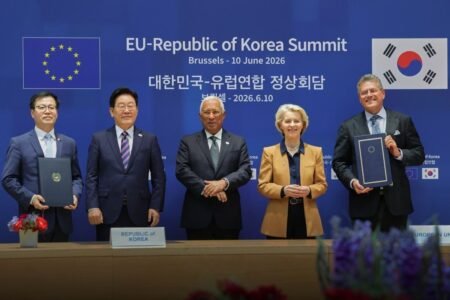
    Security the theme of strengthened EU-South Korea partnership

    Ruto - Virkkunen - Photo © European Union 2026

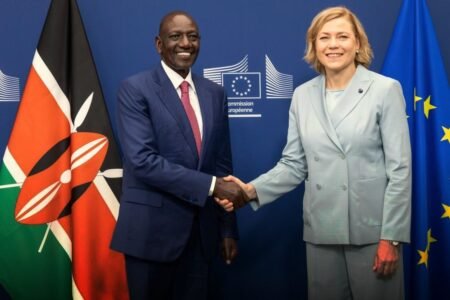
    EU strengthens trade and investment cooperation with Kenya

    Costa - Sheinbaum - von-der-Leyen - Photo © European Union 2026

    EU and Mexico sign updated trade agreement

    Rice sacks trade - Image by Thilina Alagiyawanna on Pexels

    EU signs off reinforced rules on trade preferences for developing countries

    US-EU Joint Statement - Maros Sefcovic - Photo © European Union 2025

    Agreement reached on implementation of EU-US trade deal

    Asaad Al-Shaibani - Dubravka Suica © European Union 2026

    EU restores full application of EU-Syria trade agreement

    LATEST EU NEWS
    Pesticides fertiliser - Image by Franck Barske from Pixabay

    Brussels proposes €540m financial relief for farmers facing fertiliser crisis

    12 June 2026
    Refugees Frontex - Photo © European Union 2015

    EU’s migration and asylum pact enters into force

    12 June 2026
    Emissions - transport - buildings - Rhine industry - Image by Thomas G. from Pixabay

    EU agrees safeguards for new emissions trading system for buildings and road transport

    11 June 2026
    Military helicopter - Photo by Dominik Gryzbon on Pexels

    EU strikes deal to strengthen Europe’s defence readiness

    10 June 2026
    Korea - Lee Jae-myung, António Costa, Ursula von der Leyen and Maros Sefčovic - Photo © European Union 2026

    Security the theme of strengthened EU-South Korea partnership

    10 June 2026

    Subscribe to EUbusiness Week

    Get the latest EU news

    CONTACT INFO

    • EUbusiness, 117 High Street, Chesham Buckinghamshire, HP5 1DE, United Kingdom
    • +44(0)20 8058 8232
    • service@eubusiness.com

    INFORMATION

    • About Us
    • Advertising
    • Contact Info

    Services

    • Cookie Policy
    • Terms
    • Disclaimer

    SOCIAL MEDIA

    Facebook
    eubusiness.com © EUbusiness Ltd 2026

    Type above and press Enter to search. Press Esc to cancel.

    Manage Consent
    To provide the best experiences, we use technologies like cookies to store and/or access device information. Consenting to these technologies will allow us to process data such as browsing behavior or unique IDs on this site. Not consenting or withdrawing consent, may adversely affect certain features and functions.
    Functional Always active
    The technical storage or access is strictly necessary for the legitimate purpose of enabling the use of a specific service explicitly requested by the subscriber or user, or for the sole purpose of carrying out the transmission of a communication over an electronic communications network.
    Preferences
    The technical storage or access is necessary for the legitimate purpose of storing preferences that are not requested by the subscriber or user.
    Statistics
    The technical storage or access that is used exclusively for statistical purposes. The technical storage or access that is used exclusively for anonymous statistical purposes. Without a subpoena, voluntary compliance on the part of your Internet Service Provider, or additional records from a third party, information stored or retrieved for this purpose alone cannot usually be used to identify you.
    Marketing
    The technical storage or access is required to create user profiles to send advertising, or to track the user on a website or across several websites for similar marketing purposes.
    • Manage options
    • Manage services
    • Manage {vendor_count} vendors
    • Read more about these purposes
    View preferences
    • {title}
    • {title}
    • {title}

    Sign In or Register

    Welcome Back!

    Login to your account below.

    Lost password?