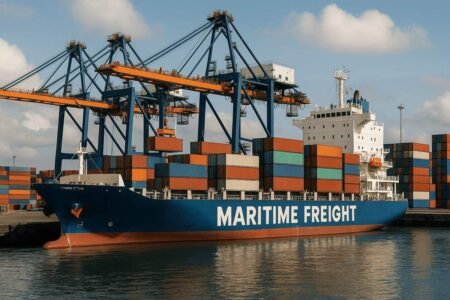


Trade in goods and services makes a significant contribution to increasing sustainable growth and creating jobs. More than 30 million jobs already depend on exports outside the EU. 90% of future global growth will happen outside Europe’s borders. Hence – trade is a growth vector and a key priority for the EU.
Advertisement
The EU Council is committed to a strong, rules-based multilateral trading system. Responsible EU trade policy is accompanied by a high level of transparency and an effective communication with citizens about benefits and challenges of trade an open markets.
What are barriers to trade?
Governments can impose certain barriers to trade in order to make local goods more competitive in relation to imports.
There are several kinds of barriers to trade. Tariffs are customs duties on imports. They give a price advantage to locally-produced goods over similar imported goods. Once customs duties are removed, trade can still face many obstacles from different technical regulations applicable to products and services.
Non-Tariff Barriers (NTBs) refer to restrictions that result from prohibitions, conditions, or specific market requirements that make importation or exportation of products difficult and/or costly.
What are trade agreements?
The EU manages trade relations with third countries in the form of trade agreements. They are designed to create better trading opportunities and overcome barriers to trade.
Trade policy is also used as a vehicle for the promotion of European principles and values, starting from democracy and human rights but also the EU’s views on the environment, social and labour rights. or development. Thus, the Council ensures that trade agreements safeguard EU values, standards and regulatory practices. This includes:
- sustainable development
- good governance
- free, fair and ethical trade
- environmental protection
- human and labour rights
- health and consumer protection
- animal welfare
- protection of cultural diversity
What kind of trade agreements exist?
The EU common commercial policy is based on Article 207 of the Treaty on the Functioning of the European Union (TFEU). The negotiation of trade agreements is conducted in accordance with the rules set out in Article 218 (TFEU).
Names of the trade agreements differ depending on the content of the agreement: Economic Partnership Agreements with partners such as African, Caribbean and Pacific countries aim primarily at supporting development. Free Trade Agreements with developed countries and emerging economies are economically driven and based on reciprocal market opening. They grant preferential access to the markets of the involved countries. Some trade agreements are part of broader political agreements, this is for instance the case of some Association Agreements. The EU also enters into non-preferential trade agreements, as part of broader agreements such as Partnership and Cooperation Agreements (PCAs).
What trade agreements exist between the EU and third countries?
The EU has successfully concluded a number of trade agreements with partner countries.
Ongoing trade negotiation processes include:
- Transatlantic Trade and Investment Partnership (TTIP) negotiations with the USA
- EU-Canada Comprehensive Economic and Trade Agreement (CETA) negotiations
- EU-Japan Free Trade Agreement negotiations
- Trade in Services Agreement (TiSA) negotiations by 23 WTO members, including the EU
What are the benefits of trade agreements?
Trade should benefit all – consumers, workers and businesses – and should provide equal opportunities across EU member states and regions.
Trade agreements can have many benefits:
- opening new markets for EU goods and services
- increasing investment opportunities and protection of investments in spirit of reciprocity and mutual benefit
- making trade cheaper by eliminating customs duties and cutting red tape
- making trade faster by facilitating transit through customs and setting common rules on technical and sanitary standards
- making the policy environment more predictable by taking joint commitment on areas that affect trade such as intellectual property rights, non-tariff trade barriers, competition rules and the framework for public purchasing decisions
- supporting sustainable development by fostering cooperation, transparency and dialogue with partners on social and environmental issues
What’s the role of the Council in trade negotiations?
Trade policy and a better implementation of the EU’s agreements are a joint responsibility of the Commission, member states and the European Parliament.
The Council plays a crucial role during the process in which a new trade agreement takes shape: It authorises the Commission to negotiate a new trade agreement on behalf of the EU – in a document commonly referred to as “negotiating mandate”. In its authorisation, the Council gives the appropriate negotiating directives, including objectives, scope of the negotiations, possible time limits.
The Commission then negotiates with the partner country on behalf of the EU, in close cooperation with the Council and the European Parliament. It regularly reports to the Council and the Parliament on how negotiations are going. Throughout the negotiations, the Commission consults the Council.
When the text of an agreement has been agreed with the partners, drafted and translated into all official languages of the EU, the Commission submits formal proposals for adoption to the Council.
Following discussions in the Council, and after legal and linguistic review of the text, the Council adopts a decision to sign. The Council also decides whether to provisionally apply the agreement fully or partially – if the agreement is of mixed nature, covering not only areas of EU competences but also matters of member state competence.
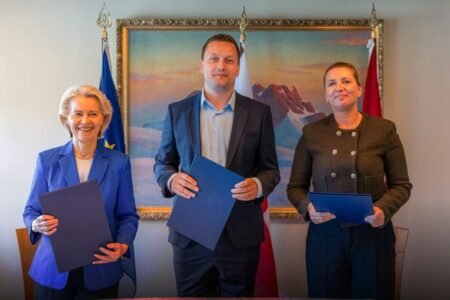
The agreement is then formally signed by the parties. The Presidency of the Council designates the person who signs on behalf of the EU. If the agreement covers topics of mixed responsibility (i.e. it covers not only areas of EU competence but also matters of member state competence), all member states need to sign as well.
After signature, the Council transmits the agreement together with the draft decision to conclude to the European Parliament for consent.
Only after having obtained the consent of the European Parliament, the Council adopts the decision to conclude. If the agreement covers topics of mixed responsibility, the Council can conclude it only after ratification by all member states.
You can find more information on individual trade agreements in the Council’s agreements and conventions database.
Source: Council of the EU