Close Menu
    Latest Category
    • Finance
    • Tech
    • EU Law
    • Energy
    • About
    • Contact
    EUbusiness.com | EU news, business and politicsEUbusiness.com | EU news, business and politics
    Login
    • EU News
    • Focus
    • Guides
    • Press
    • Jobs
    • Events
    • Directory
    EUbusiness.com | EU news, business and politicsEUbusiness.com | EU news, business and politics
    Home » Baltic states become fully energy independent from Russia, 10 months early

    Baltic states become fully energy independent from Russia, 10 months early

    eub2By eub29 February 2025Updated:11 February 2025 Energy No Comments2 Mins Read
    — Filed under: EU News
    Share
    Facebook Twitter LinkedIn Pinterest Email

    Estonia, Latvia and Lithuania successfully integrated into the EU internal energy market Sunday, becoming fully independent from Russia’s and Belarus’s electricity systems.
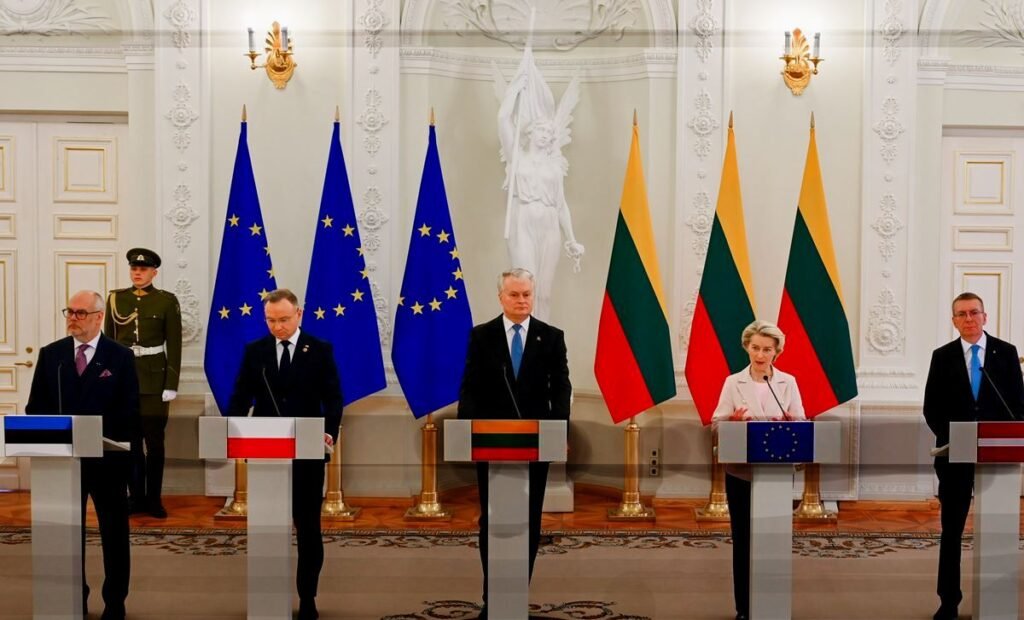
    Karis - Duda - Nauseda - von der Leyen - Vascega - Photo © European Union 2025

    Joining the European continental network via Poland allows the Baltic States to operate their own energy systems under common and transparent European rules.

    The synchronisation of the Baltics – achieved 10 months ahead of schedule – not only contributes to the security of supply of the entire EU, says the European Commission, but also supports the integration of renewable energy in the system, ultimately allowing consumers to benefit from lower energy costs.

    “The last electricity grids in Europe still linked to Russia are now fully integrated into Europe’s internal energy market, with the support of over 1 billion euros of European funding over the years,” said the Commission’s president Ursula von der Leyen: “The last remaining electricity lines with Russia and Belarus will now be dismantled. These chains of power lines, linking the Baltic states to hostile neighbours will be a thing of the past. This is freedom. Freedom from threats and blackmail. Congratulations on the start of this new era,” she added.

    The Baltic States were the last three EU Member States whose electricity networks were still operating fully within the Russian and Belarussian system where the electricity frequency was centrally controlled by Russia, leaving them vulnerable to Russia’s weaponisation of energy.

    Synchronising their electricity networks with those of EU Member States and several neighbouring countries enables the Baltic States to move away from energy dependence on Russia. Instead, they gain full control of their own electricity networks and strengthen the energy security of the Eastern Baltic Sea region and the EU as a whole.

    The European Coordinator for the Baltic Synchronisation projects, Catharina Sikow-Magny, says thye EU will continue to work closely with the EU Member States in the Baltic region to implement the remaining aspects of this project. Further work includes the construction of a 700 MW ‘Harmony Link Interconnector’ between Lithuania and Poland, scheduled for completion in 2030.

    EU energy infrastructure

    Baltic Energy Market Interconnection Plan

    New European Coordinator for the Baltic Synchronisation energy project

    Add A Comment
    Leave A Reply Cancel Reply

    You must be logged in to post a comment.

    eub2
    • Website

    eub2 is the default publisher for EUbusiness.

    Related Content

    Nuclear power plant, Isar, Germany - Image by Leopictures from Pixabay

    Nuclear power production in the EU increased 4.8 pct in 2024

    Electric hydro storage Cierny Vah, Slovakia

    EU issues EUR 650m call for energy infrastructure projects

    Liquified natural gas tanker - Photo by Sylvain Thomas © European Union 2012

    EU Council gives green light to phasing out of Russian gas imports

    Power generator - Photo © European Union

    EU deploys emergency generators for Ukraine following Russian strikes

    Oil tanker - Image by Erich Westendarp from Pixabay

    New EU mechanism to lower price cap for Russian crude oil to $44,10 per barrel

    Renewable energy - Image by Maria Maltseva from Pixabay

    Nearly 50pct EU electricity came from renewables in 2024

    LATEST EU NEWS
    Farming tractor delivering manure - Photo by Mirko Fabian on Pexels

    Commission adopts new EU legislation on RENURE fertilisers

    9 February 2026
    Clothes-Photo by Fujiphilm on Unsplash

    EU measures will prevent destruction of unsold clothes, shoes

    9 February 2026
    Innovation - researcher - Image-by-Thomas-from-Pixabay

    Postdoctoral researchers to receive EU awards of EUR 404.3m

    9 February 2026
    TikTok-Image by Stefan Coders from Pixabay

    TikTok under EU pressure over addictive design that could harm children

    6 February 2026
    Cable laying vessel - Photo LukaszKatlewa

    Brussels increases submarine cable security with EUR 347m and toolbox

    5 February 2026

    Subscribe to EUbusiness Week

    Get the latest EU news

    CONTACT INFO

    • EUbusiness, 117 High Street, Chesham Buckinghamshire, HP5 1DE, United Kingdom
    • +44(0)20 8058 8232
    • service@eubusiness.com

    INFORMATION

    • About Us
    • Advertising
    • Contact Info

    Services

    • Privacy Policy
    • Terms
    • EU News

    SOCIAL MEDIA

    Facebook
    eubusiness.com © EUbusiness Ltd 2026

    Type above and press Enter to search. Press Esc to cancel.

    Sign In or Register

    Welcome Back!

    Login to your account below.

    Lost password?