The European Commission today welcomed the launch of ‘Education at a Glance 2011’, a new report which gathers statistical data on investment in education, student-teacher ratios, teaching hours, graduate numbers and results.
Advertisement
21 EU countries are covered by the report, which is compiled annually by the Organisation for Economic Co-operation and Development (OECD), drawing on data jointly collected with Eurostat and the United Nations Educational Scientific and Cultural Organization (UNESCO).
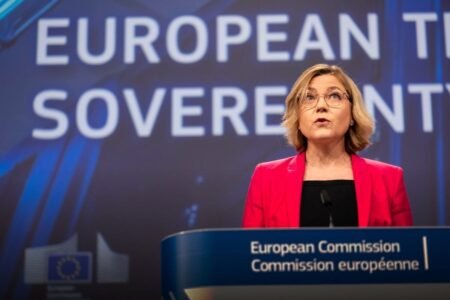
Androulla Vassiliou, European Commissioner for Education, Culture, Multilingualism and Youth, said: “The report provides invaluable evidence and data for policy-makers. Its findings underline the importance of our Europe 2020 targets to reduce early school leaving and boost university education, both in terms of increasing graduate numbers and quality. 35% of jobs in the EU will require high-level qualifications by 2020, so it’s vital that we continue to invest properly in schools and universities. Education must remain a top priority for the EU, even in a tough economic climate.”
Education at a Glance 2011
Education at a Glance covers 34 OECD Member countries including all EU Member States except Bulgaria, Cyprus, Malta, Latvia, Lithuania and Romania, as well as, among others, Australia, Canada, Japan, South Korea and the United States. It also includes data on other important economies (G20 countries), amongst them Brazil, India and China.
The report shows that, the EU countries perform near the OECD average, but with strong differences between them (for details see full report). All the countries featured in the report face the same challenge of improving educational results while public resources are, in many cases, being cut. The report demonstrates that improving the quality of education systems yields high economic and social returns.
Background
Where EU countries in the report perform better on average than the OECD as a whole:
Early childhood education (3-4 years old): EU 76%, OECD 70%;
Pupils graduating from upper secondary education: EU 85%, OECD 82%;
Percentage of young people not in education and training and not employed (“NEETs”): EU 6.4%, OECD 8.6%;
Class size and student-teacher ratios in schools.
Where the OECD as a whole outperforms the EU countries:
Adults (25-64) who have graduated from higher education: EU 27%, OECD 30%;
Vocational education graduates at tertiary level: EU 8%, OECD 10%;
Expenditure per student at tertiary level: EU $13 000, OECD $13 700;
Private spending on tertiary education institutions: EU 0.2%, OECD 0.5%.
Among other points, the 2011 Education at a Glance report reveals that:
Graduation rates: On average across OECD countries, 37% of 25-34 year-olds have completed university-level education (EU 34%), compared with 22% of 55-64 year-olds (EU 20%). Korea, Canada and Japan are in the lead, along with the Russian Federation, all with more than 50% of 25-34 year olds with tertiary qualifications (see Chart A1.1 in the report). The best performing EU country is Ireland, where 48% of 25-34 year olds have university-level qualifications. The EU’s Europe 2020 strategy includes a benchmark for increasing the share of 30-34 year olds with tertiary qualifications to 40% by 2020 (2010: 34%).
Unemployment rates: Among people with a tertiary level of education, unemployment rates have stayed at or below 4% on average across OECD countries during the recession. For those who failed to complete upper secondary education, by contrast, unemployment rates have repeatedly exceeded 12% (see Table A7.4a in the report). The situation is very similar in the EU countries covered.
Foreign students: More students are looking beyond their home countries for university education and this brings both academic and commercial benefits for the destination countries. In 2009, the last year for which complete figures are available, more than 3.7 million tertiary students were enrolled outside their country of citizenship, an increase of 77% from 2000 (see Chart C3.1 in the report). This includes 500 000 EU students studying in other EU countries.
Further information on Education at a Glance 2011
Source: European Commission