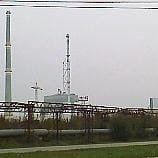
Kozloduy nuclear power plant
(LUXEMBOURG) – The cost of decommissioning Soviet-designed nuclear reactors in Lithuania, Bulgaria and Slovakia will be at least EUR 5.7 billion, and could reach double that if the cost of final disposal of high-level waste is included, according to a report Tuesday from the European Court of Auditors.
EU Member States’ co-financing of EU programmes remains very limited, say the auditors. The gap between decommissioning costs and financing in Lithuania has increased to 1.56 billion since their last audit in 2011. The financing gaps are now estimated at 28 million in Bulgaria and 92 million in Slovakia.
The ECA says that dedicated EU funding programmes for nuclear decommissioning have not created the right incentives for timely and cost-effective decommissioning, with nearly all the key infrastructure projects having experienced delays.
“I am concerned that key decommissioning projects have suffered delays, that financing gaps remain, and that insufficient progress is being made towards final disposal of high-level nuclear waste”, said Phil Wynn Owen, the Member of the European Court of Auditors responsible for the report.
The auditors examined the progress made in the EU’s nuclear decommissioning assistance programmes since 2011. Member State authorities claim the plants have been irreversibly closed; however, not all of the expected outputs used by the European Commission to assess progress towards irreversible closure have been fully met. The dismantling of key components in lower radiation-level areas, such as turbine halls, is well advanced at plants in Ignalina (Lithuania), Kozloduy (Bulgaria) and Bohunice (Slovakia). But critical challenges still lie ahead for work in higher-radiation-level areas, such as the reactor buildings. The three Member States have put in place some key, temporary waste-management infrastructure on-site, but nearly all the key infrastructure projects have experienced delays. The longest were in Lithuania, where the decommissioning end-date has, since 2011, been postponed by a further nine years to 2038.
Future costs associated with nuclear decommissioning and final disposal of spent nuclear fuel are not always recognised as provisions and/or included in the notes to the accounts. This limits transparency and hampers authorities’ ability to plan adequately how to meet the future decommissioning and disposal costs.
The auditors make a number of recommendations to the Commission and to the Member States. Among the key recommendations to the Commission are:
- seek increases in national co-financing during the 2014-2020 financing period;
- dedicated funding programmes for nuclear decommissioning in Lithuania, Bulgaria and Slovakia should be discontinued after 2020. If a clear need for the use of EU funds beyond 2020 is established, in one or more of these Member States, any future EU funding proposed by the Commission and agreed by the legislator should include the right incentives to pursue decommissioning, including by being time-limited and by being based on appropriate levels of Member State co-financing. One way to do this would be to consider widening access to the European Structural and Investment Funds to allow nuclear decommissioning activities to be covered, fulfilling these conditions;
- allow EU nuclear decommissioning assistance to finance only staff working fully on decommissioning;
- work with the Member States so that all future costs associated with nuclear decommissioning and the final disposal of spent fuel are accounted for properly, in a transparent manner;
- explore options with all Member States for final disposal of spent fuel and high-level waste, including any regional and other EU-based solutions.
Among the key recommendations to the relevant Member States are:
- further improve project management to have the necessary waste and spent fuel management infrastructure in place when planned; and build up their technical capacity with a better balance between in-house and external expertise;
- improve exchange of best practices and technical knowledge among themselves and with the wider nuclear decommissioning community in the EU and beyond;
- establish more complete cost estimates and financing plans for the disposal of spent fuel and radioactive waste;
- recognise their own role in ensuring that the polluter pays principle is respected, and be prepared to use national funds to cover decommissioning and the cost of final disposal, both in the current financing period and thereafter.
Special report No 22/2016: EU nuclear decommissioning assistance programmes in Lithuania, Bulgaria and Slovakia: some progress made since 2011, but critical challenges ahead
European Court of Auditors
http://www.eca.europa.eu/