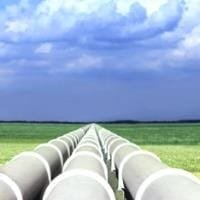
Gas supplies – secure gas – Photo EC
(BRUSSELS) – As the EU prepares for possible disruptions of gas supplies from Russia, Member States reached a political agreement Tuesday on a voluntary reduction of natural gas demand by 15 per cent this winter.
The Council regulation also foresees the possibility to trigger a ‘Union alert’ on security of supply, in which case the gas demand reduction would become mandatory.
The purpose of the gas demand reduction is to make savings ahead of winter in order to prepare for disruptions from a Russia intent on using energy supplies as a weapon.
The agreement was a reflection of the EU’s unity and solidarity, said Czech industry minister Jozef Sikela, for the EU presidency: “Today’s decision has clearly shown the member states will stand tall against any Russian attempt to divide the EU by using energy supplies as a weapon. Adopting the gas reduction proposal in record time has undoubtedly strengthened our common energy security. Saving gas now will improve preparedness.”
Member states agreed to reduce their gas demand by 15% compared to their average consumption in the past five years, between 1 August 2022 and 31 March 2023, with measures of their own choice.
Whereas all EU countries will use their best efforts to meet the reductions, the Council specified some exemptions and possibilities to request a derogation from the mandatory reduction target, in order to reflect the particular situations of member states and ensure that the gas reductions are effective in increasing security of supply in the EU.
The Council agreed that member states that are not interconnected to other member states’ gas networks are exempted of mandatory gas reductions as they would not be able to free up significant volumes of pipeline gas to the benefit of other member states. Member states whose electricity grids are not synchronised with the European electricity system and are heavily reliant on gas for electricity production are also exempted, in order to avoid the risk of an electricity supply crisis.
Member states can request a derogation to adapt their demand reduction obligations if they have limited interconnections to other member states and they can show that their interconnector export capacities or their domestic LNG infrastructure are used to re-direct gas to other member states to the fullest.
Member states can also request a derogation if they have overshot their gas storage filling targets, if they are heavily dependent on gas as a feedstock for critical industries or if their gas consumption has increased by at least 8% in the past year compared to the average of the past five years.
Member states agreed to increase the role of the Council in triggering a ‘Union alert’. The alert would be activated by a Council implementing decision, acting on a proposal from the Commission. The Commission shall present a proposal to trigger a ‘Union alert’ in case of a substantial risk of a severe gas shortage or an exceptionally high gas demand, or if five or more member states that have declared an alert at national level request the Commission to do so.
When choosing demand reduction measures, member states agreed they should prioritise measures that do not affect protected customers such as households and essential services for the functioning of society like critical entities, healthcare and defence. Possible measures include reducing gas consumed in the electricity sector, measures to encourage fuel switch in industry, national awareness raising campaigns, targeted obligations to reduce heating and cooling and market-based measures such as auctioning between companies.
Member states will update their national emergency plans that set out the demand reduction measures they are planning, and regularly report to the Commission on the advancement of their plans.
The regulation is an exceptional and extraordinary measure, foreseen to be for a limited time. It will apply for one year and the Commission is to carry out a review to consider its extension in light of the general EU gas supply situation by May 2023.
The agreed text will now be formally adopted through a written procedure. The written procedure will be launched and concluded in the days to come, following technical revisions of the text.
Commission proposal for a Council regulation on gas demand reduction
‘Save gas for a safe winter’ Commission communication
‘Save gas for a safe winter’ Commission communication annex
Energy prices and security of supply (background information)
How Russia’s war in Ukraine has impacted markets (background information)