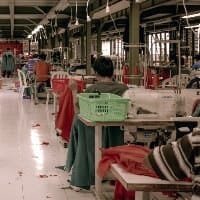
Textile workers – Photo by Rio Lecatompessy on Unsplash
(BRUSSELS) – The EU Commission published Wednesday a legislative proposal which will effectively prohibit the placing on the EU market of products made with forced labour, as well as their export from the EU.
An estimated 27.6 million people are in forced labour, in many industries and in every continent, with the majority of forced labour taking place in the private economy, while some is imposed by states.
National authorities will be empowered to withdraw from the EU market products made with forced labour, following an investigation. EU customs authorities will identify and stop products made with forced labour at EU borders.
“This proposal will make a real difference in tackling modern-day slavery, which affects millions of people around the globe,” said Trade Commissioner Valdis Dombrovskis: “Our aim is to eliminate all products made with forced labour from the EU market, irrespective of where they have been made.”
National authorities in the Member States will implement the prohibition through a robust, risk-based enforcement approach. In a preliminary phase, they will assess forced labour risks based on many different sources of information that together should facilitate the identification of risks and help focus their efforts. These may include submissions from civil society, a database of forced labour risks focusing on specific products and geographic areas, and the due diligence that companies carry out.
The authorities will start investigations on products for which there are well-founded suspicions that they have been made with forced labour. They can request information from companies and carry out checks and inspections, including in countries outside the EU. If national authorities find forced labour, they will order the withdrawal of the products already placed on the market, and prohibit to place the products on the market, and to export them. Companies will be required to dispose of the goods. The Member States’ customs authorities will be in charge of enforcement at the EU borders.
If the national authorities cannot gather all the evidence they require, for instance due to the lack of cooperation by a company or a non-EU state authority, they can take the decision on the basis of the available facts.
Competent authorities will apply the principles of risk-based assessment and proportionality throughout the process. On this basis, the proposal takes into account in particular the situation of small and medium-sized companies (SMEs). Without being exempted, SMEs will benefit from the specific design of the measure, i.e. competent authorities will consider the size and resources of the economic operators concerned and the scale of the risk of forced labour before initiating a formal investigation. SMEs will also benefit from support tools.
The Commission will also issue guidelines within 18 months from the entry into force of this Regulation. The guidelines will include forced labour due diligence guidance and information on risk indicators of forced labour. The new EU Forced Labour Product Network will serve as a platform for structured coordination and cooperation between competent authorities and the Commission.
The proposal now needs to be discussed and agreed by the European Parliament and the Council of the European Union before it can enter into force. It will apply 24 months after its entry into force.
Prohibition of products made by forced labour in the Union Market - guide
Proposal for a Regulation on prohibiting products made with forced labour on the Union market