Close Menu
    Latest Category
    • Finance
    • Tech
    • EU Law
    • Energy
    • About
    • Contact
    EUbusiness.com | EU news, business and politicsEUbusiness.com | EU news, business and politics
    Login
    • EU News
    • Focus
    • Guides
    • Press
    • Jobs
    • Events
    • Directory
    EUbusiness.com | EU news, business and politicsEUbusiness.com | EU news, business and politics
    Home » Green light for energy performance of buildings law

    Green light for energy performance of buildings law

    npsnps12 April 2024Updated:14 February 2025 focus
    — Filed under: Energy Environment EU News Headline
    Share
    Facebook Twitter LinkedIn Pinterest Email
    Green light for energy performance of buildings law

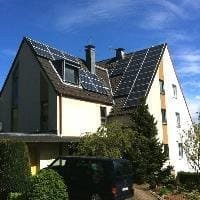
    Energy-efficient building

    (LUXEMBOURG) – The EU Council formally adopted a revised directive on the energy performance of buildings Friday, with the aim of helping to reduce greenhouse gas emissions and energy poverty in the EU.

    The revised directive sets ambitious targets to reduce the overall energy use of buildings, taking into account national specificities. It leaves to Member States which buildings to target and which measures to take.

    Each Member State will adopt its own national trajectory to reduce the average primary energy use of residential buildings, by 16% by 2030 and 20-22% by 2035. For non-residential buildings, they need to renovate the 16% worst-performing buildings by 2030 and the 26% worst-performing buildings by 2033. Member States are able to exempt certain categories of residential and non-residential buildings from these obligations, including historical buildings or holiday homes.

    Citizens will be supported in efforts to improve their homes. The Directive requires the establishment of one-stop shops for advice on building renovation and provisions on public and private financing will make renovation more affordable and feasible.

    The Directive is expected to reduce use of imported fossil fuels, and make ‘zero-emissions’ the standard for new buildings.

    All new residential and non-residential buildings must have zero on-site emissions from fossil fuels, as of 1 January 2028 for publicly-owned buildings and 1 January 2030 for all other new buildings, with a possibility for specific exemptions.

    The Directive contains new provisions to progressively phase-out fossil fuels from heating in buildings and boost the deployment of solar power installations, taking into account the national circumstances. Member States will also have to ensure new buildings are ‘solar ready’.

    Subsidies for the installation of stand-alone boilers powered by fossil fuels will not be allowed as of 1 January 2025. There will be a boost for uptake of sustainable mobility thanks to provisions on pre-cabling, recharging points for electric vehicles and bicycle parking spaces.

    To fight energy poverty and bring down energy bills, financing measures will have to incentivise and accompany renovations and be targeted in particular at vulnerable customers and worst-performing buildings, in which a higher share of energy-poor households live.

    The revised Directive will be published in the Official Journal of the Union and enter into force in the coming weeks. Member States will then have to transpose it into national legislation.

    Revised directive on the energy performance of buildings

    Revised Energy Performance of Buildings Directive (EPBD) - guide

    (adsbygoogle = window.adsbygoogle || []).push({});

    Add A Comment
    Leave A Reply Cancel Reply

    You must be logged in to post a comment.

    nps
    • Website

    Related Content

    Lawyer - Photo by Pavel Danilyuk on Pexels

    What You Need To Know About Inheriting a Business in the UK

    Mortgage advice - Photo by RDNE Stock project on Pexels

    Mortgage Rates Rise As Bridging Rates Fall

    Business conference - Image by SNCR GROUP from Pixabay

    The Hidden Workforce Behind Successful Business Events: Event Staffing Explained

    Psychiatrist - Photo by SHVETS production on Pexels

    Professional licensing evaluations: when careers depend on psychiatric opinions?

    Culture of fermentation and maturation

    The Value of Time – an analysis of maturation in products

    Lawyer - Photo by Pavel Danilyuk on Pexels

    How to Find the Right Litigation Solicitor for Your Legal Dispute

    LATEST EU NEWS
    Renewable energy - Image by Maria Maltseva from Pixabay

    47 pct of EU’s electricity came from renewables in 2025

    19 March 2026
    Henna Virkkunen - Photo © European Union 2026

    EU Inc. to boost startups and growth in Europe

    18 March 2026
    Bioeconomy - farmer ploughing field - Photo by Frank Molter © European Union 2017

    EU adopts strategy for sustainable bioeconomy

    17 March 2026
    Cargo Ship on Rhine River - Photo by Wolfgang Vrede on Pexels

    New state aid rules to boost sustainable transport in EU

    16 March 2026
    Fit pensioner - Photo by Centre for Ageing Better on Pexels

    EU life expectancy increases again to 81.5 years

    13 March 2026

    Subscribe to EUbusiness Week

    Get the latest EU news

    CONTACT INFO

    • EUbusiness, 117 High Street, Chesham Buckinghamshire, HP5 1DE, United Kingdom
    • +44(0)20 8058 8232
    • service@eubusiness.com

    INFORMATION

    • About Us
    • Advertising
    • Contact Info

    Services

    • Cookie Policy
    • Terms
    • Disclaimer

    SOCIAL MEDIA

    Facebook
    eubusiness.com © EUbusiness Ltd 2026

    Type above and press Enter to search. Press Esc to cancel.

    Manage Consent
    To provide the best experiences, we use technologies like cookies to store and/or access device information. Consenting to these technologies will allow us to process data such as browsing behavior or unique IDs on this site. Not consenting or withdrawing consent, may adversely affect certain features and functions.
    Functional Always active
    The technical storage or access is strictly necessary for the legitimate purpose of enabling the use of a specific service explicitly requested by the subscriber or user, or for the sole purpose of carrying out the transmission of a communication over an electronic communications network.
    Preferences
    The technical storage or access is necessary for the legitimate purpose of storing preferences that are not requested by the subscriber or user.
    Statistics
    The technical storage or access that is used exclusively for statistical purposes. The technical storage or access that is used exclusively for anonymous statistical purposes. Without a subpoena, voluntary compliance on the part of your Internet Service Provider, or additional records from a third party, information stored or retrieved for this purpose alone cannot usually be used to identify you.
    Marketing
    The technical storage or access is required to create user profiles to send advertising, or to track the user on a website or across several websites for similar marketing purposes.
    • Manage options
    • Manage services
    • Manage {vendor_count} vendors
    • Read more about these purposes
    View preferences
    • {title}
    • {title}
    • {title}

    Sign In or Register

    Welcome Back!

    Login to your account below.

    Lost password?