Close Menu
    Latest Category
    • Finance
    • Tech
    • EU Law
    • Energy
    • About
    • Contact
    EUbusiness.com | EU news, business and politicsEUbusiness.com | EU news, business and politics
    Login
    • EU News
    • Focus
    • Guides
    • Press
    • Jobs
    • Events
    • Directory
    EUbusiness.com | EU news, business and politicsEUbusiness.com | EU news, business and politics
    Home » Heightened drought risk threatens Europe’s environment and economy

    Heightened drought risk threatens Europe’s environment and economy

    npsnps11 October 2023
    — Filed under: Environment EU News
    Share
    Facebook Twitter LinkedIn Pinterest Email
    Heightened drought risk threatens Europe's environment and economy

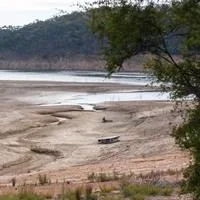
    Drought river – Image by Penny from Pixabay

    (BRUSSELS) – The European Drought Risk Atlas provides for the first time a comprehensive assessment and mapping of drought risks and impacts in the EU for a global warming of 1.5, 2 and 3 degrees.

    In recent years, droughts have significantly affected regions across the EU. However, accurate assessment and quantification of drought risks and their impacts had remained challenging due to the complex nature of these events. Droughts cannot be easily defined or predicted: they develop gradually, can occur outside of seasonal patterns, and may persist over extended periods.

    Thanks to an innovative approach, combining expert knowledge and machine learning, a first European Drought Risk Atlas offers a detailed and disaggregated view on the risks posed by droughts to our societies and ecosystems, as well as the underlying drivers of these risks.

    “Droughts affect all EU regions, with a huge impact on human life, our ecosystems, farming, jobs and transport,” said Research Commissioner Iliana Ivanova: “Mapping drought risk helps identify vulnerable areas, and anticipate and understand droughts. The Commission’s Joint Research Centre plays a major role in protecting citizens and our environment, thanks to the scientific and analytical work it continuously provides.”

    The Atlas reveals that the current levels of drought risk are significantly high, with average annual losses posing both economic and environmental threats. The Atlas aims to support the development and implementation of drought management and adaptation policies and actions across the EU.

    The increased frequency of droughts is shrinking the recovery window, leading to even more severe consequences, according to the Atlas. While climate change has already resulted in more intense and persistent meteorological droughts in southern Europe, it is expected that almost all the EU will be more affected by drought events with further global warming. More frequent and severe droughts affecting agriculture and ecosystems are projected to occur at 2 °C or above.

    The assessment focuses on five sectors and systems: agricultural crop systems, public water supply, energy production, river transportation, and ecosystems. The analysis integrated findings from literature, consultations with experts, and data-driven assessments for the 27 EU countries to assess the risks associated with drought.

    The Mediterranean region is most at risk due to a clear trend of increasing dry conditions caused by global warming. In particular, the Iberian Peninsula is under higher drought risk under both current and projected climate conditions.

    Northern regions may face more diverse and varying effects, including wetter yet more variable weather conditions, and an expected increase in the frequency and intensity of extremes. For some sectors such as agriculture and hydropower, a lower drought risk is expected, particularly in the Baltics.

    Eastern and western Europe may experience more complex effects due to the interplay between drying/wetting dynamics and precipitation variability. Notably, Romania already experiences relatively high drought risks, and projections show increased risk across several sectors. In France, the higher drought risk in the south is expected to be found also in the north as warming levels rise. Additionally, France is particularly vulnerable in terms of both nuclear and hydropower, with risks that are projected to significantly increase.

    Precision agriculture and water resource diversification policies can be integrated into sustainable adaptation strategies in the agricultural sector and bring benefits. Policies like the EU Water Reuse Regulation, in application since June 2023, can promote diversification of water resources, particularly in coastal areas where water is typically wasted.

    For public water supply, adaptation efforts need to focus on both water quality and quantity with the recast of the EU Drinking Water Directive holding a crucial role, thanks to updated water quality standards.

    The implementation of dry or hybrid cooling systems can reduce vulnerability of the energy system. For river transportation, a promising potential strategy for adaptation consists of adapting vessels to low flow and supply stock management.

    Forest management practices, such as shorter rotation cycles and appropriate mixing of tree species, may enhance resilience to drought in forest ecosystems. Buffer zones around designated ecosystems can aid in the adaptation of freshwater ecosystems.


    European Drought Risk Atlas

    Add A Comment
    Leave A Reply Cancel Reply

    You must be logged in to post a comment.

    nps
    • Website

    Related Content

    Clean drop of water - Image Pexels

    Water resilience is the next frontier for financial stability, warns WWF

    Sponsor: WWF7 May 2026
    Hydrogen - Image by Roman from Pixabay

    EU awards over €1 billion to European hydrogen projects

    Cyber-bullying - Photo by Faye Tsui on Pexels

    EU to simplify rules on AI, bans ‘nudification’ apps

    EEB logo

    Policy Officer for Chemicals, European Environmental Bureau, EEB

    Science Europe logo

    Policy Officer – R&I EU Legislation and Advocacy, Science Europe

    Roxana Mînzatu - Photo by Lukasz Kobus © European Union 2026

    EU looks to tackle poverty and homelessness

    LATEST EU NEWS
    Hydrogen - Image by Roman from Pixabay

    EU awards over €1 billion to European hydrogen projects

    7 May 2026
    Cyber-bullying - Photo by Faye Tsui on Pexels

    EU to simplify rules on AI, bans ‘nudification’ apps

    7 May 2026
    Roxana Mînzatu - Photo by Lukasz Kobus © European Union 2026

    EU looks to tackle poverty and homelessness

    6 May 2026
    Antonio Costa - Nikol Pashinyan - Ursula von der Leyen in Armenia - Photo © European Union 2026

    EU forges deeper economic, security ties with Armenia

    5 May 2026
    Deforestation - Photo by Annie Spratt on Unsplash

    EU presses on with deforestation law but exempts leather imports

    4 May 2026

    Subscribe to EUbusiness Week

    Get the latest EU news

    CONTACT INFO

    • EUbusiness, 117 High Street, Chesham Buckinghamshire, HP5 1DE, United Kingdom
    • +44(0)20 8058 8232
    • service@eubusiness.com

    INFORMATION

    • About Us
    • Advertising
    • Contact Info

    Services

    • Cookie Policy
    • Terms
    • Disclaimer

    SOCIAL MEDIA

    Facebook
    eubusiness.com © EUbusiness Ltd 2026

    Type above and press Enter to search. Press Esc to cancel.

    Manage Consent
    To provide the best experiences, we use technologies like cookies to store and/or access device information. Consenting to these technologies will allow us to process data such as browsing behavior or unique IDs on this site. Not consenting or withdrawing consent, may adversely affect certain features and functions.
    Functional Always active
    The technical storage or access is strictly necessary for the legitimate purpose of enabling the use of a specific service explicitly requested by the subscriber or user, or for the sole purpose of carrying out the transmission of a communication over an electronic communications network.
    Preferences
    The technical storage or access is necessary for the legitimate purpose of storing preferences that are not requested by the subscriber or user.
    Statistics
    The technical storage or access that is used exclusively for statistical purposes. The technical storage or access that is used exclusively for anonymous statistical purposes. Without a subpoena, voluntary compliance on the part of your Internet Service Provider, or additional records from a third party, information stored or retrieved for this purpose alone cannot usually be used to identify you.
    Marketing
    The technical storage or access is required to create user profiles to send advertising, or to track the user on a website or across several websites for similar marketing purposes.
    • Manage options
    • Manage services
    • Manage {vendor_count} vendors
    • Read more about these purposes
    View preferences
    • {title}
    • {title}
    • {title}

    Sign In or Register

    Welcome Back!

    Login to your account below.

    Lost password?