Close Menu
    Latest Category
    • Finance
    • Tech
    • EU Law
    • Energy
    • About
    • Contact
    EUbusiness.com | EU news, business and politicsEUbusiness.com | EU news, business and politics
    Login
    • EU News
    • Focus
    • Guides
    • Press
    • Jobs
    • Events
    • Directory
    EUbusiness.com | EU news, business and politicsEUbusiness.com | EU news, business and politics
    Home » Mobile card payment: revolutionising payments in a safe way

    Mobile card payment: revolutionising payments in a safe way

    npsnps24 November 2020Updated:4 July 2024
    — Filed under: Focus
    Share
    Facebook Twitter LinkedIn Pinterest Email

    The pandemic is heavily impacting businesses across Europe. From small to medium-sized, national or multinational firms. The impact is largely unknown as of yet, but when we look at restaurants and bars, we can already see major changes. What if these places can slowly open up after the second lockdown?

    To offer a safe environment for both customers and clients, mobile card payment should be through SumUp. Old payment terminals require to type in the cost price resulting in bacteria and viruses on the surface. How can we improve this?
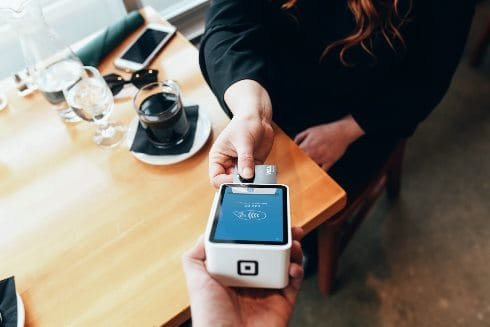
    Credit card payment - Photo by Blake Wisz on Unsplash

    Mobile card payment with a QR code

    Something that is already widespread across East Asia is the use of a QR code for payments. The cashier can type in the cost price (or this is generated automatically by the application) and a QR code appears. The customer can scan the code and pay directly with the preferred means of payment, such as debit card or PayPal. This limits the interaction and use of equipment and helps prevent the spread of the virus.

    Pricing

    When you decide to move forward with this payment method, you not only become more efficient put also save costs. The transaction cost is significantly lower than traditional payment terminals. This also makes it more attractive to handle smaller transactions, previously resulting in a very low margin. This helps shop owners in these difficult times while also providing a secure environment for visitors.

    What about a physical card?

    Good question. In the previous mobile card payment scenario, we expect visitors in the store to have a smartphone. Not only a smartphone, but also a payment method that they can utilise through their smartphone. In a less sophisticated scenario, it could make sense to have a payment method at hand that can be used by all customers.

    Mobile card reader to the rescue

    There is also an option to use a card reader. Traditionally, such a machine is hooked up to a payment system. However, nowadays, it can be easily integrated with a smartphone. Simply download an app on the phone and you can get started after registering. You can type in the amount on the smartphone and it is sent to the reader. Customers can then scan it contactless with their payment card. That’s it. Transaction fees are also low compared to those of payment terminals. A win-win for both parties involved. Another upside is the fact that no complex integration is needed and it can be used in any scenario and location, also outside or on a market.

    Get started today

    Start your payment journey and get paid remotely with SumUp. SumUp is a leading provider of online payments across Europe and can offer multiple payment methods. For example, it is possible to have a QR code method as well as a mobile card reader that can be used in combination with tablets and smartphones.

    Add A Comment
    Leave A Reply Cancel Reply

    You must be logged in to post a comment.

    nps
    • Website

    Related Content

    EUSPA logo

    Financial Officer, European Union Agency for the Space Programme, EUSPA

    Shopping mall - Image by Steve Buissinne from Pixabay

    The Single Market & European Retail Alliances: essential for lower prices and consumer choice

    Sponsor: EuroCommerce24 February 2026
    Sustainable finance - Image by Nattanan Kanchanaprat from Pixabay

    Final EU approval to reduce sustainability reporting requirements for companies

    Farm chemicals spraying -Photo by Ferencz Istvan on Pexels

    Brussels proposes to suspend duties on imported fertilisers for one year

    Office work - Photo by Arlington Research on Unsplash

    EU imported EUR 3.5 trillion-worth of services in 2024

    Ukraine Zelensky - Photo © European Union 2026

    EU stands firm in support for Ukraine on 4th anniversary of Russia’s invasion

    LATEST EU NEWS
    Sustainable finance - Image by Nattanan Kanchanaprat from Pixabay

    Final EU approval to reduce sustainability reporting requirements for companies

    24 February 2026
    Farm chemicals spraying -Photo by Ferencz Istvan on Pexels

    Brussels proposes to suspend duties on imported fertilisers for one year

    24 February 2026
    Office work - Photo by Arlington Research on Unsplash

    EU imported EUR 3.5 trillion-worth of services in 2024

    24 February 2026
    Ukraine Zelensky - Photo © European Union 2026

    EU stands firm in support for Ukraine on 4th anniversary of Russia’s invasion

    24 February 2026
    Trade in cars - Photo by Tom Fisk on Pexels

    EU trade in goods in Q4 2025 shows EUR 28.4 bn surplus

    18 February 2026

    Subscribe to EUbusiness Week

    Get the latest EU news

    CONTACT INFO

    • EUbusiness, 117 High Street, Chesham Buckinghamshire, HP5 1DE, United Kingdom
    • +44(0)20 8058 8232
    • service@eubusiness.com

    INFORMATION

    • About Us
    • Advertising
    • Contact Info

    Services

    • Privacy Policy
    • Terms
    • EU News

    SOCIAL MEDIA

    Facebook
    eubusiness.com © EUbusiness Ltd 2026

    Type above and press Enter to search. Press Esc to cancel.

    Sign In or Register

    Welcome Back!

    Login to your account below.

    Lost password?