Close Menu
    Latest Category
    • Finance
    • Tech
    • EU Law
    • Energy
    • About
    • Contact
    EUbusiness.com | EU news, business and politicsEUbusiness.com | EU news, business and politics
    Login
    • EU News
    • Focus
    • Guides
    • Press
    • Jobs
    • Events
    • Directory
    EUbusiness.com | EU news, business and politicsEUbusiness.com | EU news, business and politics
    Home » 90% on paper, lower than 85% in reality: ministers take a hatchet to climate target
    Environment

    90% on paper, lower than 85% in reality: ministers take a hatchet to climate target

    Sponsored By: WWF EU5 November 202504 Mins Read
    — Filed under: Press
    Share
    Facebook Twitter LinkedIn Pinterest Email

    Environment Ministers have agreed on a 2040 climate target: a 90% reduction in emissions in comparison to 1990. On paper, this might not sound too bad, but in reality, the reliance on international offsets up to 5% and the inclusion of an emergency break for carbon sinks could reduce the actual domestic target to lower than 85%.
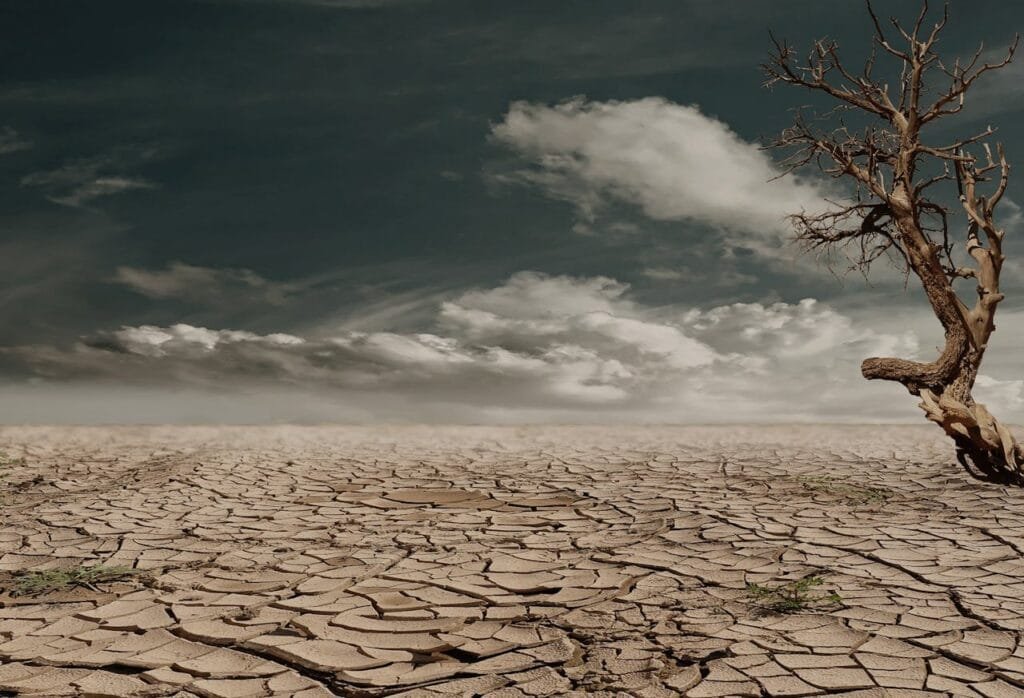
    Climate change - Photo by Pixabay

    Ministers also agreed on the EU’s Nationally Determined Contribution (NDC) for 2035, just ahead of COP30 in Belém. Sticking to the same range as the earlier ‘statement of intent’ (66.25%-72.5%), the EU has settled for too little too late, making no progress since their September meeting, only losing time and face. WWF emphasises that when a range is adopted, it is typically only the lower bound that is effectively pursued, meaning 66.25%.

    Offsets: cheap numbers, expensive consequences

    WWF welcomes the fact that EU leaders agreed on a 2040 climate proposal and NDC before COP30, avoiding showing up in Belém empty-handed. However, WWF warns that the EU’s decision to depend on international offsets threatens to hollow out the 2040 target. The European Scientific Advisory Board on Climate Change (ESABCC) has already pointed out that offsets should be additional to the domestic target, but the Commission and Member States have once again disregarded science.

    According to the ESABCC, only 16% of offsets have delivered genuine emissions reductions. But if they were high-quality offsets, they would be costly, and relying on them would divert investment from transforming the EU’s own industries, economy, and workers. On top of that, the Commission will assess the possibility for Member States to use a further 5% of such credits at Member States’ level, and Ministers want to delay introduction of the Emission Trading System (ETS) for buildings and road transport and push back the phase-out of free allowances under the ETS, weakening domestic climate action even more and sending the wrong signal to frontrunners.

    “Member States are claiming they have agreed on a 90% target, but that’s just sleight of hand. Once you strip off the offsets and the potential emergency break for carbon sinks, the real figure will be lower than 85%. The EU should lead by example, not by loophole,” said Michael Sicaud-Clyet, Climate Policy Officer at WWF EU.

    “Adding a review clause after five years only exacerbates the problem. It turns what should be a clear, stable path for investors and industries into a moving target. Targets are meant to set long-term direction, not to be constantly revised,” added Sicaud-Clyet.

    The Council text explicitly links this review clause to a potential review of the overall 2040 target if the estimated level of natural removals does not meet the expectations. WWF is concerned that it is giving Member States a get-out-of-jail free card to lower the target if they don’t do enough to protect their natural carbon sinks.

    Equally disappointing is the agreement to open the door to the inclusion of internal EU offsets within the EU ETS. The integration of permanent carbon removals in the EU ETS will undermine emissions reductions by deterring big polluters to reduce their emissions first. The integration of permanent removals poses a risk to the carbon price and is set to reduce Member States’ revenues. Even worse, the criteria for permanent removals that the Commission looks set to adopt are fundamentally flawed and will certify things that are not removals at all.

    Throwing nature removals under the bus

    The Council’s position wants to backtrack on carbon sinks. By refusing to acknowledge the root cause of the decline of natural removals, namely irresponsible harvesting practices, Member States want to allow themselves to fail without any consequences. The EU and its Member States would do better to remember that they have a legally binding international obligation to protect and enhance carbon sinks and reservoirs under the United Framework Convention on Climate Change, as reminded by the recent International Court of Justice’s advisory opinion delivered in July 2025.

    The ball is now in the European Parliament’s court, which will vote on its position later in November. WWF urges Members of the European Parliament to back a genuinely strong 2040 target: closing existing loopholes and excluding international offsets to ensure real emission reductions within the EU.


    Add A Comment
    Leave A Reply Cancel Reply

    You must be logged in to post a comment.

    eub2
    • Website

    eub2 is the default publisher for EUbusiness.

    Related Content

    European Council - Photo © European Union 2026

    EU leaders manage to avoid shooting themselves in the foot

    Sponsor: WWF21 March 2026
    Renewable energy - Image by Maria Maltseva from Pixabay

    47 pct of EU’s electricity came from renewables in 2025

    EUnited logo

    Environment & Sustainability Officer, European Engineering Industries Association, EUnited

    Pollution - Image by ivabalk from Pixabay

    Leading environmental NGOs warn: Deregulation push threatens Europe’s long-term competitiveness, security and public health

    Sponsor: WWF17 March 2026
    Bioeconomy - farmer ploughing field - Photo by Frank Molter © European Union 2017

    EU adopts strategy for sustainable bioeconomy

    Cargo Ship on Rhine River - Photo by Wolfgang Vrede on Pexels

    New state aid rules to boost sustainable transport in EU

    LATEST EU NEWS
    Fitto - Mînzatu - Photo © European Union 2026

    EUR 34.6 bn cohesion funds reallocated to EU’s strategic priorities

    25 March 2026
    Health research - Photo by National Cancer Institute on Unsplash

    Brussels awards EUR 617m to doctoral programmes

    25 March 2026
    Trade port cargo - Image by Pexels from Pixabay

    EU trade in goods with Australia in 2025

    25 March 2026
    Sefcovic - von der Leyen - Albanese - Photo © European Union 2026

    EU and Australia conclude talks on trade agreement

    24 March 2026
    Putin - Image by svklimkin from Pixabay

    Brussels renews support for exiled and relocated journalists in the EU

    23 March 2026

    Subscribe to EUbusiness Week

    Get the latest EU news

    CONTACT INFO

    • EUbusiness, 117 High Street, Chesham Buckinghamshire, HP5 1DE, United Kingdom
    • +44(0)20 8058 8232
    • service@eubusiness.com

    INFORMATION

    • About Us
    • Advertising
    • Contact Info

    Services

    • Cookie Policy
    • Terms
    • Disclaimer

    SOCIAL MEDIA

    Facebook
    eubusiness.com © EUbusiness Ltd 2026

    Type above and press Enter to search. Press Esc to cancel.

    Manage Consent
    To provide the best experiences, we use technologies like cookies to store and/or access device information. Consenting to these technologies will allow us to process data such as browsing behavior or unique IDs on this site. Not consenting or withdrawing consent, may adversely affect certain features and functions.
    Functional Always active
    The technical storage or access is strictly necessary for the legitimate purpose of enabling the use of a specific service explicitly requested by the subscriber or user, or for the sole purpose of carrying out the transmission of a communication over an electronic communications network.
    Preferences
    The technical storage or access is necessary for the legitimate purpose of storing preferences that are not requested by the subscriber or user.
    Statistics
    The technical storage or access that is used exclusively for statistical purposes. The technical storage or access that is used exclusively for anonymous statistical purposes. Without a subpoena, voluntary compliance on the part of your Internet Service Provider, or additional records from a third party, information stored or retrieved for this purpose alone cannot usually be used to identify you.
    Marketing
    The technical storage or access is required to create user profiles to send advertising, or to track the user on a website or across several websites for similar marketing purposes.
    • Manage options
    • Manage services
    • Manage {vendor_count} vendors
    • Read more about these purposes
    View preferences
    • {title}
    • {title}
    • {title}

    Sign In or Register

    Welcome Back!

    Login to your account below.

    Lost password?