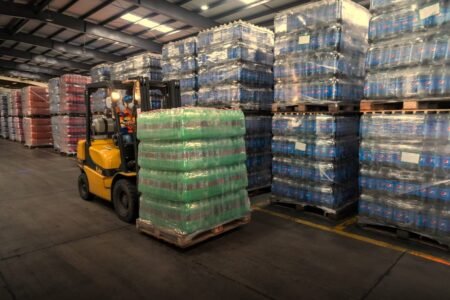
The European Commission has adopted new rules on recycling of single-use plastic beverage bottles made primarily of polyethylene terephthalate (PET bottles).

The rules – which form part of the Commission’s December 2025 plastics package – establish, for the first time, a methodology to calculate, verify and report chemically recycled content.
The new rules will ensure transparency in calculating recycled content in new single-use PET bottles. This is key to creating a level playing field and providing investment security for the plastic recycling sector, says the Commission. The new rules can be applied to any recycling technology, including chemical and mechanical recycling technologies. This will help Member States meet the recycled-content target set under the Single-Use Plastics Directive.
Mechanical recycling is currently the most widely used method for recycling plastics. This is typically used to sort, clean, shred and remold plastics into new products. However, some plastic waste streams cannot be effectively recycled mechanically. This includes for example plastic waste with food residues, additives and mixed materials which reduce recyclability. In these cases, chemical recycling can complement mechanical recycling. In contrast to mechanical recycling, chemical recycling breaks down plastics into smaller molecules, which can be reused for feedstocks for new plastics or other chemicals. This helps to return more plastic waste streams to the circular economy, including for products that have to meet high-quality standards like food-contact packaging.
In a first phase, the EU will count as recycled plastics material from the Union and EEA countries, where compliance with EU environmental rules can be fully verified. From 21 November 2027, recycled plastic from OECD countries will also count, unless excluded under the Waste Shipment Regulation. Also material from non-OECD countries will count when covered by arrangements ensuring equivalent standards related to human health and environmental protection requirements, for example in the Waste Framework Directive and the Packaging and Packaging Waste Regulation.
Recycled content is counted towards EU targets based on credible, traceable and environmentally sound standards.
The Implementing Act will be published in the Official Journal shortly and will enter into force 20 days later.
Package of measures to boost circular economy and plastic recycling (23 December 2025)
OECD Decision of the Council on the Control of Transboundary Movements of Wastes