
Close Menu
    Latest Category
    • Finance
    • Tech
    • EU Law
    • Energy
    • About
    • Contact
    EUbusiness.com | EU news, business and politicsEUbusiness.com | EU news, business and politics
    Login
    • EU News
    • Focus
    • Guides
    • Press
    • Jobs
    • Events
    • Directory
    EUbusiness.com | EU news, business and politicsEUbusiness.com | EU news, business and politics
    Home » Digital Fairness Act: retailers call for effective enforcement and proportionate rules
    SMEs in the EU

    Digital Fairness Act: retailers call for effective enforcement and proportionate rules

    Sponsored By: EuroCommerce12 November 202604 Mins Read
    — Filed under: Press
    Share
    Facebook Twitter LinkedIn Pinterest Email

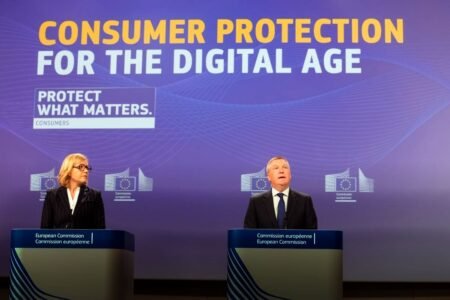
    Following the publication of the European Commission’s proposal for a Digital Fairness Act (DFA) and revision of the Consumer Protection Cooperation Regulation (CPC), Ecommerce Europe, EuroCommerce and Independent Retail Europe call on the co-legislators to focus on effective enforcement and genuine regulatory gaps, while avoiding unnecessary new burdens for compliant businesses.

    Ecommerce contactless payment - Photo by SumUp on Unsplash

    While the communication around the DFA proposal is focussing on gaming, influencers and social media, a significant part of the proposal will actually overburden retailers with complex and far-reaching rules and high compliance burdens. This seems to undermine the simplification agenda of the European Commission in other policy areas, according to the associations.

    Christel Delberghe, Director General of EuroCommerce, said: “Consumer trust is essential to a thriving Single Market. Consumers need to be able to rely on fair and transparent practices, while businesses need clear, simple and consistently enforced rules, that ensure fair competition. Yet the proposed DFA risks overburdening retailers at a time when they are already grappling with unfair competition from third-country operators and the need for substantial investments in digitalisation and sustainability.”

    The organisations have consistently stressed that effective enforcement should be at the centre of the EU’s approach to digital fairness. Their 2024 study, Digital Fairness in Online Retail, concluded that the existing framework is largely fit for purpose in addressing concerns around “dark patterns” and called for stronger enforcement and targeted adjustments rather than a major overhaul.

    The Digital Fairness Act proposal, however, marks a significant shift in EU consumer law contradicting the earlier statements of the Commission to focus on targeted and limited measures to improve consumer protection online. New rules should target demonstrated problems and avoid unnecessary complexity, in line with the EU’s wider simplification and competitiveness objectives.

    The organisations regret that the proposal does not address long-standing difficulties with the price reduction rules under Article 6a of the Price Indication Directive, which fragment the Single Market and limit businesses‘ ability to offer price reductions that benefit consumers. The organisations also regret the highly restrictive approach proposed for price comparisons which creates an uneven playing field and undermines widespread legitimate business models.

    Luca Cassetti, Secretary General of Ecommerce Europe, said: We are committed to finding solutions to the ongoing challenges, but we must also avoid adding layers of complexity for compliant businesses, particularly when the EU is committed to simplification and strengthening competitiveness.”

    Effective enforcement is essential to ensuring a level playing field in the Single Market. European retailers face unfair competition from non-EU based actors that do not comply with EU rules. The CPC revision therefore provides an opportunity to strengthen cross-border enforcement. A stronger role for the European Commission in cases of widespread infringements with a Union dimension can contribute to this objective, provided that its powers are clearly defined and proportionate.

    Alexis Waravka, Deputy Director General of Independent Retail Europe, said: “A level playing field requires the same rules to be effectively enforced for everyone selling to European consumers and that rules do not discriminate between types of business models. Strengthening enforcement against non-EU based actors flooding the market with non-compliant goods is essential, while any new obligations must remain proportionate. We do not believe the current proposal aligns with the Commission’s simplification agenda, and will mostly add disproportionate compliance costs on trustworthy retailers.”

    The three organisations will now carefully assess the proposals and their implications for European retailers. The ultimate test will be whether the reforms strengthen consumer trust and enforcement, while allowing European businesses to innovate, compete and continue offering consumers choice and value.


    About EuroCommerce:
    EuroCommerce is the principal European organisation representing the retail and wholesale sector. It embraces national associations in 28 countries and 5 million companies, including leading global players and many small businesses. Over a billion times a day, retailers and wholesalers distribute goods and provide an essential service to millions of businesses and individual customers. The sector generates 1 in 7 jobs, offering a varied career to 26 million Europeans, many of them young people. It also supports millions of further jobs throughout the supply chain, from small local suppliers to international businesses. EuroCommerce is the recognised European social partner for the retail and wholesale sector.

    Add A Comment
    Leave A Reply Cancel Reply

    You must be logged in to post a comment.

    eub2
    • Website

    eub2 is the default publisher for EUbusiness.

    Related Content

    Shopping for clothes - Photo by charlesdeluvio on Unsplash

    EU generated 2.3 million tonnes of textile waste in 2024

    Ecommerce - Photo by AS Photography on Pexels

    Digital Fairness Act: heavy compliance burden, very light simplification for SMEs

    Sponsor: SMEunited11 November 2026
    Henna Virkkunen, Michael McGrath - Photo © European Union 2026

    New EU rules on consumer fairness to protect consumers online

    E-commerce - Photo by Antoni Shkraba Studio on Pexels

    EU Council approves VAT simplification rules for online sales

    TikTok - Image by Stefan Coders from Pixabay

    TikTok’s ‘rabbit holes’ effect could breach EU internet rules

    Business finance - Photo by Towfiqu barbhuiya on Unsplash

    Commission Work Programme 2027: A simplification agenda that does not deliver for SMEs

    Sponsor: SMEunited4 November 2026
    LATEST EU NEWS
    Quantum computing - Photo by Brecht Corbeel on Unsplash

    EU awards €500 million to 48 teams tackling major scientific challenges

    12 November 2026
    Shopping for clothes - Photo by charlesdeluvio on Unsplash

    EU generated 2.3 million tonnes of textile waste in 2024

    12 November 2026
    European Parliament vote - Photo © European Union 2026 - source EP

    MEPs call for scrutiny of AI impact on democracy

    12 November 2026
    Tim Ayres, Ekaterina Zaharieva - Photo © European Union 2026

    Australia gains access to EU’s Horizon Europe research programme

    12 November 2026
    Budget - Image by Aleksei Alimenko on Pexels

    Council and Parliament reach agreement on 2027 EU Budget

    11 November 2026

    Subscribe to EUbusiness Week

    Get the latest EU news

    CONTACT INFO

    • EUbusiness, 117 High Street, Chesham Buckinghamshire, HP5 1DE, United Kingdom
    • +44(0)20 8058 8232
    • service@eubusiness.com

    INFORMATION

    • About Us
    • Advertising
    • Contact Info

    Services

    • Cookie Policy
    • Terms
    • Disclaimer

    SOCIAL MEDIA

    Facebook
    eubusiness.com © EUbusiness Ltd 2026

    Type above and press Enter to search. Press Esc to cancel.

    Manage Consent
    To provide the best experiences, we use technologies like cookies to store and/or access device information. Consenting to these technologies will allow us to process data such as browsing behavior or unique IDs on this site. Not consenting or withdrawing consent, may adversely affect certain features and functions.
    Functional Always active
    The technical storage or access is strictly necessary for the legitimate purpose of enabling the use of a specific service explicitly requested by the subscriber or user, or for the sole purpose of carrying out the transmission of a communication over an electronic communications network.
    Preferences
    The technical storage or access is necessary for the legitimate purpose of storing preferences that are not requested by the subscriber or user.
    Statistics
    The technical storage or access that is used exclusively for statistical purposes. The technical storage or access that is used exclusively for anonymous statistical purposes. Without a subpoena, voluntary compliance on the part of your Internet Service Provider, or additional records from a third party, information stored or retrieved for this purpose alone cannot usually be used to identify you.
    Marketing
    The technical storage or access is required to create user profiles to send advertising, or to track the user on a website or across several websites for similar marketing purposes.
    • Manage options
    • Manage services
    • Manage {vendor_count} vendors
    • Read more about these purposes
    View preferences
    • {title}
    • {title}
    • {title}

    Sign In or Register

    Welcome Back!

    Login to your account below.

    Lost password?