Close Menu
    Latest Category
    • Finance
    • Tech
    • EU Law
    • Energy
    • About
    • Contact
    EUbusiness.com | EU news, business and politicsEUbusiness.com | EU news, business and politics
    Login
    • EU News
    • Focus
    • Guides
    • Press
    • Jobs
    • Events
    • Directory
    EUbusiness.com | EU news, business and politicsEUbusiness.com | EU news, business and politics
    Home » Dieselgate: EU gains power over new car approvals

    Dieselgate: EU gains power over new car approvals

    npsnps9 December 2017
    — Filed under: Cars Environment EU News Headline1
    Share
    Facebook Twitter LinkedIn Pinterest Email
    Dieselgate: EU gains power over new car approvals

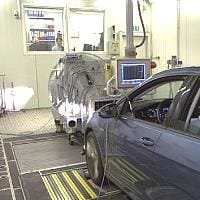
    Car emissions testing

    (BRUSSELS) – The EU institutions reached a provisional agreement Thursday on reform of type-approval and market surveillance for motor vehicles, raising the quality and independence of car type-approval and testing.

    According to the deal, Member States will have to carry out checks on at least one in every 40,000 newly registered vehicles, and 20 percent of those checks will have to include emissions tests.

    This follows the Dieselgate scandal, which demonstrated a need for strong EU oversight over national type-approval authorities. This is to ensure that European consumers enjoy the same level of protection across the EU.

    Audits will also help prevent national regulators giving their own car makers preferential treatment.

    Dieselgate revealed the weaknesses in Europe’s regulatory and market surveillance system, said Industry Commissioner Elzbieta Bienkowska: “We know that some car manufacturers were cheating and many others were exploiting loopholes. To put an end to this, we are overhauling the whole system. After almost two years of negotiations, I welcome that the key elements of our proposal have been upheld, including real EU oversight and enforcement powers. In the future, the Commission will be able to carry out checks on cars, trigger EU-wide recalls, and impose fines of up to €30,000 per car when the law is broken,” she said.

    The main building blocks of the new rules are:

    1. Raise the quality level and independence of type-approval and testing before a car is placed on the market:
      • Technical services will be regularly and independently audited, on the basis of stringent performance criteria, to obtain and maintain their designation by a Member State for testing and inspecting new car models. The Commission and other Member States will be able to challenge a designation when something is wrong.
      • National type-approval authorities will be subject to Commission audits to ensure that the relevant rules are implemented and enforced rigorously across the EU.
      • The Commission’s proposal to modify the remuneration system to avoid that technical services are paid directly by the manufacturer was not maintained.
    2. Increase checks of cars that are already on the EU market:
      • While the current type-approval rules deal mainly with ex ante controls of prototypes taken from the production line, in the future Member States will have to carry out regular spot-checks on vehicles already on their market and such results will be made publicly available.
      • All Member States will now be able to immediately take safeguard measures against non-compliant vehicles on their territory without having to wait for the authority that issued the type-approval to take action, as is currently still the case.
    3. European oversight:
      • In the future, the Commission will carry out market checks independently from Member States and will have the possibility to initiate EU-wide recalls. It will have the power to challenge the designation of technical services, and to impose administrative penalties on manufacturers or technical services of up to €30,000 per non-compliant car.
      • The Commission will lead a new enforcement forum to ensure a more uniform interpretation of relevant EU legislation, complete transparency on cases of non-compliance, and better and more coordinated market surveillance activities by Member States.

    The new Regulation maintains the current ban on defeat devices, which national authorities have a standing obligation to police and enforce, but goes a step further. In the future, car manufacturers will have to provide access to the car’s software protocols. This measure goes hand in hand with the Real Driving Emissions package, which will make it very difficult to circumvent emission requirements and includes an obligation for manufacturers to disclose their emissions reduction strategies, as is the case in the U.S.

    The preliminary political agreement reached by the European Parliament, Council and Commission in so-called trilogue negotiations is now subject to formal approval by the European Parliament and Council. The Regulation will then be directly applicable in all Member States and will become mandatory on 1 September 2020.

    FAQs: Proposal for a Regulation on the approval and market surveillance of motor vehicles, real driving emissions testing (27 January 2016)

    FAQs: EU action to curb air pollution by cars (31 August 2017)

    Add A Comment
    Leave A Reply Cancel Reply

    You must be logged in to post a comment.

    nps
    • Website

    Related Content

    Ursula von der Leyen - Antonio Costa -Ahmed al-Sharaa - Photo © European Union 2026

    Brussels proposes full resumption of EU-Syria Cooperation Agreement

    Trader

    Is the Euro Entering a Sustainable Recovery or Still Trapped Between Inflation and Growth Risk?

    EU agenda - Image by Andreas Lischka from Pixabay

    EU Agenda: Week Ahead – 13-18 April 2026

    Euro coins and notes - Photo by Pixabay

    Eurozone Economic Calendar

    Personal training

    The UK’s Musculoskeletal Crisis Is Costing the NHS Billions: Why Specialists Say Prevention Through Exercise Is the Answer

    Population commuters - Image by Pexels from Pixabay

    EU’s population projected to drop by 11.7pct by 2100

    LATEST EU NEWS
    Ursula von der Leyen - Antonio Costa -Ahmed al-Sharaa - Photo © European Union 2026

    Brussels proposes full resumption of EU-Syria Cooperation Agreement

    20 April 2026
    Population commuters - Image by Pexels from Pixabay

    EU’s population projected to drop by 11.7pct by 2100

    16 April 2026
    Google search - Photo by Firmbee.com on Unsplash

    Google must share search data with competitors, says EU

    16 April 2026
    BEAK UAV drone made by Origin Robotics - Photo by Gints Ivuskans © European Union 2025

    EU spends EUR 1.07 bn on 57 defence projects supporting European Readiness Flagships

    15 April 2026
    O'Sullivan - Minzatu - Photo © European Union 2026

    EU and UK take decisive step towards Erasmus+ association in 2027

    15 April 2026

    Subscribe to EUbusiness Week

    Get the latest EU news

    CONTACT INFO

    • EUbusiness, 117 High Street, Chesham Buckinghamshire, HP5 1DE, United Kingdom
    • +44(0)20 8058 8232
    • service@eubusiness.com

    INFORMATION

    • About Us
    • Advertising
    • Contact Info

    Services

    • Cookie Policy
    • Terms
    • Disclaimer

    SOCIAL MEDIA

    Facebook
    eubusiness.com © EUbusiness Ltd 2026

    Type above and press Enter to search. Press Esc to cancel.

    Manage Consent
    To provide the best experiences, we use technologies like cookies to store and/or access device information. Consenting to these technologies will allow us to process data such as browsing behavior or unique IDs on this site. Not consenting or withdrawing consent, may adversely affect certain features and functions.
    Functional Always active
    The technical storage or access is strictly necessary for the legitimate purpose of enabling the use of a specific service explicitly requested by the subscriber or user, or for the sole purpose of carrying out the transmission of a communication over an electronic communications network.
    Preferences
    The technical storage or access is necessary for the legitimate purpose of storing preferences that are not requested by the subscriber or user.
    Statistics
    The technical storage or access that is used exclusively for statistical purposes. The technical storage or access that is used exclusively for anonymous statistical purposes. Without a subpoena, voluntary compliance on the part of your Internet Service Provider, or additional records from a third party, information stored or retrieved for this purpose alone cannot usually be used to identify you.
    Marketing
    The technical storage or access is required to create user profiles to send advertising, or to track the user on a website or across several websites for similar marketing purposes.
    • Manage options
    • Manage services
    • Manage {vendor_count} vendors
    • Read more about these purposes
    View preferences
    • {title}
    • {title}
    • {title}

    Sign In or Register

    Welcome Back!

    Login to your account below.

    Lost password?