

The European Union and Indonesia have signed a comprehensive trade and investment deal, strengthening EU ties with Southeast Asia’s largest economy and fourth most populous country in the world.
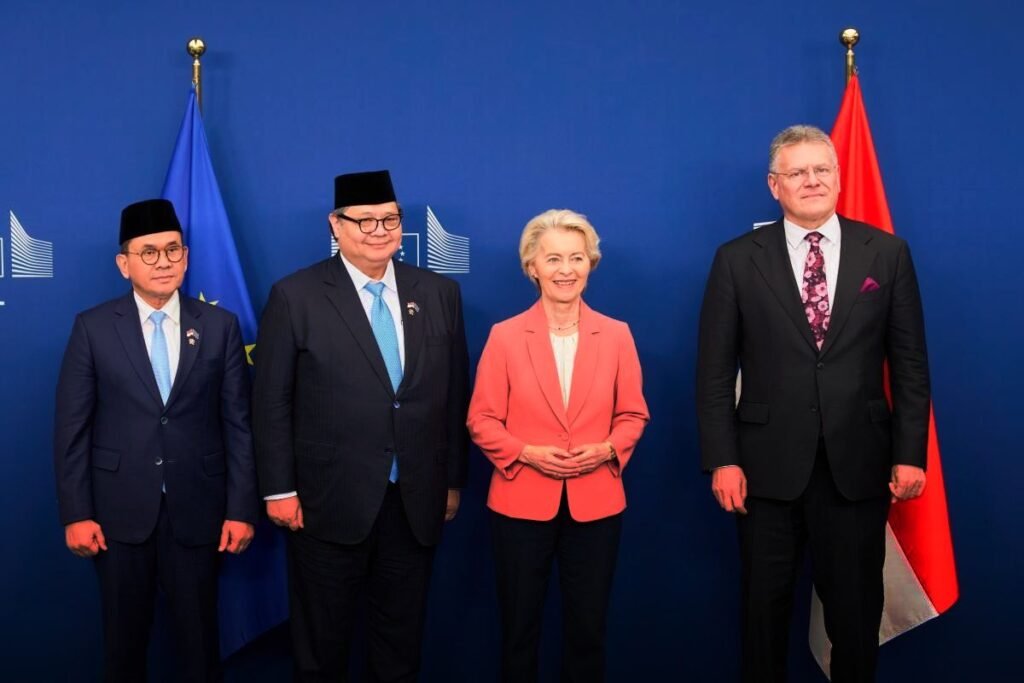
The Comprehensive Economic Partnership Agreement (CEPA), and Investment Protection Agreement (IPA) will create new opportunities for businesses on both sides and deliver significant economic benefits, according to the European Commission.
“This exciting new agreement with Indonesia shows that our global partners trust us and value what we have to offer”, said Commission president Ursula von der Leyen: “EU-Indonesia trade and investment has vast untapped potential. With these deals in place, we will make rapid progress on delivering real benefits for our peoples and businesses.”
EU exports to Indonesia are projected to increase by almost 40% within 15 years, with particularly strong gains in machinery, motor vehicles, and other metals. Indonesian exports of goods and services to the EU are expected to rise by more than 14% over the same period. This will boost economic growth, with the EU’s GDP projected to be €16 billion higher and Indonesia’s €27 billion higher than they would be without the agreement.
The agreements will notably:
- Remove import duties on 98.5% of tariff lines and simplify procedures on EU goods exports to Indonesia, including agrifood exports and key industrial products, helping EU exporters to save over €600 million a year in customs duties;
- Open up new opportunities for EU investments into Indonesia, notably in strategic sectors such as electric vehicles, electronics and pharmaceuticals;
- Allow EU companies to provide services with full ownership in key sectors such as computers services sectors and telecommunications;
- Protect European investments in Indonesia and vice versa against unjustified discrimination, expropriation, or denial of justice in local courts, while respecting each Party’s right to regulate within their territories;
- Ensure respect and fair compensation for intellectual property rights, including the protection of 221 EU geographical indications;
- Strengthen predictable, reliable and sustainable supply chains, including through reduced tariffs, facilitation of critical raw materials exports, environmental impact assessments and enhanced cooperation; and
- Support sustainable growth through a strong Trade and Sustainable Development chapter covering commitments on climate, the environment, workers’ rights and enforceability; setting the Paris Agreement as an essential element of the deal; and including mechanisms for cooperation and dialogue on regulatory and sustainability issues, as well as a dedicated Protocol on palm oil.
The two agreements now require the European Parliament’s consent. The Indonesian authorities are, in parallel, carrying out their own internal ratification procedures. Once the EU and Indonesia have concluded their internal procedures, the agreements will be provisionally applied, likely in early 2027.
EU and Indonesia conclude negotiations on free trade agreement