As catastrophic wildfires sweep across Southern Europe, WWF warns that the EU is sleepwalking into a permanent wildfire crisis while simultaneously weakening key environmental protections that help safeguard people, economies and nature from climate impacts.
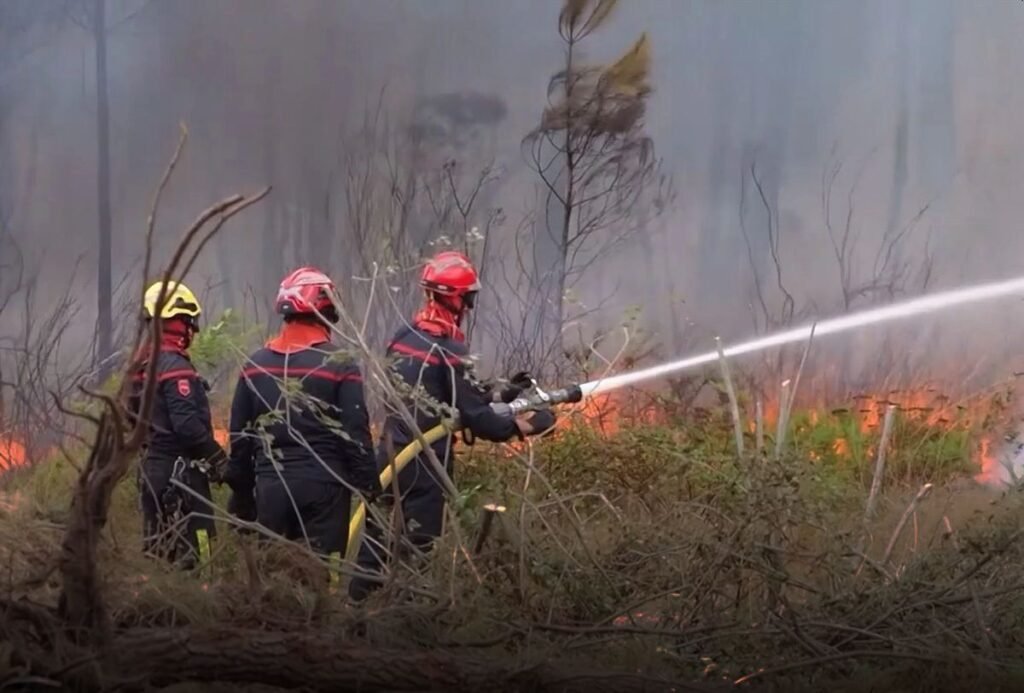
For years, scientists and public authorities have warned that Europe would experience longer fire seasons, more simultaneous outbreaks and increasingly severe wildfire events, and these warnings have become bitter reality. In 2026 alone, with more than 460,000 hectares already burned across the EU this year, well above historical averages. Recent studies have demonstrated that climate change made the extreme fire weather that fuelled these wildfires at least twice as likely in France and at least 20 times more likely in Spain.
Despite this, political efforts in Brussels and Member States are increasingly focused on weakening climate action and environmental safeguards, rather than strengthening the EU’s actions to reduce emissions and enhance climate resilience.
“Europe is burning – but while firefighters are desperately pouring water on the raging wildfires, our leaders are sitting in air-conditioned rooms debating how far they should water down EU climate and nature laws. The real question should be how to strengthen them to avoid future catastrophes,” said Anke Schulmeister‑Oldenhove, Manager, Forests at the WWF EU. “Every hectare burned, every community evacuated and every ecosystem destroyed is a reminder that climate change is not a future threat, but a present-day reality. The worst possible response is to dismantle the very policies designed to cut emissions, build the resilience of natural ecosystems and restore natural defences.”
Although most wildfires are triggered by human activity, climate change is dramatically increasing the likelihood, intensity and scale of fires through hotter temperatures, more frequent heatwaves and prolonged droughts. At the same time, deteriorating ecosystems, shrinking wetlands, degraded forests, monoculture plantations and decades of unsustainable land-use decisions have made many parts of Europe more vulnerable to extreme fires.
The result is a vicious cycle: climate change drives more destructive fires; fires release millions of tonnes of greenhouse gas emissions; and weakened ecosystems become less able to absorb carbon, retain water, withstand fires, and protect communities from future disasters.
“Europe cannot extinguish its way out of the wildfire crisis. Wildfire policy must move beyond emergency response and towards prevention, resilience and landscape-level planning, as the European Commission has acknowledged in its recent communication. However, this is only possible with stronger implementation of climate and nature legislation and substantial investment in ecosystem restoration and nature-based solutions,” said Edoardo Nevola, Global Fire Community Lead at WWF International.
WWF calls for the EU and Member States to:
- Fully implement the Nature Restoration Regulation to ensure the recovery of biodiverse and resilient nature across the EU. By 2030, 20% of the EU’s land rea needs to be restored.
- Protect and restore wetlands, peatlands, rivers, natural forests and other ecosystems that act as natural fire breaks and retain moisture in landscapes.
- Ensure the upcoming European Framework for Climate Resilience places nature-based solutions at the heart of climate adaptation planning and incentivises forest and land use practices that protect biodiversity and increase habitat resilience.
- Strengthen rather than weaken implementation of the Birds and Habitats Directives, which remain essential for maintaining healthy, connected and resilient ecosystems.
- Redirect public investment towards more resilient landscapes, prevention, restoration and community preparedness instead of overwhelmingly prioritising suppression after disaster strikes.
- Speed-up the phase-out of fossil fuels and deliver a rapid transition to an electrified renewable-based energy system in order to tackle climate change.
- Set an ambitious carbon dioxide removal target for the land use sector by 2040 to drive the protection and restoration of carbon rich ecosystems such as wetlands and forests, reducing wildfires risk, safeguarding carbon stock, and increasing resilience.
“If policy-makers continue to treat climate mitigation, adaptation, ecosystem restoration and biodiversity protection as optional, Europe will pay the price every summer,” said Sofia Ghezzi, Policy Officer on Climate and Land Use at WWF EU. “Wildfires are not just a forestry issue. They are a climate issue, a biodiversity issue, a water security issue and a public safety issue. Healthy ecosystems and ambitious climate policies are Europe’s first line of defence against escalating disasters. Leaders who weaken them are weakening Europe’s resilience.”
European Commission Communication on integrated wildfire risk management (March 2026)