Close Menu
    Latest Category
    • Finance
    • Tech
    • EU Law
    • Energy
    • About
    • Contact
    EUbusiness.com | EU news, business and politicsEUbusiness.com | EU news, business and politics
    Login
    • EU News
    • Focus
    • Guides
    • Press
    • Jobs
    • Events
    • Directory
    EUbusiness.com | EU news, business and politicsEUbusiness.com | EU news, business and politics
    Home » Developing countries’ exports boosted by EU trade preferences

    Developing countries’ exports boosted by EU trade preferences

    npsnps12 February 2020Updated:25 June 2024
    — Filed under: EU News Headline1 Trade
    Share
    Facebook Twitter LinkedIn Pinterest Email
    Developing countries' exports boosted by EU trade preferences

    Image by marissaorton

    (BRUSSELS) – Exports to the EU from developing countries using special tariff preferences under the EU’s Generalised Scheme of Preferences reached a new high of EUR 69 billion in 2018, a report said Monday.

    According to a European Commission’s report published every two years on the GSP, released Monday, exports to the EU from the 71 GSP beneficiary countries increased to almost €184 billion. Nearly €69 billion of these used GSP special preferences.

    “Through the EU’s Generalised Scheme of Preferences, we support developing countries to grow and advance in a sustainable way, not least when it comes to climate action,” said the EU’s foreign policy chief Josep Borrell: “Our preferential trade tariffs help to take thousands out of poverty, to reduce inequalities, and to bring economic growth.”

    While Trade Commissioner Phil Hogan said: “Thanks to our trade preferences, the EU imports twice as much from least developed countries as the rest of the world does. This trademark tool of the EU’s trade policy underpins millions of jobs in the world’s poorest countries and acts as an incentive to countries to implement international conventions on human rights, labour rights, good governance and the environment.”

    The Generalised Scheme of Preferences removes import duties on developing countries’ exports to the EU. By creating additional export opportunities, it helps the countries to tackle poverty and create jobs while also respecting sustainable development principles.

    For instance, this latest report shows that, thanks to the GSP, countries like Sri Lanka, Mongolia and Bolivia are more effectively tackling child labour.

    The EU’s trade agenda contributes to the United Nations Sustainable Development Goals around the world. The preferences provide beneficiary countries with an incentive to take further steps towards effectively implementing international conventions related to human rights, labour rights, environment and good governance.

    Challenges remain in many of the 71 GSP beneficiary countries, says the EU executive, including when it comes to restrictions on civil society and freedom of the media, access to justice, minorities’ rights, capital punishment and freedom of association. Insufficient progress, including in some of the largest beneficiaries, has resulted in the EU increasing its monitoring and enhancing its engagement, in particular regarding human rights and labour rights. In the case of Cambodia, this has led to the EU initiating the procedure to temporarily withdraw preferences because of the serious and systematic violation of the principles of core United Nations and International Labour Organization conventions.

    The report looks at the extent to which GSP countries make the most of the scheme. It also examines a number of overarching issues such as the freedom of civil society to operate, progress on tackling child labour, and environmental and good governance concerns. The report gives examples of how the EU works with all stakeholders, such as civil society, international organisations – in particular the United Nations and International Labour Organization monitoring bodies – and beneficiary country authorities to make GSP more effective and to make sure that trade and values advance simultaneously.

    EU industry is an important partner in making sustainable development a reality by investing and producing in, and sourcing from, GSP countries and by ensuring that international labour and environmental standards are met.

    The EU’s GSP has three arrangements:

    • A General Arrangement for low and lower-middle income countries, providing the partial or full removal of customs duties on two-thirds of tariff lines (15 beneficiaries);
    • GSP+ is a special incentive arrangement for sustainable development and good governance. It slashes these same tariffs to 0% for vulnerable low and lower-middle income countries that implement 27 international conventions related to human rights, labour rights, protection of the environment and good governance (8 beneficiaries);
    • EBA (Everything But Arms) is a special arrangement for least developed countries, giving them duty-free, quota-free access for all products except arms and ammunition (48 beneficiaries).

    Key facts

    Report on the Generalised Scheme of Preferences

    GSP+ assessment for Armenia, Bolivia, Cabo Verde, Kyrgyzstan, Mongolia, Pakistan, Paraguay, Philippines, Sri Lanka and a report on an enhanced engagement with Bangladesh, Cambodia and Myanmar

    Generalised Scheme of Preferences (GSP)

    Add A Comment
    Leave A Reply Cancel Reply

    You must be logged in to post a comment.

    nps
    • Website

    Related Content

    Business Growth

    How to get your business ready for expansion

    EU agenda - Image by Andreas Lischka from Pixabay

    EU Agenda: Week Ahead – 4-9 May 2026

    Euro coins and notes - Photo by Pixabay

    Eurozone Economic Calendar

    Casino - Image by Mariakray from Pixabay

    How Is Business Looking for Netherlands iGaming Brands? Compared to Other Key EU Countries

    Single market - lorry delivery - Image by Maickel Althuizen from Pixabay

    Better regulation starts with putting the ‘Think Small First’ principle into practice

    Sponsor: SMEunited30 April 2026
    Sustainable finance - Image by Nattanan Kanchanaprat from Pixabay

    Largest companies in France still unprepared for nature transition, finds WWF

    Sponsor: WWF30 April 2026
    LATEST EU NEWS
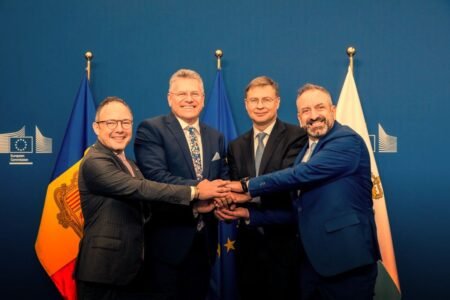
    Mercosur signing - Maros Sefcovic - Photo © European Union 2026

    EU-Mercosur interim trade deal to enter into provisional application

    30 April 2026
    Pet dog at vet - Image by Tima Miroshnichenko on Pexels

    Green light for first EU rules to protect cats and dogs

    28 April 2026
    Rice sacks trade - Image by Thilina Alagiyawanna on Pexels

    Renewed EU trade instrument for development set for 2027

    28 April 2026
    Artificial intelligence - Image by Kohji Asakawa from Pixabay

    Brussels consults on Google measures to give Android users choice on AI services

    28 April 2026
    Car crash - Image by Rico Lob from Pixabay

    Road fatalities in the EU down 2.2 pct in 2024

    27 April 2026

    Subscribe to EUbusiness Week

    Get the latest EU news

    CONTACT INFO

    • EUbusiness, 117 High Street, Chesham Buckinghamshire, HP5 1DE, United Kingdom
    • +44(0)20 8058 8232
    • service@eubusiness.com

    INFORMATION

    • About Us
    • Advertising
    • Contact Info

    Services

    • Cookie Policy
    • Terms
    • Disclaimer

    SOCIAL MEDIA

    Facebook
    eubusiness.com © EUbusiness Ltd 2026

    Type above and press Enter to search. Press Esc to cancel.

    Manage Consent
    To provide the best experiences, we use technologies like cookies to store and/or access device information. Consenting to these technologies will allow us to process data such as browsing behavior or unique IDs on this site. Not consenting or withdrawing consent, may adversely affect certain features and functions.
    Functional Always active
    The technical storage or access is strictly necessary for the legitimate purpose of enabling the use of a specific service explicitly requested by the subscriber or user, or for the sole purpose of carrying out the transmission of a communication over an electronic communications network.
    Preferences
    The technical storage or access is necessary for the legitimate purpose of storing preferences that are not requested by the subscriber or user.
    Statistics
    The technical storage or access that is used exclusively for statistical purposes. The technical storage or access that is used exclusively for anonymous statistical purposes. Without a subpoena, voluntary compliance on the part of your Internet Service Provider, or additional records from a third party, information stored or retrieved for this purpose alone cannot usually be used to identify you.
    Marketing
    The technical storage or access is required to create user profiles to send advertising, or to track the user on a website or across several websites for similar marketing purposes.
    • Manage options
    • Manage services
    • Manage {vendor_count} vendors
    • Read more about these purposes
    View preferences
    • {title}
    • {title}
    • {title}

    Sign In or Register

    Welcome Back!

    Login to your account below.

    Lost password?