The European Commission has sent the final text of the controversial EU-Mercosur trade deal to the EU Member States and the European Parliament, paving the way for the crucial ratification stage.
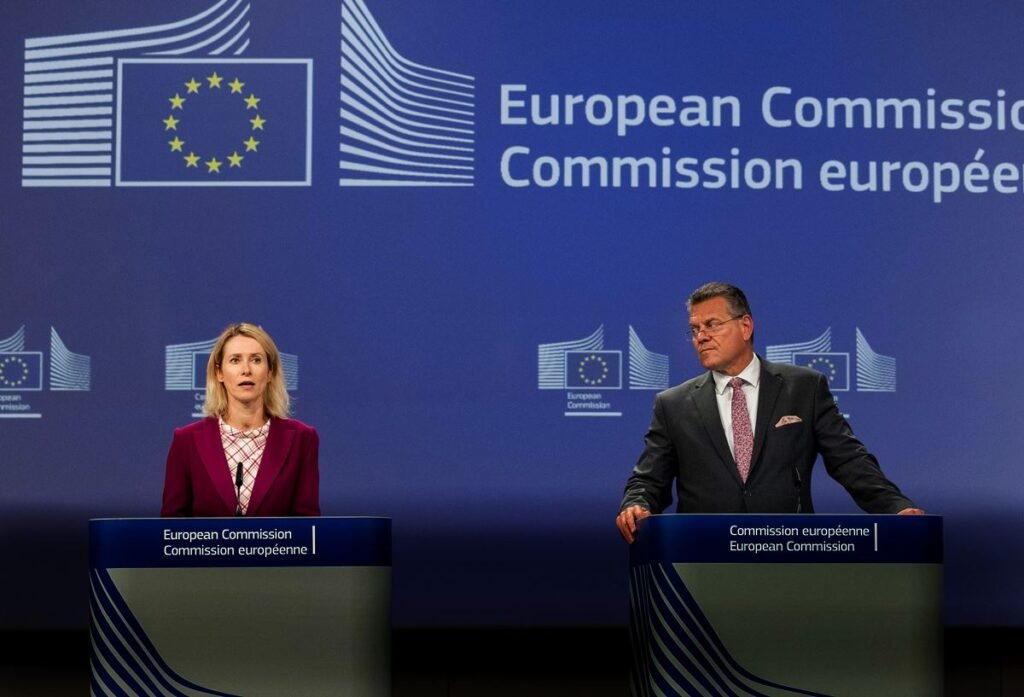
With the political agreement with the Mercosur countries including Brazil, Argentina, Paraguay and Uruguay reached in December, the EU executive is now looking to side-step protests by farmers, a public backlash to the deal, and clear opposition of several EU countries by splitting the trade pillar of the deal, separate from the political part, into a so-called interim trade deal.
With the splitting, approval of the EU-Mercosur trade deal only requires a qualified majority in the European Council and then a majority in the European Parliament. Member states are no longer able to veto it, and parliaments at the national level have no say on the ratification of the deal.
The Commission says the partnerships will create billions of euro’s worth of export opportunities for EU companies of all sizes, contribute to economic growth and competitiveness, support hundreds of thousands of European jobs, and promote EU interests and values.
The deal with Argentina, Brazil, Paraguay and Uruguay (EU-Mercosur Partnership Agreement) will create the world’s biggest free trade zone, covering a market of over 700 million consumers. The Commission says EU firms will enjoy first-mover advantage, benefitting from lower tariffs in a region where most other countries face high tariffs and other barriers to trade.
It is estimated the agreement can increase EU annual exports to Mercosur by up to 39% (€49 billion) supporting more than 440,000 jobs across Europe. It will reduce often prohibitive Mercosur duties for EU exports, including on key industrial products, such as cars (currently 35%), machinery (14-20%), and pharmaceuticals (up to 14%).
The Commission claims EU agri-food exports to Mercosur are expected to grow by almost 50%, as the deal reduces high tariffs on key EU agri-food products, notably wine and spirits (up to 35%), chocolate (20%), and olive oil (10%).The deal will also support growth in exports of traditional, high-quality EU agri-food products. It will also put an end to unfair competition by Mercosur products that imitate authentic EU products by protecting 344 EU Geographical Indications.
The deal, it adds, provides protection for EU sensitivities in the agricultural sector. First, it limits preferential agri-food imports from Mercosur to a fraction of EU production (for example, 1.5% for beef and 1.3% for poultry). Second, it establishes robust safeguards protecting sensitive European products against any harmful surge in imports from Mercosur. In this sense, the Commission proposes to supplement the agreement with a legal act that operationalises the bilateral safeguards chapter of the EMPA. This act, to be adopted by the European Parliament and the Council, aims in particular at protecting EU’s crucial and most sensitive agricultural sectors, recognising the concerns of European farmers. The Commission says it will address the issue with Mercosur countries with a view to ensuring smooth implementation of the Agreement.
The new agreement will further support economic growth and boost competitiveness on both sides. Mexico is one of the EU’s longest standing trading partners and second biggest trading partner in Latin America, with the original agreement dating back to 2000. The EU exports over €70 billion’s worth of goods and services to Mexico every year under the existing trade deal, supporting over 630,000 EU jobs.
Mexico is a net food importing country, therefore the agreement will strongly benefit EU agriculture exporters. The modernised EU-Mexico agreement will remove the remaining prohibitive tariffs on EU agri-food exports to Mexico, such as cheese, poultry, pork, pasta, apples, jams as well as chocolate and wine. Removing these tariffs, which currently go up to 100% on certain EU exports, will make EU agricultural products much more competitive in Mexico.
Factsheets
- Factsheet key facts about the agreement
- Factsheet on Agriculture
- Factsheet on Food Safety
- Factsheet on Sustainable Development
- Factsheet on Critical Raw Materials
- Factsheet on Services
- Factsheet on Facts and Figures
- Factsheets on benefits to EU Member States
EU-Mexico Modernised Global Agreement
Factsheets:
- Factsheet on General benefits
- Factsheet key trade data (Infographic)
- Factsheet on Agriculture
- Factsheet on Critical raw materials
- Factsheet on Sustainability