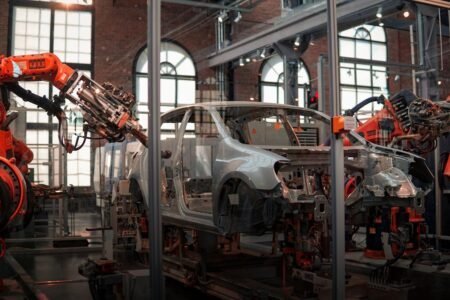
While modern and often successful, European business and industry knows it cannot afford to rest on their laurels. It is a constant challenge to remain competitive, and keep up with technology, and the pace of growth in competing countries. Meeting the challenge successfully is essential for sustainable growth and for our greater prosperity. EU enterprise policy plays its part by fostering innovation, entrepreneurship and competitiveness in manufacturing and services.
Advertisement
The European Union’s enterprise and industry policy aims to ensure all businesses compete and trade on fair and equal terms, that Europe is an attractive place to invest and work, and that growth is in knowledge-based and innovative industries. This requires a sound industrial fabric across the EU, so that – without being interventionist – the policy takes specific needs and characteristics of individual sectors, such as the food, fashion and design, and IT industries, into account and makes sure that strategically important industries, such as aerospace, defence, mechanical engineering, chemicals, the life sciences and biotechnology, can flourish.
Remaining internationally competitive
Particular attention is paid to creating conditions that enable EU businesses to compete on equal terms with the rest of the world. This includes protecting their intellectual and industrial property against counterfeiting and piracy. It means ensuring that they are not overburdened with regulation or excessive costs while at the same time adhering to high energy, environmental and social standards. Simplification of existing EU legislation, which has often been built up piecemeal over several decades, is another priority. Another element in the equation is deregulation: adequate and non-discriminatory access at the best price possible to key business support services, such as communications, transport and utilities.
Technology and innovation are key factors in creating an environment for industrial enterprise. The EU funds large amounts of research, finances entrepreneurship, encourages public-private partnerships in order to make the most of what the private and public sectors have to offer and organises technological platforms. It also plans to set up a European Technology Institute.
The EU does not take a protectionist or inward-looking approach to meeting these challenges. The basic premise is that sheltering industry from change would only postpone the inevitable and make it costlier and more painful in the long run. What the EU does is to try to anticipate structural change, create a climate which promotes the innovation for meeting the challenge and – where adjustment is needed – then cushion the impact as much as realistically possible for both employer and employee.
Enterprise policy emphasises the need to integrate policies as diverse as trade, research, the internal market, employment and training, the information society, regional development and taxation – without overlooking the importance of the environment, so that they boost the use of knowledge and innovation across EU industry as a whole. The overriding goals are to remove obstacles to competition, prevent new barriers going up in member states, and limit and improve regulation in the interests of job creation and growth.
Product regulation only where strictly necessary
Sometimes, barriers to intra-EU trade are dismantled through common product standards, if mandatory product requirements are essential for protecting public health, the consumer or the environment. In other cases, producers are left free to decide what technology to use, providing the end-result is a safe product. The “CE” mark on products provides the authorities and consumers with reassurance that appropriate standards have been met, whether goods are produced in the EU or imported.
Only in exceptional cases, e.g. pharmaceuticals, is upfront approval needed before a product can be put on to the market. The process of obtaining the approvals needed to sell in more than one country is facilitated by the option of applying through the European Medicines Evaluation Agency in London.
Strict rules also apply to some chemicals. These rules are currently being streamlined to achieve a better balance between the need for enterprise to be competitive and for the products not to endanger health or the environment. The plan is to list all chemical substances in a single database and improve risk evaluation though a system called REACH – Registration, Evaluation, and Authorisation of Chemicals, managed by a European Chemicals Agency in Helsinki.
SMEs are the backbone of EU enterprise
The EU’s 23 million small and medium-sized businesses (SMEs) are the backbone of EU enterprise, accounting for 75 million jobs and 99% of all enterprises. Based on its principle of “think small first”, the EU has specific programmes which make it easier for SMEs to participate in EU-funded research and innovation projects. In addition, the rules on state aid and other forms of funding are more generous for SMEs than for large firms.
The policy priorities are to promote entrepreneurship and skills, improve SMEs’ access to markets (including public sector contracts), cut red tape, improve SMEs’ growth potential (by boosting their capacity for research and innovation), strengthening dialogue and consultation, and keeping SME needs in mind whenever formulating any policy.
The Innovation Relay Centre network in 32 European countries and Chile, which is part-funded by the Commission, helps SMEs find partners for research and innovation projects. Euro Info Centres in 45 countries, including the United States, provide information on policies and opportunities which target SMEs.
Through its Entrepreneurship Action Plan, the Commission is:
- promoting a more entrepreneurial mindset,
- encouraging education in schools about the values of entrepreneurship,
- promoting improvements in social security for small businesses,
- encouraging more people to set up businesses,
- providing tailor-made support for women and ethnic minorities,
- helping SME’s grow and become more competitive, improving the flow of finance and creating a more SME-friendly environment.
The Commission works closely with the European Investment Bank in encouraging small business growth, particularly in the countries which joined the EU in 2004.
Sustainability is crucial
Sustainability is never lost sight of. For example, Europe is the world’s most visited tourism region. This calls for a response that does not throttle the development of a major service industry or prevent people taking the holiday of their choice, but protects natural resources and the environment, so that the development of tourist sites does not destroy the very heritage on which the industry is built.
Sustainable growth is not just a matter for EU policymakers. Each enterprise is responsible for having socially and environmentally responsible policies, and the European Commission has given its backing to the European Alliance for Corporate Social Responsibility.
EU Enterprise policy web links
European Commission Enterprise and Industry DG
Information for business
Innovation and SME Programme
EU funding opportunities in the field of Enterprise
Access to Finance for european Small and medium-sized enterprises (SMEs)
Summaries of EU Legislation in Force: Enterprise Policy
Recent case-law of the Court of Justice and the Court of First Instance : EU industrial policy
Further information on EU Enterprise Policy on Europa