
Close Menu
    Latest Category
    • Finance
    • Tech
    • EU Law
    • Energy
    • About
    • Contact
    EUbusiness.com | EU news, business and politicsEUbusiness.com | EU news, business and politics
    Login
    • EU News
    • Focus
    • Guides
    • Press
    • Jobs
    • Events
    • Directory
    EUbusiness.com | EU news, business and politicsEUbusiness.com | EU news, business and politics
    Home » European Parliament powers

    European Parliament powers

    eub2eub228 April 2014 europarl
    Share
    Facebook Twitter LinkedIn Pinterest Email
    — last modified 28 April 2014

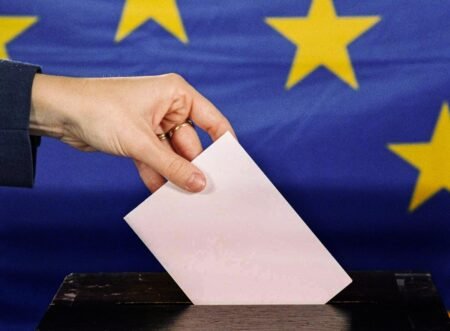
    The European Parliament (EP) is the assembly of the representatives of the 500 million Union citizens. Since 1979 they have been elected by direct universal suffrage. The Lisbon Treaty set the total number of EP seats to 751. The number of MEPs per country is set by a European Council decision adopted unanimously on the EP proposal. No country may now have less than 6 or more than 96 MEPs.


    Advertisement


    The European Parliament has been steadily gaining power over recent decades and now acts as a co-legislator for nearly all EU law.

    Together with the Council, the Parliament adopts or amends proposals from the Commission.

    Parliament also supervises the work of the Commission and adopts the European Union’s budget.

    Beyond these official powers the Parliament also works closely with national parliaments of EU countries.

    Regular joint parliamentary assemblies allow for a better inclusion of national perspectives into the Parliament’s deliberations.

    The European Parliament’s main functions are as follows:

    • Legislative power: in most cases Parliament shares the legislative power with the Council, in particular through the ordinary legislative procedure.
    • Budgetary power: Parliament shares budgetary powers with the Council in voting on the annual budget, rendering it enforceable through the President of Parliament’s signature, and overseeing its implementation
    • Power of control over the Union’s institutions, in particular the Commission. Parliament can give or withhold approval for the designation of Commissioners and has the power to dismiss the Commission as a body by passing a motion of censure. It also exercises a power of control over the Union’s activities through the written and oral questions it can put to the Commission and the Council. And it can set up temporary committees and committees of inquiry whose remit is not necessarily confined to the activities of European institutions but can extend to action taken by the Member States in implementing European policies.

    The Lisbon Treaty strengthens the role of the European Parliament by placing it on an equal footing with the Council of Ministers. Namely, the Lisbon Treaty:

    • extends the ordinary legislative procedure (ordinary legislative procedure) to 40 new fields including agriculture, energy security, immigration, justice and home affairs, health and structural funds;
    • reinforces the role of the Parliament in the adoption of the EU budget. The distinction between ‘compulsory’ and ‘non compulsory’ expenditure is abandoned. The European Parliament is now responsible for the adoption of the entire budget together with the Council;
    • enables MEPs to give their consent on a wide range of international agreements negotiated by the European Union such as international trade agreements;
      introduces new rights to be informed on the activities of the European Council, the rotating Council presidency and the Union’s external action;
    • gives the European Parliament the right to propose changes to the Treaty;
    • improves its power of scrutiny by giving it the responsibility to elect the President of the Commission, and approve the Commission members by a vote of consent.

     

    Add A Comment
    Leave A Reply Cancel Reply

    You must be logged in to post a comment.

    eub2
    • Website

    eub2 is the default publisher for EUbusiness.

    Related Content

    Election vote - Photo © European Union 2025 - source EP

    EU strengthens rules on voting in European elections when abroad

    Election vote - Photo © European Union 2025 - source EP

    EU strikes deal on new rules for European political parties

    This Week’s Top Stories from the European Parliament – 22-26 April 2024

    This Week’s Top Stories from the European Parliament – 8-12 April 2024

    This Week’s Top Stories from the European Parliament – 18-22 March 2024

    This Week’s Top Stories from the European Parliament – 11-15 March 2024

    LATEST EU NEWS
    Renewable energy - Image by Maria Maltseva from Pixabay

    47 pct of EU’s electricity came from renewables in 2025

    19 March 2026
    Henna Virkkunen - Photo © European Union 2026

    EU Inc. to boost startups and growth in Europe

    18 March 2026
    Bioeconomy - farmer ploughing field - Photo by Frank Molter © European Union 2017

    EU adopts strategy for sustainable bioeconomy

    17 March 2026
    Cargo Ship on Rhine River - Photo by Wolfgang Vrede on Pexels

    New state aid rules to boost sustainable transport in EU

    16 March 2026
    Fit pensioner - Photo by Centre for Ageing Better on Pexels

    EU life expectancy increases again to 81.5 years

    13 March 2026

    Subscribe to EUbusiness Week

    Get the latest EU news

    CONTACT INFO

    • EUbusiness, 117 High Street, Chesham Buckinghamshire, HP5 1DE, United Kingdom
    • +44(0)20 8058 8232
    • service@eubusiness.com

    INFORMATION

    • About Us
    • Advertising
    • Contact Info

    Services

    • Cookie Policy
    • Terms
    • Disclaimer

    SOCIAL MEDIA

    Facebook
    eubusiness.com © EUbusiness Ltd 2026

    Type above and press Enter to search. Press Esc to cancel.

    Manage Consent
    To provide the best experiences, we use technologies like cookies to store and/or access device information. Consenting to these technologies will allow us to process data such as browsing behavior or unique IDs on this site. Not consenting or withdrawing consent, may adversely affect certain features and functions.
    Functional Always active
    The technical storage or access is strictly necessary for the legitimate purpose of enabling the use of a specific service explicitly requested by the subscriber or user, or for the sole purpose of carrying out the transmission of a communication over an electronic communications network.
    Preferences
    The technical storage or access is necessary for the legitimate purpose of storing preferences that are not requested by the subscriber or user.
    Statistics
    The technical storage or access that is used exclusively for statistical purposes. The technical storage or access that is used exclusively for anonymous statistical purposes. Without a subpoena, voluntary compliance on the part of your Internet Service Provider, or additional records from a third party, information stored or retrieved for this purpose alone cannot usually be used to identify you.
    Marketing
    The technical storage or access is required to create user profiles to send advertising, or to track the user on a website or across several websites for similar marketing purposes.
    • Manage options
    • Manage services
    • Manage {vendor_count} vendors
    • Read more about these purposes
    View preferences
    • {title}
    • {title}
    • {title}

    Sign In or Register

    Welcome Back!

    Login to your account below.

    Lost password?