EU Commission proposals to modernise Europe’s standardisation system will make it faster, increase the representation of smaller companies, and be better equipped to support the EU’s strategic interests.

The EU executive proposes to revise existing legislation to make standards development more responsive while preserving its core strengths as a public-private partnership involving European standardisation organisations.
“Europe must continue to set the rules, rather than simply follow standards designed elsewhere”, said EC executive vice-president Stéphane Séjourné: “Europe has been a global leader in standardisation for decades. We must remain one. Standards may be technical, but they are also strategic: those who set the standards shape the technologies, products and markets of tomorrow. A strong European standardisation system is therefore essential to a functioning Single Market, competitiveness, our technological sovereignty and our economic security.”
Standards are seen as essential to the EU economy, helping to ensure safety and interoperability, provide legal certainty, and enabling market access across sectors ranging from clean technologies and batteries to construction products, cybersecurity and advanced manufacturing.
Harmonised European standards play a central role in helping businesses demonstrate compliance with EU legislation, reducing costs and enhancing quality and consumer trust. The Commission says the current standardisation system faces challenges in keeping pace with rapid innovation and technological developments, which necessitate the timely development of standards.
The proposal introduces clearer deadlines for the development of standards requested by the Commission and clarifies the use of common specifications as a targeted fallback measure.
The Commission is also proposing to allow greater use of external technical specifications under defined conditions and safeguards. Furthermore, it would allow interim deliverables to support conformity. This would help innovative solutions reach the market faster while full standards are still being developed. The Commission is also proposing to let other standard development organisations contribute to technical work where urgent or highly specialised needs arise.
The Commission estimates these measures would together reduce the average time needed to develop a standard from six years to four years, thus increasing the ability of the Union to shape standardisation globally while simplifying the access of businesses to the Single Market.
The proposal introduces provisions that strengthen the obligations for European and national standardisation organisations to ensure effective participation and representation for small- and medium-sized enterprises, civil society, academia and public authorities in the standardisation process. The proposal also introduces transparency and accountability requirements. Broader participation will help bring a wider range of expertise into the standardisation process.
Following recent rulings from the European Court of Justice, the Commission proposes to codify those rules to ensure free access to standards developed under EU law through the creation of dedicated repositories thus making standards easier to access for businesses, public authorities, civil society, and citizens.
Because standards play an important role in getting products on the market, jurisdictions that invest in standard-setting are more likely to see their standards adopted at the global level. Given this geopolitical importance, the proposal also contributes to stronger Union coordination in international standardisation. This will support a more coherent approach by helping promote European interests while remaining in line with WTO principles.
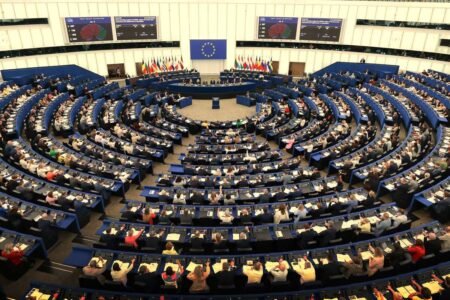
The proposed measures will now be examined by the European Parliament and the Council of the European Union before their adoption and entry into force.