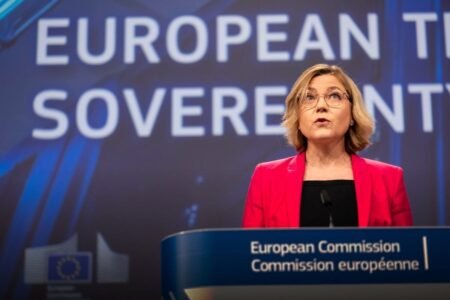
The first winners of the European Commission’s new Marie Curie Prize for outstanding achievement in research were announced on 5 November at a ceremony in Nicosia, Cyprus. The three winners are Dr Gkikas Magiorkinis from Greece, in the ‘Promising Research Talent’ category, Dr Claire Belcher from the United Kingdom, for ‘Communicating Science’, and Dr Sarit Sivan from Israel, for ‘Innovation and Entrepreneurship’. Androulla Vassiliou, the European Commissioner for Education, Culture, Multilingualism and Youth, presented each scientist with a trophy at the ceremony. This is taking place in the context of a conference focused on the future of the Marie Curie Actions and Horizon 2020, the Commission’s proposed 80 billion programme for investment in research and innovation. Under the proposal, over 5.75 billion would be allocated to the Marie Curie Actions in 2014-2020. The scheme has supported the training, mobility and skills development of more than 65 000 researchers since its launch in 1996.
Advertisement
Gkikas Magiorkinis has been honoured for his work on tracing how the Hepatitis C virus (HCV) has spread around the world. The life-threatening virus attacks the liver and affects around 150 million people worldwide. Claire Belcher is recognised for her study of the Earth’s geological past and its impact on plant and animal life a subject she has brought to wider attention through regular appearances on television and in the media. Sarit Sivan has developed an innovative treatment for lower back pain resulting from the degeneration of discs in the spinal column.
Who does the programme fund?
The Marie Curie Actions award European research grants, regardless of nationality or field of research. In addition to supporting fellowships, the programme enables researchers to gain international experience which benefits the individual as well as the European research community as a whole.
Why does the EU fund European research?
While European researchers are often well equipped for the academic labour market, they are less prepared for working in or with business. The European Union wants to attract and retain more of the best researchers there is also an urgent need to ensure researchers have the right skills required for the jobs of the future.
The Marie Curie Actions (MCA) connect the three sides of the knowledge triangle – research, education and innovation and combine the excellent research and top-quality training that fosters innovation. They do this by making it easier for researchers to move internationally and across sectors as part of their training. This not only promotes high professional standards in research careers, but also equips researchers with the skills needed in the modern economy.
How are beneficiaries chosen?
Applications for Marie Curie grants are evaluated by an independent panel of renowned European and international scientists. The evaluation is based on the scientific quality of the project and its likely impact on European competitiveness, as well as on the excellence of the training programme, host institute and the researcher. Only the best projects are funded. Marie Curie fellows receive employment contracts for up to three years, full social security cover and a contribution to pension funds.
What is the impact of the Marie Curie Actions?
They enable large numbers of researchers to receive high-quality initial training. 40% of the MCA budget is allocated to training early-stage researchers; the MCA will fund around 10 000 PhDs in 2007-2013. Emphasis is placed on inter-sectoral, interdisciplinary and international training, thus increasing innovation skills and employability.
The MCA boost industry-academia cooperation. Companies are strongly involved in the Initial Training Networks (ITN) and Industry-Academia Partnerships and Pathways (IAPP) that receive half of the programme budget. Companies represent 12% of ITN participants and 38% of IAPP participants, out of which 50% are SMEs. In addition, the MCA support European Industrial Doctorates (EID), which expose researchers to the industrial sector for at least 50% of the duration of their PhD.
The scheme supports attractive working conditions for researchers, with full social benefits and maternity leave, in line with the principles of the “European Charter for Researchers and the Code of Conduct for the Recruitment of Researchers”. The logic is simple: by improving working conditions and the status of researchers, more people will be attracted to the profession in Europe.
The MCA also seek to encourage gender balance. 38% of MCA researchers are women (EU target is 40%).
Are there any nationality restrictions to become a Marie Curie Fellow?
The Marie Curie Actions are open to researchers of any nationality and research organisations from any country can participate. This makes them a key EU instrument for attracting the best researchers from around the world to Europe. To date, researchers of 130 different nationalities and host organisations in more than 80 countries have received support from the MCA.
Why is the scheme being renamed Marie Sklodowska-Curie Actions?
The Marie Curie Actions will be renamed Marie Sklodowska-Curie Actions to honour the Polish roots of this extraordinary and inspiring scientist.
What are the main changes foreseen under Horizon 2020 for the Marie Sklodowska-Curie Actions?
The Commission’s proposal for the future of the Marie Sklodowska-Curie Actions foresees streamlining, simplification and strengthening of doctoral training. The MCA will still involve the private sector as a main actor and will maintain a strong international dimension. The co-funding principle will be extended to spread best practices across Europe.
Do the Marie Curie Actions help researchers in their career development?
Yes. Marie Curie fellows have a better chance of getting the best jobs, thanks to their training and exposure to the private sector. In addition, former Marie Curie fellows have a higher than average success rates for obtaining grants from the European Research Council.