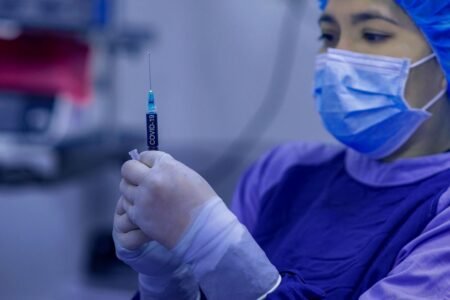
Each year, in the EU, between 8% and 12% of patients admitted to hospitals suffer harm from the healthcare they receive, including from healthcare associated infections. Much of that harm is preventable, says the European Commission. Today, the Commission has adopted a Communication and proposal for a Council Recommendation with specific actions that EU Member States can take, either individually, collectively or with the Commission, to improve the safety of patients.
Advertisement
Patient safety is defined as freedom for a patient from unnecessary harm or potential harm associated with healthcare. It attempts to reduce adverse events which occur in all healthcare settings – in hospitals, in primary and community care and in the home.
Studies in one or two EU Member States plus surveys of patients themselves suggest that among the most common adverse events in EU healthcare are healthcare associated infections (HCAIs), medication-related errors such as patients receiving the wrong dose or wrong medicine, surgical errors, medical device and equipment-related failures and errors in diagnosis or the failure to act on the results of tests.
From studies carried out in some EU Member States, it is estimated that in the EU, between 8% and 12% of patients admitted to hospitals suffer from adverse effects whilst receiving healthcare. The figures are thought to be slightly lower for adverse events in primary care settings.
Healthcare-associated infections are infections occurring as a result of exposure to healthcare facilities or healthcare procedures. Hospital acquired infections, also referred to as nosocomial infections or simply hospital infections, are infections occurring during a stay in hospital that were neither present nor incubating at the time of hospital admission. So, every hospital acquired or nosocomial infection is a healthcare associated infection, but not vice versa.
The available data represent hospital acquired infections only and are therefore an underestimation of the amount of healthcare associated infections. The European Centre for Disease Prevention and Control (ECDC) has calculated that the yearly number of patients in the EU with at least one hospital acquired infection can be estimated at 4.1 million patients, equivalent to one in twenty hospitalised patients. Since patients sometimes acquire more than one infection during the same hospitalisation, the yearly number of acquired infections is estimated at 4.5 million. Every year, approximately 37,000 deaths are thought to be caused by hospital acquired infections; an additional 110,000 deaths yearly occur in which such infections have contributed to death.
The most common micro-organisms involved in healthcare associated infections are and (of which the resistant strain MRSA (meticillin-resistant ) is a well known example), followed by , , coagulase-negative staphylococci and .
The following are some of the pathogens posing a major threat to healthcare systems, but the list is not exhaustive:
- Vancomycin-resistant (VRSA);
- Vancomycin-resistant enterococci (VRE);
- Carbapenem-resistant Enterobacteriaceae;
- Carbapenem-resistant ;
- Carbapenem-resistant ;
- Extended-spectrum ß-lactamase (ESBL) producing Enterobacteriaceae.
The four most common infection types are urinary tract infections (27%), lower respiratory tract infections (24%), surgical site infections (17%) and bloodstream infections (10.5%).
This is difficult to calculate because there are many variables that need to be estimated. For example, the number of healthcare associated infections, the increased length of hospital stay and the daily cost per hospital bed. Assuming a yearly number of 4.1 million patients affected by healthcare associated infections, with an average excess hospital stay of 4 days (i.e. 16.4 million extra hospital days a year) and an average hospital bed cost of 334 per day (not including post-hospital costs), the resulting healthcare cost for the EU can be estimated conservatively at 5.48 billion per year.
Based on published scientific studies and reviews, experts estimate that 20-30% of healthcare associated infections can be prevented. There is a broad consensus that the prevention of healthcare associated infections is highly cost-effective. The scientific literature and our own calculations indicate that, if infection prevention and control programmes were effective in preventing only 7-10% of HCAIs, the costs of the programmes would already be covered.