Close Menu
    Latest Category
    • Finance
    • Tech
    • EU Law
    • Energy
    • About
    • Contact
    EUbusiness.com | EU news, business and politicsEUbusiness.com | EU news, business and politics
    Login
    • EU News
    • Focus
    • Guides
    • Press
    • Jobs
    • Events
    • Directory
    EUbusiness.com | EU news, business and politicsEUbusiness.com | EU news, business and politics
    Home » Europe’s Galileo satnav system goes live

    Europe’s Galileo satnav system goes live

    npsBy nps16 December 2016Updated:25 June 2024 No Comments2 Mins Read
    — Filed under: EU News Headline2 Telecoms Transport
    Share
    Facebook Twitter LinkedIn Pinterest Email
    Europe's Galileo satnav system goes live

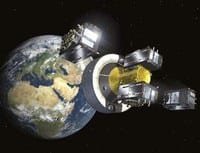
    galileo-Photo © ESA Pierre Carril

    (BRUSSELS) – Europe’s satellite navigation system Galileo goes live for public authorities and businesses on Thursday, with the promise of accurate, fast and more reliable positioning for end users.

    Galileo will increase geo-location precision ten-fold, claims the European Commission, enabling the next generation of location-based technologies, including autonomous cars, connected devices, or smart city services.

    The EU has made a concerted effort to design and build “the most accurate satellite navigation system in the world”, according to Industry Commissioner Elzbieta Bienkowska: “It demonstrates the technological excellence of Europe, its know-how and its commitment to delivering space-based services and applications. No single European country could have done it alone,” she added.

    In its initial services, Galileo will start to deliver, in conjunction with GPS, the following services free of charge:

    • Support to emergency operations, with the Search and Rescue Service enabling people in distress to be found and rescued more quickly;
    • More accurate navigation for citizens, with the Galileo Open Service offering a free mass-market service for positioning, navigation and timing that can be used by Galileo-enabled chipsets in smartphones or in car navigation systems. By 2018, Galileo will also be found in every new model of vehicle sold in Europe, providing enhanced navigation services to a range of devices as well as enabling the eCall emergency response system.
    • Better time synchronisation for critical infrastructures, allowing more resilient time synchronisation of banking and financial transactions, telecommunications and energy distribution networks such as smart-grids.
    • Secure services for public authorities, offering a particularly robust and fully encrypted service for government users during national emergencies or crisis situations, such as terrorist attacks, to ensure continuity of services.

    Galileo is fully interoperable with GPS, but will offer more accurate and reliable positioning for end users. The Galileo constellation consists of 18 orbiting satellites, with a full constellation of 30 satellites foreseen by 2020.

    So far, the first Galileo smartphone by Spanish company BQ is available on the market. But the Commission says other manufacturers are expected to follow suit. It will allow also application developers to test their ideas on the basis of real signal.

    Galileo Initial Services are managed by the European GNSS Agency (GSA). The overall Galileo programme is run by the European Commission, which has handed over the responsibility for the deployment of the system and technical support to operational tasks to the European Space Agency (ESA).

    Add A Comment
    Leave A Reply Cancel Reply

    You must be logged in to post a comment.

    nps
    • Website

    Related Content

    Oil tanker - Image by Erich Westendarp from Pixabay

    New EU mechanism to lower price cap for Russian crude oil to $44,10 per barrel

    Robot doctor - Image by Thomas Meier from Pixabay

    EU launches EUR 307m artificial intelligence and related technologies calls

    Farm flooded with cows - Image by Brigitte Werner from Pixabay

    Climate and nature risks threaten Europe’s financial resilience and insurability – WWF report

    Sponsor: WWF15 January 2026
    Valdis Dombrovskis - Photo © European Union 2026

    Brussels presents 2026–2027 financial support package for Ukraine

    Renewable energy - Image by Maria Maltseva from Pixabay

    Nearly 50pct EU electricity came from renewables in 2024

    Olives - Image by Marco Centenaro from Pixabay

    EU’s checks on olive oil need tightening up: auditors’ report

    LATEST EU NEWS
    Oil tanker - Image by Erich Westendarp from Pixabay

    New EU mechanism to lower price cap for Russian crude oil to $44,10 per barrel

    15 January 2026
    Robot doctor - Image by Thomas Meier from Pixabay

    EU launches EUR 307m artificial intelligence and related technologies calls

    15 January 2026
    Valdis Dombrovskis - Photo © European Union 2026

    Brussels presents 2026–2027 financial support package for Ukraine

    14 January 2026
    Renewable energy - Image by Maria Maltseva from Pixabay

    Nearly 50pct EU electricity came from renewables in 2024

    14 January 2026
    Olives - Image by Marco Centenaro from Pixabay

    EU’s checks on olive oil need tightening up: auditors’ report

    14 January 2026

    Subscribe to EUbusiness Week

    Get the latest EU news

    CONTACT INFO

    • EUbusiness, 117 High Street, Chesham Buckinghamshire, HP5 1DE, United Kingdom
    • +44(0)20 8058 8232
    • service@eubusiness.com

    INFORMATION

    • About Us
    • Advertising
    • Contact Info

    Services

    • Privacy Policy
    • Terms
    • EU News

    SOCIAL MEDIA

    Facebook
    eubusiness.com © EUbusiness Ltd 2026

    Type above and press Enter to search. Press Esc to cancel.

    Sign In or Register

    Welcome Back!

    Login to your account below.

    Lost password?