Close Menu
    Latest Category
    • Finance
    • Tech
    • EU Law
    • Energy
    • About
    • Contact
    EUbusiness.com | EU news, business and politicsEUbusiness.com | EU news, business and politics
    Login
    • EU News
    • Focus
    • Guides
    • Press
    • Jobs
    • Events
    • Directory
    EUbusiness.com | EU news, business and politicsEUbusiness.com | EU news, business and politics
    Home » How UK-based Businesses are Adjusting to a Diminished Import Market

    How UK-based Businesses are Adjusting to a Diminished Import Market

    npsnps7 August 2021Updated:3 July 2024
    — Filed under: Focus
    Share
    Facebook Twitter LinkedIn Pinterest Email

    Economists are reporting that the total value of goods imported into the United Kingdom are continuing to fall, which is causing some concerns among those in the import and retail industries. While this bodes well for companies that produce goods domestically and may even help to create jobs, it’s also causing fears that the overall cost of consumer goods will go up. That, in turn, could drive prices across the entire economy up.
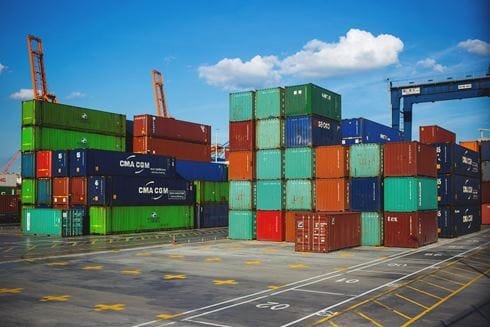
    Imports - Image Pixabay

    In spite of all the latest economic indicators, the pound sterling remains very competitive against both the US dollar as well as the Japanese yen, so the overall value of imports in the UK continues to fall. While it’s likely that the UK will continue to import a large amount of manufactured goods from China, imports from other nations are likely to fall. Currently, around 12 percent of imports come from China and another 12 percent come from Germany, though this is probably going to change as a result of newer EU trade deals.

    Even though this might look like a mixed bag for consumers, business managers have found some interesting ways to adapt to the changes.

    How Businesses are Adapting to the New Marketplace

    Local markets in England, Scotland, Wales and Northern Ireland are growing according to many reports. Arbitrageurs are taking advantage of the situation by purchasing large amounts of goods from foreign markets and selling them in said markets for reasonable prices. None of the monetary values involved are large enough to tip the balance of trade in any significant way, but they’ve certainly allowed small business owners to deliver needed goods to consumers even while national import numbers continue to fall.

    A few people have even opined that the current situation might have some environmental advantages, because local markets tend to be less carbon-intensive than massive international ones. European Union commissions have promoted the idea that the continent will be carbon-neutral by 2050, though most of these policies act only in a large international fashion. Farmers’ markets and those that provide handicrafts are among those most quickly growing, and these can help to provide an alternative for manufactured goods.

    Local products don’t have to be moved as far, which can help to dramatically reduce the amount of energy consumed when shipping them. If the United Kingdom continues to opt for a low-carbon energy policy, then there’s a good chance that these rather traditional industries could keep on growing.

    It’s also likely to have an impact on the retail space as a whole.

    Changing Demographics in the Retail Market

    For many years, large retailers like Tesco have been able to provide low-cost goods to consumers by buying them in bulk from manufacturers in China and India. Smaller importers haven’t been able to buy things in this size, which has prevented them from being competitive in the market. Newer digital tools have helped to ensure that these firms can take advantage of the lower value of imports entering the country.

    By using a mail forwarding service like My UK Mailbox and a conventional eCommerce app, it’s possible to purchase a large number of goods that can then be sold inside of the UK. Nevertheless, these manufactured products are again unlikely to tip the balance of trade in any significant numbers.

    Gemstones and precious metals represent what might be the most valuable portion of the market, but these are usually imported merely as an investment vehicle or for use in the jewelry industry. Gold has continued to look promising in spite of lower prices, so there are a fair number of people who continue to import it into the country. Assuming that the pound stays as strong as it currently is, arbitrageurs will probably keep making tidy profits for the foreseeable future.

    Increased safety standards might be the biggest force for change, however.

    Closing Loopholes that Allow Imports into the UK

    Online retailers have allowed the heretofore unseen import of relatively large numbers of suspect medical and technological goods, many of which don’t actually meet UK safety regulations. Products have to adhere to certain standards before they can be sold domestically and digital identity documents are helping to shut many of the loopholes that importers used to hide behind.

    While most of these products weren’t valuable by themselves, they did start to add up over time. Increased enforcement of the laws is likely to continue to close the gap, but this in turn will create additional opportunities for local business leaders who don’t mind trying something new.


    Add A Comment
    Leave A Reply Cancel Reply

    You must be logged in to post a comment.

    nps
    • Website

    Related Content

    EFTA Surveillance Authority

    Legal Officer – Internal Market Affairs – Transport, EFTA Surveillance Authority, ESA

    Green jobs - Photo by Gustavo Fring on Pexels

    Green jobs in EU grow by 2.2 million over last decade

    Students in Lisbon - Photo by Vytautas Markunas on Pexels

    EU offers 40,000 ‘DiscoverEU’ free travel passes to young people

    Business conference - Image by SNCR GROUP from Pixabay

    Retail and wholesale take centre stage in European Parliament with first-ever dedicated European week

    Sponsor: EuroCommerce7 April 2026
    Euro coins and notes - Photo by Pixabay

    Eurozone Economic Calendar

    Chemical production nature clouds - Image by andreas N from Pixabay

    Commission to halt Omnibus packages as environmental rules reach “optimal simplicity”

    Sponsor: WWF2 April 2026
    LATEST EU NEWS
    Green jobs - Photo by Gustavo Fring on Pexels

    Green jobs in EU grow by 2.2 million over last decade

    8 April 2026
    Students in Lisbon - Photo by Vytautas Markunas on Pexels

    EU offers 40,000 ‘DiscoverEU’ free travel passes to young people

    8 April 2026
    BEAK UAV drone made by Origin Robotics - Photo by Gints Ivuskans © European Union 2025

    Brussels boosts support to Ukrainian deep tech innovators

    2 April 2026
    Zelensky - Kallas- Ukraine - Photo © European Union 2026

    EU to deliver EUR 1.4 bn revenue from frozen Russian assets to be used for support to Ukraine

    2 April 2026
    House sparrow - Photo by Alexas Fotos on Pexels

    Brussels issues guidance for ‘more balanced’ rules on protecting wild birds

    1 April 2026

    Subscribe to EUbusiness Week

    Get the latest EU news

    CONTACT INFO

    • EUbusiness, 117 High Street, Chesham Buckinghamshire, HP5 1DE, United Kingdom
    • +44(0)20 8058 8232
    • service@eubusiness.com

    INFORMATION

    • About Us
    • Advertising
    • Contact Info

    Services

    • Cookie Policy
    • Terms
    • Disclaimer

    SOCIAL MEDIA

    Facebook
    eubusiness.com © EUbusiness Ltd 2026

    Type above and press Enter to search. Press Esc to cancel.

    Manage Consent
    To provide the best experiences, we use technologies like cookies to store and/or access device information. Consenting to these technologies will allow us to process data such as browsing behavior or unique IDs on this site. Not consenting or withdrawing consent, may adversely affect certain features and functions.
    Functional Always active
    The technical storage or access is strictly necessary for the legitimate purpose of enabling the use of a specific service explicitly requested by the subscriber or user, or for the sole purpose of carrying out the transmission of a communication over an electronic communications network.
    Preferences
    The technical storage or access is necessary for the legitimate purpose of storing preferences that are not requested by the subscriber or user.
    Statistics
    The technical storage or access that is used exclusively for statistical purposes. The technical storage or access that is used exclusively for anonymous statistical purposes. Without a subpoena, voluntary compliance on the part of your Internet Service Provider, or additional records from a third party, information stored or retrieved for this purpose alone cannot usually be used to identify you.
    Marketing
    The technical storage or access is required to create user profiles to send advertising, or to track the user on a website or across several websites for similar marketing purposes.
    • Manage options
    • Manage services
    • Manage {vendor_count} vendors
    • Read more about these purposes
    View preferences
    • {title}
    • {title}
    • {title}

    Sign In or Register

    Welcome Back!

    Login to your account below.

    Lost password?