Close Menu
    Latest Category
    • Finance
    • Tech
    • EU Law
    • Energy
    • About
    • Contact
    EUbusiness.com | EU news, business and politicsEUbusiness.com | EU news, business and politics
    Login
    • EU News
    • Focus
    • Guides
    • Press
    • Jobs
    • Events
    • Directory
    EUbusiness.com | EU news, business and politicsEUbusiness.com | EU news, business and politics
    Home » Managing Business Risk During an Economic Crisis

    Managing Business Risk During an Economic Crisis

    npsnps6 April 2021Updated:26 June 2024
    — Filed under: Focus SMEs
    Share
    Facebook Twitter LinkedIn Pinterest Email

    The jobs of many employees have been jeopardized as a result of the economic fallout from COVID-19 outbreak. Not only that, but financial prospects of many of the business owners who hire them are also in question.
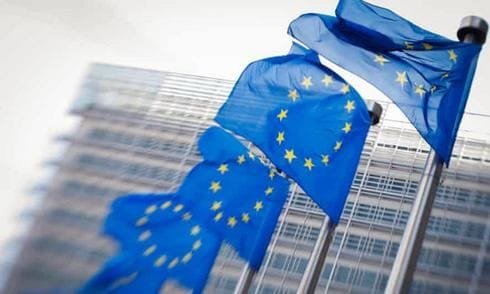
    EU flags Berlaymont

    Consumers, companies, and societies all over the world are concerned about the coronavirus epidemic, which is causing widespread fear and economic instability. Many companies have risk management plans in place, but they may not be comprehensive enough to handle the quickly moving and unpredictable factors of a pandemic like COVID-19.

    In 2020, the European economy had a tough time. After declining in the first quarter, it fell by nearly 12% as the pandemic struck Europe full force in the second quarter. This has been preceded by a quick recovery (up 12.4% ) in the third quarter, before a downturn (down 0.7%) in the final quarter as new regulations were introduced. According to initial forecasts, the European economy contracted around 6.8% in 2020.

    BusinessEurope’s Autumn Economic Outlook predicted that the EU economy will contract by 7.3 percent in 2020, then rise by 5.0 percent in 2021. According to them, the European economy appears to have developed better in the final weeks of 2020, despite GDP declines in the three biggest economies (Germany, France, and Italy) being marginally lower than expected. As per the latest estimates, a number of EU countries, including Latvia, Lithuania, Luxembourg, and Poland, will be able to fully recover this year.

    On the downside, business morale is still poor, and many companies’ financial conditions are deteriorating. The second wave of Covid-19 outbreaks in Europe, as well as the resulting lockdowns, have dominated the news since January. Many companies, especially those in the hospitality and tourism sectors, are experiencing difficulties as a result of the current wave of the pandemic.

    For this reason, companies are struggling to find ways to keep their businesses up and working. Some of them are relying on government assistance, others are reducing expenses, while even others are going beyond their normal business activities to try and improve their operations by tracking trends, investing in marketing, improving client retention, or simply empowering employees.

    The vast majority of small and medium-sized enterprises have seen a drop in revenue. However, as we could expect, the situation varies by country, reflecting the extent of pandemic measures and their effects on economic activity.

    Despite government alerts, several small business owners in Poland are preparing to resist the constraints and reopen their restaurants and tourist sites, fearing the loss of their living standards as a result of the ongoing lockdown.

    Travel agency business owners in Germany, after three decades of operating their business, have scrapped plans to hand it over to a successor. They claim that without revenue coming in, they’ll have to close one of their two stores, cut jobs, and handle the majority of the workload themselves to keep their company afloat.

    Gym closures in Europe are affecting gym operators as a result of the coronavirus outbreak. By negotiating rent with tenants, Pure Gym is reducing cash burn and boosting its liquidity role. The corporation is also taking advantage of government assistance programs such as 80 percent compensation for employee costs, a 1-year corp tax holiday, and tax deferral.

    Spain’s hospitality market, which is suffering the effects of the coronavirus pandemic’s economic consequences, is facing its toughest months since the country’s first state of alert in June. This year, according to the largest hospitality industry lobby, 85,000 companies are in jeopardy. “We are losing money in the business, but we are still taking care of our bills. We can only last for a few months, maybe two or three months, I don’t think we will last much longer,” Jose Manuel del Moral, a bartender at his husband’s Madrid bar “Zarpa,” said.

    In most nations, schools and kindergartens have remained open throughout the winter, and remote working has become common. Such causes, combined with a better than expected third period, offered an extra buffer for the second-half economic losses.

    Officials from the European Central Bank estimate that Europe’s economic performance will only hit 2019 levels in 2022. From here on out, governments in Europe will take different approaches to fund their small businesses Their level of assistance will also vary, with a lot depending on local market conditions.

    Add A Comment
    Leave A Reply Cancel Reply

    You must be logged in to post a comment.

    nps
    • Website

    Related Content

    Costa - Zelensky - von der Leyen - Photo © European Union 2026

    EU Council finalises EUR 90 bn support loan to Ukraine

    Kaja Kallas - Photo © European Union 2026

    EU adopts 20th package of sanctions against Russia

    Eurelectric logo

    Director Finance Administration & IT, EURELECTRIC – Union of the Electricity Industry

    EUSPA logo

    Corporate Services Contracts Officer, European Union Agency for the Space Programme, EUSPA

    Ikarus Industrial Park - Image by gregimages.com

    Ikarus Industrial Park Székesfehérvár: A strategic hub for industrial investment in Hungary

    Renewable energy - Image by Maria Maltseva from Pixabay

    Brussels proposes to accelerate EU shift to clean energy

    LATEST EU NEWS
    Costa - Zelensky - von der Leyen - Photo © European Union 2026

    EU Council finalises EUR 90 bn support loan to Ukraine

    23 April 2026
    Kaja Kallas - Photo © European Union 2026

    EU adopts 20th package of sanctions against Russia

    23 April 2026
    Renewable energy - Image by Maria Maltseva from Pixabay

    Brussels proposes to accelerate EU shift to clean energy

    22 April 2026
    Ursula von der Leyen - Antonio Costa -Ahmed al-Sharaa - Photo © European Union 2026

    Brussels proposes full resumption of EU-Syria Cooperation Agreement

    20 April 2026
    Population commuters - Image by Pexels from Pixabay

    EU’s population projected to drop by 11.7pct by 2100

    16 April 2026

    Subscribe to EUbusiness Week

    Get the latest EU news

    CONTACT INFO

    • EUbusiness, 117 High Street, Chesham Buckinghamshire, HP5 1DE, United Kingdom
    • +44(0)20 8058 8232
    • service@eubusiness.com

    INFORMATION

    • About Us
    • Advertising
    • Contact Info

    Services

    • Cookie Policy
    • Terms
    • Disclaimer

    SOCIAL MEDIA

    Facebook
    eubusiness.com © EUbusiness Ltd 2026

    Type above and press Enter to search. Press Esc to cancel.

    Manage Consent
    To provide the best experiences, we use technologies like cookies to store and/or access device information. Consenting to these technologies will allow us to process data such as browsing behavior or unique IDs on this site. Not consenting or withdrawing consent, may adversely affect certain features and functions.
    Functional Always active
    The technical storage or access is strictly necessary for the legitimate purpose of enabling the use of a specific service explicitly requested by the subscriber or user, or for the sole purpose of carrying out the transmission of a communication over an electronic communications network.
    Preferences
    The technical storage or access is necessary for the legitimate purpose of storing preferences that are not requested by the subscriber or user.
    Statistics
    The technical storage or access that is used exclusively for statistical purposes. The technical storage or access that is used exclusively for anonymous statistical purposes. Without a subpoena, voluntary compliance on the part of your Internet Service Provider, or additional records from a third party, information stored or retrieved for this purpose alone cannot usually be used to identify you.
    Marketing
    The technical storage or access is required to create user profiles to send advertising, or to track the user on a website or across several websites for similar marketing purposes.
    • Manage options
    • Manage services
    • Manage {vendor_count} vendors
    • Read more about these purposes
    View preferences
    • {title}
    • {title}
    • {title}

    Sign In or Register

    Welcome Back!

    Login to your account below.

    Lost password?