How strong is Europe’s economy compared to the rest of the world and what is the outlook for the continent in the future? Find out how Europe performs now.
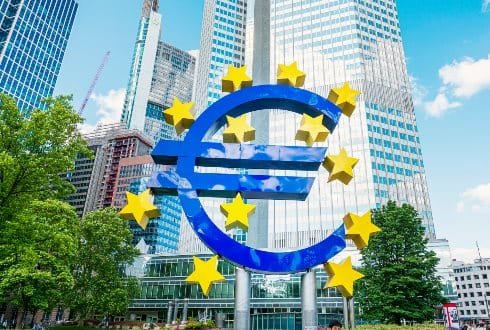
Europe is well known for its strong economy. However, it is sometimes easy to overlook the extent of how interconnected and robust the continent’s system is.
From major organisations like the EU and Schengen Area to the soon-to-launch ETIAS application for visa-waiver nationals from 3rd countries, the European economy relies heavily on the simplified flow of trade, goods and people. This has made it one of the success stories of the world.
This article examines where Europe ranks compared to other major world economies. It also considers what future events might affect the European economy and takes a look at who the star performers of the continent are.
How does Europe’s economy perform?
In terms of overall world economies, Europe (specifically the European Union) boasts a GDP of around $16 trillion. It has one of the planet’s strongest financial systems, falling only behind the United States of America which holds the overall number 1 spot. Even then, Europe only trails the US by only around $5 trillion.
This healthy GDP has been achieved through the continent’s diversified economy, relative stability over the past 50 years, and its interconnectedness. A good deal of this success has been achieved thanks to the European Economic Area (EEA) and EU which has removed trading barriers between 30 nations and has simplified the movement of people and knowledge between most countries on the continent.
What is the outlook for Europe’s economy?
Whilst Europe’s economy is one of the world’s strongest, it is set to undergo a number of significant challenges over the next 12 months. These are likely to cause some difficulties for the European GDP as a whole.
How has COVID-19 affected Europe?
Perhaps the biggest challenge facing the European economy over the coming months is the ongoing COVID-19 pandemic. The first wave of the disease already sent many countries spiralling into negative growth.
Furthermore, case numbers of COVID have been rising again steadily since August 2020 and look set to get even higher as winter approaches. Whilst this is bad news in the immediate term, the continent has taken a number of steps to help mitigate the numerous economic difficulties that countries are facing from the pandemic.
During the spring and summer months, the European Union unveiled a recovery plan to help support struggling countries. The bloc has earmarked ?750 billion that can be used to help countries revive their economies. The allocation of this money also places a big emphasis on stimulating future-focused industries such as Green Tech, education, research, and the digital sector.
Whether these measures work as intended or not will very much depend on how the pandemic develops. However, the focus is on restructuring Europe so that it can compete and adapt to contemporary societal demands is likely to help the economy grow in the future.
Will Brexit damage the European economy?
Another factor that could cause disruption to Europe’s economy is Brexit. Britain formally left the EU on March 1st, 2020. It and the EU are currently operating on a transition agreement that will end in 2021. At the moment, the UK has yet to formalise a new trading accord with the bloc.
As it stands, the UK will leave all European trading and commercial infrastructure as of December 31st, 2020. Unless a deal is struck this is likely to heavily impact imports and exports between Britain and the EU.
Which European countries have the strongest economies?
The EU as a whole boasts the 2nd highest economy in terms of GDP in the world. Yet it is also home to many countries that are world-beating economies in their own right too.
4 European countries can be found on the list of top ten highest GDPs. These include:
- Germany: Europe’s number 1 economy with a healthy manufacturing and tech sector.
- France: A major player in the pharmaceutical and the energy market. It is also the world’s most visited country in terms of tourism.
- United Kingdom: A world centre for the financial and banking market and a major player in the service industry.
- Italy: One of the continent’s biggest food producers and a major supplier of manufactured goods.
It is clear to see that Europe is a major player in the world’s economy thanks to its interconnected marketplace. It is also quickly adapting to the necessities of the current crisis and is looking ahead to a brighter future of recovery and restructuring.