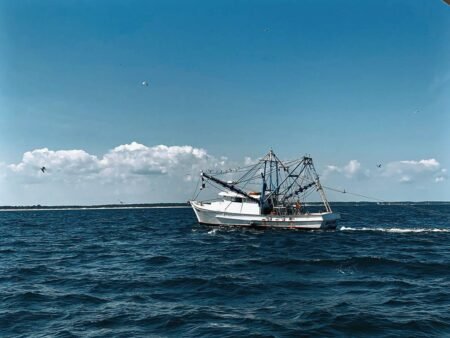
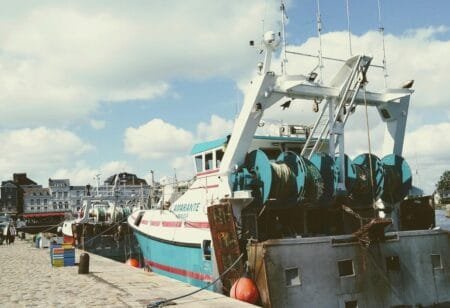
The European Commission proposed on 10 December a new system to grant and manage fishing authorisations, allowing authorities to better monitor both EU vessels fishing outside Union waters and international vessels fishing in our own waters. The new Regulation will apply to all EU vessels fishing outside EU waters, wherever they operate and irrespective of the legal framework under which the fishing takes place. These vessels will not be able to fish in third country waters or in the high sea unless they have been previously authorised by their flag Member State, i.e. the state under whose laws the vessel is registered or licensed. To obtain authorisation, they will have to show that they comply with a set of criteria that the EU considers essential for instance that they have an International Maritime Organisation (IMO) number and a valid fishing license, and have not been found guilty of infringements. The flag Member State, under the supervision of the European Commission, will have to check the vessel’s information thoroughly before granting authorisation and will enter this information into an official register.
Advertisement
The goal of the new Regulation
The main goal of the Regulation is to make sure that the core principles of the Common Fisheries Policy (such as sustainability or the fight against illegal fishing) are respected by EU vessels whether they fish inside or outside EU waters. Therefore the Regulation lays down clear and precise rules to authorise and monitor all EU vessels when they fish outside the waters of the European Union, irrespective of where the fishing activity takes place (in the Exclusive Economic Zone (EEZ) of a third country or in the high sea) and the legal framework under which it takes place (public agreement or through private authorisation).
How does it work?
Before it can fish outside Union waters, an EU vessel needs an authorisation by or an agreement with the third country concerned. The rules regulating the Sustainable Fisheries Partnership Agreements (SFPAs) form the basis of such agreements (whereby the fishing possibilities available to the Union are subject to the surplus principle). But the core aspect of the Regulation is that, on top of this authorisation or agreement, Union vessels will not be able to fish in the waters of a third country unless they have been authorised by their flag Member State. This second authorisation is based on a set of essential criteria that the vessel needs to comply with and that the flag Member State needs to check thoroughly.
This set of criteria will include administrative information on the vessel and the master, International Maritime Organisation (IMO) number, valid fishing license and lack of serious infringements. It can also be complemented by more specific criteria, depending on the nature of the authorisation request. For instance, as regards direct authorisations from a third country, operators will have to provide the flag Member State with a series of specific information, such as competent authority in the third country, bank account to be credited with the payments and applicable law.
To monitor the Union’s fleet wherever it operates and whatever the framework (Regional Fisheries Management Organisations (RFMOs),Sustainable Fisheries Partnership Agreement (SFPAs), direct authorisations, high seas), the current Fishing Authorisation Regulation (FAR) is repealed and its scope extended to cover all cases of Union vessels fishing outside Union waters, i.e. chartering operations (when a Union vessel is rented out for fishing activities), reflagging operations and direct authorisations (private licences).
Who does it benefit?
The Regulation gives national administrations and operators a clear and comprehensive legal framework, with all operators subject to the same single set of data to provide and conditions to meet. This provides legal certainly, even in the case of private licences or reflagging.
It will provide a clear overview of the activities of the EU fleet all over the world, resulting in increased transparency and better monitoring of external fleets. Part of the data collected will be made public through an online database (information will include name and flag of the vessel, type of authorisation, time frame and fishing zone); so the general public will know more about who fishes what and under which conditions around the planet. As for the third countries where EU vessels go fishing, they too get additional safeguards through a better authorisation system.
When will the proposal come into force?
The Regulation is expected to come into effect in 2017, after adoption by the European Parliament and the Council.
What does “external fishing fleet” mean?
The proposal encompasses fishing activities by both Union vessels outside Union waters and third country vessels inside Union waters. The Union’s external fleet is deemed to comprise about 700 fishing vessels, 300 of which fish under public fisheries agreements (SFPAs). With the notable exception of the public fisheries agreements, the current Fishing Authorisation Regulation does not allow for identifying and counting all Union vessels fishing in external waters. One of the aims of the proposal is precisely to change this and improve the monitoring of the Union’s external fleet.
Is the proposal going to prevent reflagging?
The main objective is not to prohibit reflagging per se but to deter operators from doing it to circumvent the rules of the Common Fisheries Policy and Sustainable Fisheries Partnership Agreements (SFPAs). Under the proposed rules, when a vessel wishes to be get back onto the EU Register, the flag Member State must check that, when that vessel was off the list, it still complied with essential EU standards such as the declaration of catches and fishing effort, fishing authorisations or the absence of sanctions.
Why the revision?
This revision of the Regulation is a major legislative proposal of the Commission for this year, and is a direct consequence of the new Common Fisheries Policy (Regulation EU 1380/2013, aka the “Basic Regulation”), which needs to be consistently reflected in the three pillars formed by the Illegal, Unreported and Unregulated Fishing Regulation (IUU), the Control and the Fishing Authorisation Regulations.
The external dimension is enshrined in the Basic Regulation of the Common Fisheries Policy i.e. the need to ensure that outside our own waters our fishing activities follow the same principles and standards as within the Union.
The revision of the Fishing Authorisation Regulation is also a Regulatory Fitness (REFIT) initiative aimed at clarifying and simplifying the current provisions, in particular in terms of responsibilities at Union, national and operator level, as well as bringing the Fishing Authorisation Regulation in line with the Control Regulation.
Several developments at international level also support the need for a revision. The Union has endorsed the FAO International Plan of Action to prevent, deter and eliminate illegal, unreported and undeclared fishing (IPOA-IUU) adopted in 2001. The IPOA-IUU and the FAO Voluntary Guidelines for flag state performance endorsed in 2014 underlie the responsibility of the flag State to ensure the long-term conservation and sustainable use of living marine resources and marine ecosystems.
The Voluntary Guidelines advocate that the flag State sets up an authorisation regime to ensure that no vessel is allowed to operate unless authorised. They also recommend that the flag State and the coastal state grant an authorisation when the fishing activities take place under a fisheries access agreement or even outside such an agreement.
Finally, in April 2015, the International Tribunal for the Law of the Sea (ITLOS) delivered its advisory opinion on Illegal, Unreported and Unregulated (IUU) matters within the exclusive economic zones (EEZs) of the members of the Sub-Regional Fisheries Commission. ITLOS considers that a flag State’s responsibility to prevent and/or repress IUU fishing activities within the EEZs of coastal states to be an obligation of ‘due diligence’. ITLOS stresses the liability of the Union for any breach of the fisheries access agreements it has with coastal states.