Pierre Moscovici – Photo EC
(BRUSSELS) – Greece regained its place ‘at the heart of Europe’ Monday as the EU brought to an end its three-year bailout programme with praise for the efforts of the Greek people and the country’s commitment to reform.
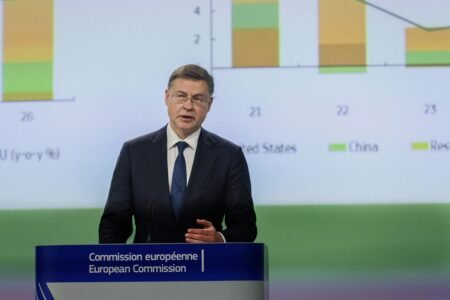
“The conclusion of the stability support programme is good news for both Greece and the euro area,” said the EU’s Commissioner for Financial Affairs Pierre Moscovici: “For Greece and its people, it marks the beginning of a new chapter after eight particularly difficult years. For the euro area, it draws a symbolic line under an existential crisis.”
Mr Moscovivi said extensive reforms carried out by Greece have laid the ground for a sustainable recovery, and that this must be “nurtured and maintained to enable the Greek people to reap the benefits of their efforts and sacrifices. Europe will continue to stand by Greece’s side.”
A total of EUR 61.9 billion in loans have been provided to Greece under the European Stability Mechanism (ESM) stability support programme on the basis of implementation of the EU’s comprehensive and unprecedented reform package.
The aim of the ESM was to tackle long-standing and deep-rooted structural issues that the EU executive said contributed to Greece experiencing an economic crisis.
Measures undertaken by Greece brought the general government balance from a significant deficit to surplus in 2017, which is projected to be maintained.
The Commission says the financial sector is now in a much stronger position as a result of successful recapitalisation operations, an overhaul of bank governance, and work to implement a strategy to reduce non-performing loans, which it says must be sustained.
The efficiency and efficacy of the public administration has been improved, with the introduction of new rules on the appointment, assessment and mobility of public sector employees; the establishment of the Independent Authority for Public Revenue; and measures to make the judicial system more efficient.
And important structural measures have been put in place to improve Greece’s business environment and competitiveness, to make Greece an attractive destination for investment and allow businesses already in place to expand, innovate and create jobs; as well as to establish sustainable and universal pensions, health care and social benefit systems, including a guaranteed minimum income scheme.
The Commission says the ‘transformative reforms’ have laid the foundations for a sustainable recovery, putting in place the fundamental conditions needed for sustained growth, job creation and sound public finances in the years to come.
Economic growth has rebounded from -5.5% in 2010 to 1.4% in 2017 and is expected to remain around 2% in 2018 and 2019. The fiscal balance has progressed from a massive deficit of 15.1% in 2009 to a 0.8% surplus in 2017 (corresponding to a primary surplus of 4.2% in programme terms). Although unemployment remains unacceptably high, according to figures recently released by the Hellenic Statistical Authority, unemployment fell to 19.5% in May 2018, reaching a level below 20% for the first time since September 2011.
The Commission now says that Greece needs to remain focused on ‘fully addressing the social and economic consequences that are the legacy of the crisis years’. This, it adds, will require that the Greek authorities maintain ownership of reforms and ensure their sustained implementation, as per their commitments at the Eurogroup meeting of 22 June 2018. This is seen as crucial to ingraining market confidence and strengthening Greece’s economic recovery, particularly in the immediate post-programme period.
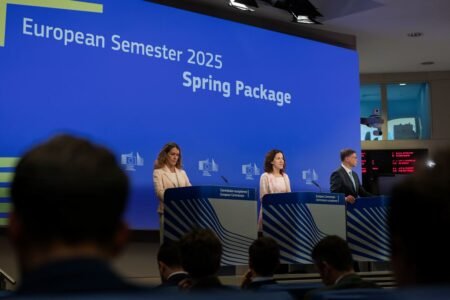
Greece will be fully integrated into the European Semester of economic and social policy coordination to help ensure that the country and its people reap the full benefits of the efforts undertaken in recent years. In the post-programme period, the completion, delivery and continued implementation of reforms agreed under the programme will also be monitored through an enhanced surveillance framework.
The Commission says its ‘Structural Reform Support Service’ will continue to assist the Greek authorities, upon their request, in the design and implementation of growth-enhancing reforms.
Factsheets A new chapter for Greece
Brochure: A new start for jobs and growth in Greece Three years on
Further background information on EU financial assistance to Greece