Close Menu
    Latest Category
    • Finance
    • Tech
    • EU Law
    • Energy
    • About
    • Contact
    EUbusiness.com | EU news, business and politicsEUbusiness.com | EU news, business and politics
    Login
    • EU News
    • Focus
    • Guides
    • Press
    • Jobs
    • Events
    • Directory
    EUbusiness.com | EU news, business and politicsEUbusiness.com | EU news, business and politics
    Home » Cheap euro transfers to be extended to non-euro states

    Cheap euro transfers to be extended to non-euro states

    npsnps28 March 2018 Finance
    — Filed under: Consumer EU News Headline SMEs
    Share
    Facebook Twitter LinkedIn Pinterest Email
    Cheap euro transfers to be extended to non-euro states

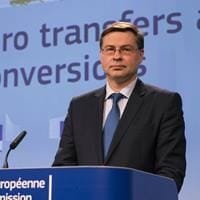
    Valdis Dombrovskis – Photo EC

    (BRUSSELS) – The European Commission proposed Wednesday to make cross-border payments in euro cheaper across the entire EU, instead of only for transactions between Member States of the eurozone.

    Under current rules, there is no difference for eurozone residents or businesses if they carry out euro transactions in their own country or with another euro area Member State.

    Today’s proposal aims to extend this benefit to people and businesses in non-euro countries. This will allow all consumers and businesses to fully reap the benefits of the Single Market when they send money, withdraw cash or pay abroad.

    All intra-EU cross-border payments in euro outside the euro area will now be priced the same – with small or zero fees – as domestic payments in the local official currency.

    The EU executive is also proposing to bring more transparency and competition to currency conversion services when consumers are buying goods or services in a different currency than their own.

    “With today’s proposal we are granting citizens and businesses in non-euro area countries the same conditions as euro area residents when making cross-border payments in euro,” said the Commission’s Financial Services vice-president Valdis Dombrovskis: ” All Europeans will be able to transfer money cross-border, in euro, at the same cost as they would pay for a domestic transaction.

    “Today’s proposal will also require full transparency in currency conversion when consumers are paying by card in a country which does not have the same currency as their own,” he added.

    Consumers and businesses in the euro area already benefit from very low fees for cross-border payments in euro, thanks to the introduction of the cross-border payments regulation in 2001.

    Today’s proposal aims to put an end to the high cost of intra-EU cross-border transactions in euro.

    In particular, this proposal provides that fees charged for cross-border payments in euro are the same that would be charged for equivalent domestic payments in the local currency.

    This, says the Commission, will bring down fees to a few euro or even cents. For example, a cross-border credit transfer in euro (EUR) from Bulgaria will be priced the same as a domestic Bulgarian lev (BGN) credit transfer. This is a major change, as fees for a simple credit transfer can be exorbitant in some non-euro area Member States (up to EUR 24 for a transfer of EUR 10!).

    Today’s hefty fees are seen as an obstacle to the Single Market as they create barriers to cross-border activities of households (buying goods or services in another currency zone) and businesses, in particular SMEs. This creates a major gap between euro area residents who benefit from the single currency, and non-euro area residents who can only make cheap transactions within their own country.

    Today’s proposal will also bring about transparency on payments that involve different Union currencies. At the moment, consumers are usually not informed or aware of the cost of a transaction that involves a currency conversion. The proposal will therefore require that consumers are fully informed of the cost of a currency conversion before they make such payment (e.g. with their card abroad, be it a cash withdrawal at an ATM or a card payment at a point of sale, or online). This means they will be able to compare the costs of different conversion options to make a fair choice. Recent findings show that consumers have been complaining about dynamic currency conversion practices – i.e. paying abroad in their home currency – and asking for their ban after having found that they were losing out in the majority of the cases studied. The lack of necessary information to make the best choice often results in consumers being unfairly led towards the more expensive currency conversion option. The European Banking Authority will be tasked with drafting the necessary Regulatory Technical Standard to implement this enhanced transparency.

    The legislative proposal will now be submitted to the European Parliament and Council for adoption.

    Cross-border payments - background guide

    Add A Comment
    Leave A Reply Cancel Reply

    You must be logged in to post a comment.

    nps
    • Website

    Related Content

    Climate change - Image by Satheesh Sankaran from Pixabay

    Council presidency’s budget proposal offers modest progress for climate and nature funding

    Sponsor: WWF11 June 2026
    Korea - Lee Jae-myung, António Costa, Ursula von der Leyen and Maros Sefčovic - Photo © European Union 2026

    Security the theme of strengthened EU-South Korea partnership

    Ruto - Virkkunen - Photo © European Union 2026

    EU strengthens trade and investment cooperation with Kenya

    Women managers - Photo by Christina Morillo on Pexels

    New EU rules on pay transparency

    Ecommerce contactless payment - Photo by SumUp on Unsplash

    Make digital euro fee fair for merchants and citizens

    Sponsor: EuroCommerce3 June 2026
    Valdis Dombrovskis - 3 - Photo © European Union 2026

    Brussels guides EU states to increased competitiveness

    LATEST EU NEWS
    Emissions - transport - buildings - Rhine industry - Image by Thomas G. from Pixabay

    EU agrees safeguards for new emissions trading system for buildings and road transport

    11 June 2026
    Military helicopter - Photo by Dominik Gryzbon on Pexels

    EU strikes deal to strengthen Europe’s defence readiness

    10 June 2026
    Korea - Lee Jae-myung, António Costa, Ursula von der Leyen and Maros Sefčovic - Photo © European Union 2026

    Security the theme of strengthened EU-South Korea partnership

    10 June 2026
    Euro - ECB-Photo by Mika Baumeister on Unsplash

    June currency outlook – Euro currency news

    10 June 2026
    Lorraine Nolan, Franz Pietsch and Magnus Brunner - Photo © European Union 2026

    Drugs gangs ‘major threat to European security’

    9 June 2026

    Subscribe to EUbusiness Week

    Get the latest EU news

    CONTACT INFO

    • EUbusiness, 117 High Street, Chesham Buckinghamshire, HP5 1DE, United Kingdom
    • +44(0)20 8058 8232
    • service@eubusiness.com

    INFORMATION

    • About Us
    • Advertising
    • Contact Info

    Services

    • Cookie Policy
    • Terms
    • Disclaimer

    SOCIAL MEDIA

    Facebook
    eubusiness.com © EUbusiness Ltd 2026

    Type above and press Enter to search. Press Esc to cancel.

    Manage Consent
    To provide the best experiences, we use technologies like cookies to store and/or access device information. Consenting to these technologies will allow us to process data such as browsing behavior or unique IDs on this site. Not consenting or withdrawing consent, may adversely affect certain features and functions.
    Functional Always active
    The technical storage or access is strictly necessary for the legitimate purpose of enabling the use of a specific service explicitly requested by the subscriber or user, or for the sole purpose of carrying out the transmission of a communication over an electronic communications network.
    Preferences
    The technical storage or access is necessary for the legitimate purpose of storing preferences that are not requested by the subscriber or user.
    Statistics
    The technical storage or access that is used exclusively for statistical purposes. The technical storage or access that is used exclusively for anonymous statistical purposes. Without a subpoena, voluntary compliance on the part of your Internet Service Provider, or additional records from a third party, information stored or retrieved for this purpose alone cannot usually be used to identify you.
    Marketing
    The technical storage or access is required to create user profiles to send advertising, or to track the user on a website or across several websites for similar marketing purposes.
    • Manage options
    • Manage services
    • Manage {vendor_count} vendors
    • Read more about these purposes
    View preferences
    • {title}
    • {title}
    • {title}

    Sign In or Register

    Welcome Back!

    Login to your account below.

    Lost password?