The European Commission has set out policy guidance for the EU Member States to help them revitalise the EU’s competitiveness and respond to the many pressures affecting European households and businesses.

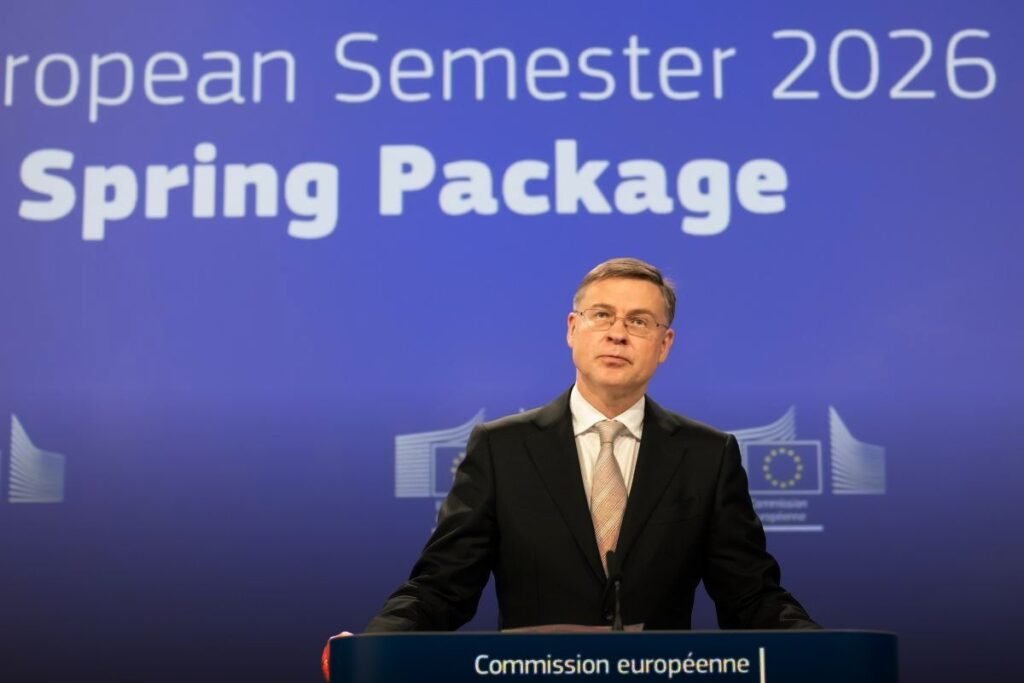
The pressures weighing on Europe’s economy include escalating global tensions, heightened security risks, climate change issues, volatile energy prices and cost of living pressures.
“We present this package at a moment of profound geopolitical uncertainty and intensifying global competition”, said Economy Commission Valdis Dombrovskis: “Competitiveness and fiscal sustainability go hand in hand. Both are essential to Europe’s long-term prosperity, resilience, and sovereignty. Today’s recommendations set out a clear path toward those goals. The road ahead will demand shared purpose, determination, adaptability and sustained effort from all of us. The Commission is fully committed to supporting Member States every step of the way.”
The guidance steers EU countries along a path to greater strategic autonomy, economic and social resilience and cohesion, while maintaining fiscal sustainability, according to the EU executive.
In the country reports for this year, the Commission analyses economic and social developments in each EU country and assesses the extent to which they have been implementing the country-specific recommendations adopted in 2025. Based on the findings, it provides targeted recommendations to EU countries to take action in certain policy areas, such as
- lowering single market barriers
- boosting research and development investment
- promoting pensions in supplementary pension schemes
- promoting quality jobs
- combatting poverty
- ensuring the affordability of housing
- accelerating the affordable green energy transition
The Commission also assessed progress in the implementation by concerned EU countries of their medium-term fiscal structural plans and the existence of macroeconomic imbalances for the seven EU countries selected for in-depth reviews in the 2026 alert mechanism report.
Furthermore, in post-programme surveillance reports the Commission assessed the economic, fiscal and financial situation of EU countries that have benefited from financial assistance programmes, focusing on their repayment capacity.
The Commission also proposes updating employment guidelines, setting common priorities for national employment and social policies to make them fairer and more inclusive. These cover new elements focused on improving job quality as well as investing in human capital, by strengthening skills and education.
The Eurogroup and the EU Council will now discuss the documents presented in the 2026 European Semester Spring Package, with a view to endorsing the guidance offered.
Questions and answers on the 2026 European Semester Spring Package