Close Menu
    Latest Category
    • Finance
    • Tech
    • EU Law
    • Energy
    • About
    • Contact
    EUbusiness.com | EU news, business and politicsEUbusiness.com | EU news, business and politics
    Login
    • EU News
    • Focus
    • Guides
    • Press
    • Jobs
    • Events
    • Directory
    EUbusiness.com | EU news, business and politicsEUbusiness.com | EU news, business and politics
    Home » Revising Europe’s carbon market: what’s at stake for climate, industry and citizens?
    Environment

    Revising Europe’s carbon market: what’s at stake for climate, industry and citizens?

    Sponsored By: WWF16 July 202604 Mins Read
    — Filed under: Press
    Share
    Facebook Twitter LinkedIn Pinterest Email

    This Friday, the European Commission is expected to unveil its proposal to revise the EU Emissions Trading System (ETS), one of the EU’s flagship climate policies.
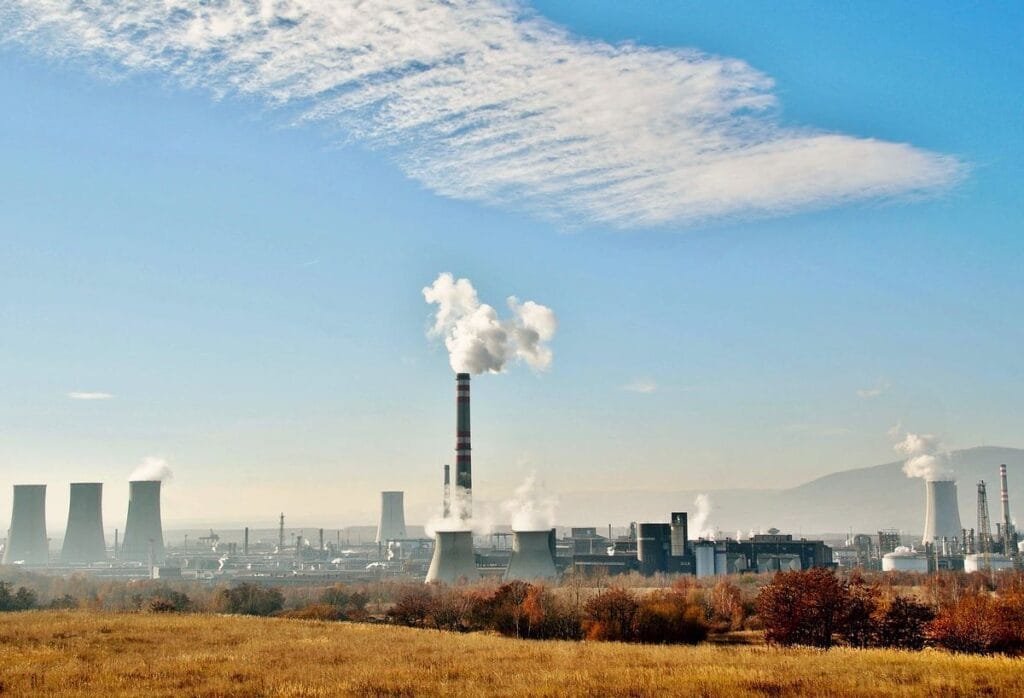
    Pollution - Image by ivabalk from Pixabay

    By putting a price on carbon pollution, the ETS in theory requires major polluters, in sectors like steel, cement and chemicals, to pay for the emissions they produce. It also generates billions of euros in revenues that Member States must reinvest in climate action, including clean technologies as well as a just transition for households, workers and affected communities. This revision is the first real test of the EU’s commitment to its 2040 climate target, setting the tone for a wave of other climate policy revisions later this year.

    What is happening and why does it matter?

    In recent months, the ETS has become the subject of intense political debate. Some Member States and industry stakeholders have wrongly blamed it for high energy prices, where unreliable and dirty fossil fuels are mostly to blame. Rather than weakening the ETS, the EU’s dependence on fossil fuels underlines the urgency of leveraging the system to break that reliance.

    At the same time, several Member States, businesses and civil society organisations have warned that weakening the ETS would undermine investment certainty, slow climate action and penalise companies that have already invested in decarbonisation while rewarding those that delay action.

    The ETS also enjoys strong public backing. A recent YouGov poll found that 72% of EU citizens support the polluter-pays approach underpinning the ETS, including majorities among voters of parties that have criticised the ETS, such as Meloni’s Fratelli d’Italia.

    Camille Maury, Senior Policy Officer on Industrial Decarbonisation at WWF EU: “Policymakers should listen not only to the industry lobbyists calling for a weaker ETS, but also to EU citizens who support a strong carbon price based on the polluter pays principle. This review is the first real test of how serious the EU is about meeting its 2040 climate target.”

    “The key question is who the EU wants to reward. A strong ETS provides certainty for companies investing in decarbonisation and underpins Europe’s long-term competitiveness. Europe needs a system that rewards industrial frontrunners, not the laggards resisting change,” concluded Maury.

    What does WWF want?

    WWF is advocating that EU policymakers stay the course with the ETS and in particularly:

    • Keep the current Linear Reduction Factor (LRF) and the ETS cap trajectory

    The ETS cap sets the maximum amount of pollution covered by the system, while the Linear Reduction Factor (LRF) determines how quickly that cap declines over time. WWF is advocating for the current LRF to remain unchanged until 2036 as to preserve the carbon price signal and provide investment certainty. Weakening it would also increase emissions under the ETS, even a one percentage-point reduction in the LRF until 2035 would significantly increase cumulative emissions, which would shift the burden of emissions reductions onto other sectors, such as agriculture, buildings and transport.

    • Continue the phase-out of free permits to pollute

    Many companies still receive freebies, meaning free permits to pollute under the ETS. WWF is calling to maintain the agreed phase-out of freebies for sectors covered by the Carbon Border Adjustment Mechanism by 2034. The European Court of Auditors has already warned that free permits to pollute slow industrial decarbonisation.

    WWF believes revenues from these permits should instead be reinvested through the Innovation and Modernisation Funds to support the transition. However, if any remaining freebies exist, they should be strictly linked to decarbonisation investments and measurable emissions reductions.

    • Use ETS revenues strategically

    Most revenues go to Member States, while some are allocated to the Innovation Fund and Modernisation Fund. Under the current rules, all ETS revenues shall support climate action.

    Over the next five years alone, the system is expected to generate €120-150 billion. This presents a major opportunity to accelerate industrial decarbonisation, expand renewable energy and support households through the transition.

    To maximise their impact, greater transparency and stronger safeguards are needed to ensure these funds are spent as intended and exclude support for fossil fuel-related activities and infrastructure. Phasing out freebies more quickly would also increase the resources available for these investments.

    • Safeguard the integrity of the ETS

    The integrity of the ETS cannot be compromised. Introducing international credits or carbon removals into the system would dilute the carbon price, and weaken incentives for European industry to invest in actual emissions reductions.


    Add A Comment
    Leave A Reply Cancel Reply

    You must be logged in to post a comment.

    eub2
    • Website

    eub2 is the default publisher for EUbusiness.

    Related Content

    Digital watch - Image by LIN LONG from Pixabay

    New exemptions added to EU rules on removability of batteries

    Deforestation - Photo by Annie Spratt on Unsplash

    Brussels adopts implementation measures for EU’s Deforestation Regulation

    Temperature controls - Photo by HUUM on Unsplash

    Energy use for cooling in EU households double over 6 years

    Image by der_niels from Pixabay

    Livestock Strategy offers band-aids, not solutions

    Sponsor: WWF7 July 2026
    Sustainable business reporting - Image by u_c48rf6ybx8 from Pixabay

    Revised sustainability reporting standards to reduce red tape for EU businesses

    Nature conservation lake - Photo by Pixabay

    European Parliament’s Environment Committee supports major boost for nature funding in next EU budget

    Sponsor: WWF EU2 July 2026
    LATEST EU NEWS
    Ursula von der Leyen and Volodymyr Zelensky - Photo © European Union 2026

    EU launches Ukraine defence partnership with drone deal

    16 July 2026
    Jitin Prasada, Maros Sefcovic, Subrahmanyam Jaishankar, Henna Virkkunen, Piyush Goyal, Ekaterina Zaharieva - Photo © European Union 2026

    EU-India Free Trade Agreement set for 2027 entry into force

    15 July 2026
    Population - Image by Mabel Amber from Pixabay

    Challenges for EU as population set to shrink and age

    14 July 2026
    Digital watch - Image by LIN LONG from Pixabay

    New exemptions added to EU rules on removability of batteries

    14 July 2026
    Fabian Picardo, Stephen Doughty, Maros Sefcovic, José Manuel Albares - Photo © European Union 2026

    EU and UK sign agreement on Gibraltar

    14 July 2026

    Subscribe to EUbusiness Week

    Get the latest EU news

    CONTACT INFO

    • EUbusiness, 117 High Street, Chesham Buckinghamshire, HP5 1DE, United Kingdom
    • +44(0)20 8058 8232
    • service@eubusiness.com

    INFORMATION

    • About Us
    • Advertising
    • Contact Info

    Services

    • Cookie Policy
    • Terms
    • Disclaimer

    SOCIAL MEDIA

    Facebook
    eubusiness.com © EUbusiness Ltd 2026

    Type above and press Enter to search. Press Esc to cancel.

    Manage Consent
    To provide the best experiences, we use technologies like cookies to store and/or access device information. Consenting to these technologies will allow us to process data such as browsing behavior or unique IDs on this site. Not consenting or withdrawing consent, may adversely affect certain features and functions.
    Functional Always active
    The technical storage or access is strictly necessary for the legitimate purpose of enabling the use of a specific service explicitly requested by the subscriber or user, or for the sole purpose of carrying out the transmission of a communication over an electronic communications network.
    Preferences
    The technical storage or access is necessary for the legitimate purpose of storing preferences that are not requested by the subscriber or user.
    Statistics
    The technical storage or access that is used exclusively for statistical purposes. The technical storage or access that is used exclusively for anonymous statistical purposes. Without a subpoena, voluntary compliance on the part of your Internet Service Provider, or additional records from a third party, information stored or retrieved for this purpose alone cannot usually be used to identify you.
    Marketing
    The technical storage or access is required to create user profiles to send advertising, or to track the user on a website or across several websites for similar marketing purposes.
    • Manage options
    • Manage services
    • Manage {vendor_count} vendors
    • Read more about these purposes
    View preferences
    • {title}
    • {title}
    • {title}
    Manage Consent
    To provide the best experiences, we use technologies like cookies to store and/or access device information. Consenting to these technologies will allow us to process data such as browsing behavior or unique IDs on this site. Not consenting or withdrawing consent, may adversely affect certain features and functions.
    Functional Always active
    The technical storage or access is strictly necessary for the legitimate purpose of enabling the use of a specific service explicitly requested by the subscriber or user, or for the sole purpose of carrying out the transmission of a communication over an electronic communications network.
    Preferences
    The technical storage or access is necessary for the legitimate purpose of storing preferences that are not requested by the subscriber or user.
    Statistics
    The technical storage or access that is used exclusively for statistical purposes. The technical storage or access that is used exclusively for anonymous statistical purposes. Without a subpoena, voluntary compliance on the part of your Internet Service Provider, or additional records from a third party, information stored or retrieved for this purpose alone cannot usually be used to identify you.
    Marketing
    The technical storage or access is required to create user profiles to send advertising, or to track the user on a website or across several websites for similar marketing purposes.
    • Manage options
    • Manage services
    • Manage {vendor_count} vendors
    • Read more about these purposes
    View preferences
    • {title}
    • {title}
    • {title}

    Sign In or Register

    Welcome Back!

    Login to your account below.

    Lost password?