Close Menu
    Latest Category
    • Finance
    • Tech
    • EU Law
    • Energy
    • About
    • Contact
    EUbusiness.com | EU news, business and politicsEUbusiness.com | EU news, business and politics
    Login
    • EU News
    • Focus
    • Guides
    • Press
    • Jobs
    • Events
    • Directory
    EUbusiness.com | EU news, business and politicsEUbusiness.com | EU news, business and politics
    Home » Omnibus on agriculture: another blow to vulnerable farmers and nature 
    Environment

    Omnibus on agriculture: another blow to vulnerable farmers and nature 

    Sponsored By: WWF14 May 202504 Mins Read
    — Filed under: Press
    Share
    Facebook Twitter LinkedIn Pinterest Email

    Today, the European Commission launched a package aimed at “simplifying” the Common Agricultural Policy (CAP), including some provisions in the Good Agricultural and Environmental Conditions (GAEC).
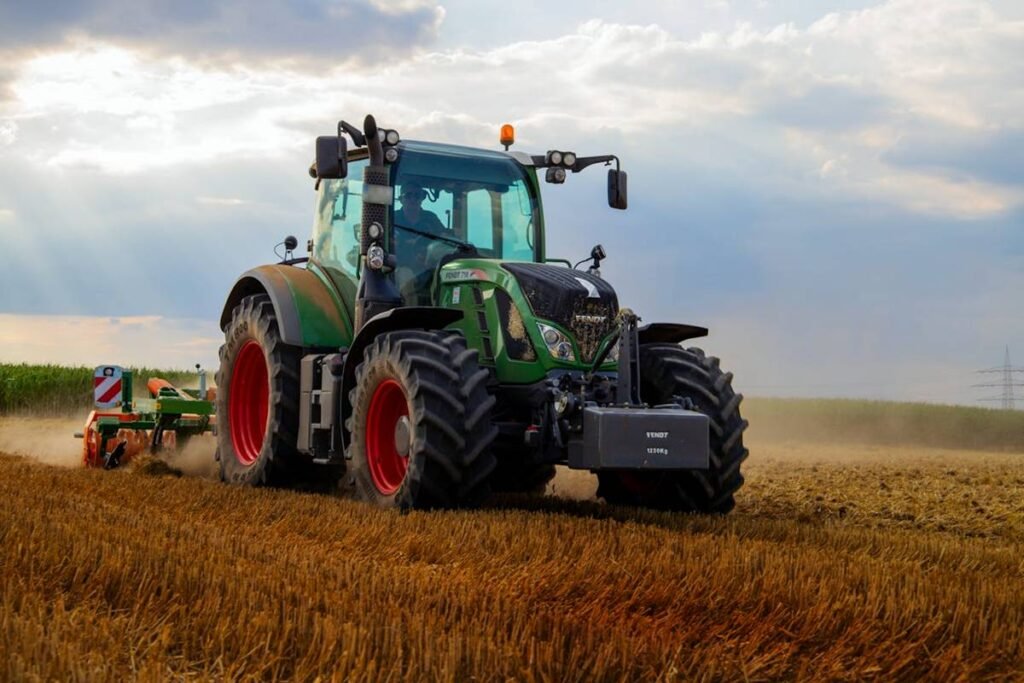
    Farming tractor - Photo by Jannis Knorr on Pexels

    Rather than genuinely making rules simpler, this move appears to be a veiled attempt to weaken the few remaining environmental safeguards within the CAP – posing serious consequences for both farmers and nature.

    Giulia Riedo, Sustainable Food Policy Officer at the WWF European Policy Office, said: “Labelling the weakening of the Good Agricultural and Environmental Conditions as ‘simplification’ is quite misleading. Watering down the limited protections for natural resources does not make farmers’ lives easier, quite the contrary, as they face growing challenges from heatwaves and floods. In reality, this is a slap in the face to vulnerable farmers and another blow to nature – completely at odds with the Commission’s claimed support for the European Green Deal.”

    Why it does not look good
    European Commissioner for Agriculture and Food, Christophe Hansen, has made a few proposals that would seriously undermine the few green measures left in the CAP. These include:

    • Revision of GAEC 1: The Commission is proposing to lower the protection of permanent grasslands, allowing for a grassland reconversion obligation buffer of 10% instead of 5%. This risks undermining EU climate and biodiversity objectives, as grasslands – together with forests, wetlands and peatlands – constitute an important biodiversity hotspot and carbon sink on land. These rules can seriously undermine the services that permanent grasslands provide to farmers such as preventing soil erosion and supporting pollination.
    • Revision of GAEC 2: On a positive note, GAEC 2 has been largely retained, with the European Commission requiring farmers to maintain peatlands and wetlands, which can store even more carbon than all the forests in the EU. However, the devil is in the detail: the Commission is leaving the level of protection for these crucial ecosystems at the discretion of Member States, rather than ensuring a standard level of protection across the EU. 
    • Revision of GAEC 4: The Commission is allowing Member States to apply their own definition of watercourses, although, fortunately, such definitions should not exclude small watercourses – otherwise, this could pose a significant threat to the non-pollution objective of the GAEC. The Commission should provide a baseline definition of watercourses in line with the principles and objectives of the Water Framework Directive, particularly to prevent the deterioration of water basins and achieve good status.
    • Removing articles 120 and 159 from the CAP Strategic Plans Regulation: With this decision, we are witnessing the weakening of the green backbone of EU legislation, as the CAP Strategic Plans are being exempted from compliance with new environmental laws. This move will undermine the legitimacy of the CAP budget in comparison to other sectors. Why is agriculture receiving special treatment when it comes to complying with EU and international goals, such as decarbonisation and soil health?
    • Exempting small farmers from protecting natural resources: The Commission is now exempting small farmers from complying with conditionalities. All farmers should look after natural resources and be responsible for the impact their practices ultimately have on citizens. Member States will need to be cautious in how they define ‘small farmers’ at the national level, in order to avoid creating excessive unfair treatment within the single market.
    • Creating “crisis payments”: The European Commission has introduced additional post-disaster payments within the direct payments package. Unfortunately, this move further erodes the already limited set of prevention tools available to address natural disasters and adverse climate events. The European Commission is indeed slowly dismantling the GAEC system and creating competition with funds for eco-schemes.

    What’s next?
    The package will be up for vote in the European Parliament and Council in the coming months, during which both institutions may introduce new amendments. “The real danger of this package is that it opens the door for anti-nature decision-makers to get their hands on the Common Agricultural Policy and scrap even more environmental protections. This could accelerate the destruction of our landscapes and make life even more precarious for farmers who depend on healthy ecosystems to survive,”Riedo concluded.

    Add A Comment
    Leave A Reply Cancel Reply

    You must be logged in to post a comment.

    eub2
    • Website

    eub2 is the default publisher for EUbusiness.

    Related Content

    European Council - Photo © European Union 2026

    EU leaders manage to avoid shooting themselves in the foot

    Sponsor: WWF21 March 2026
    Renewable energy - Image by Maria Maltseva from Pixabay

    47 pct of EU’s electricity came from renewables in 2025

    EUnited logo

    Environment & Sustainability Officer, European Engineering Industries Association, EUnited

    Pollution - Image by ivabalk from Pixabay

    Leading environmental NGOs warn: Deregulation push threatens Europe’s long-term competitiveness, security and public health

    Sponsor: WWF17 March 2026
    Bioeconomy - farmer ploughing field - Photo by Frank Molter © European Union 2017

    EU adopts strategy for sustainable bioeconomy

    Cargo Ship on Rhine River - Photo by Wolfgang Vrede on Pexels

    New state aid rules to boost sustainable transport in EU

    LATEST EU NEWS
    Fitto - Mînzatu - Photo © European Union 2026

    EUR 34.6 bn cohesion funds reallocated to EU’s strategic priorities

    25 March 2026
    Health research - Photo by National Cancer Institute on Unsplash

    Brussels awards EUR 617m to doctoral programmes

    25 March 2026
    Trade port cargo - Image by Pexels from Pixabay

    EU trade in goods with Australia in 2025

    25 March 2026
    Sefcovic - von der Leyen - Albanese - Photo © European Union 2026

    EU and Australia conclude talks on trade agreement

    24 March 2026
    Putin - Image by svklimkin from Pixabay

    Brussels renews support for exiled and relocated journalists in the EU

    23 March 2026

    Subscribe to EUbusiness Week

    Get the latest EU news

    CONTACT INFO

    • EUbusiness, 117 High Street, Chesham Buckinghamshire, HP5 1DE, United Kingdom
    • +44(0)20 8058 8232
    • service@eubusiness.com

    INFORMATION

    • About Us
    • Advertising
    • Contact Info

    Services

    • Cookie Policy
    • Terms
    • Disclaimer

    SOCIAL MEDIA

    Facebook
    eubusiness.com © EUbusiness Ltd 2026

    Type above and press Enter to search. Press Esc to cancel.

    Manage Consent
    To provide the best experiences, we use technologies like cookies to store and/or access device information. Consenting to these technologies will allow us to process data such as browsing behavior or unique IDs on this site. Not consenting or withdrawing consent, may adversely affect certain features and functions.
    Functional Always active
    The technical storage or access is strictly necessary for the legitimate purpose of enabling the use of a specific service explicitly requested by the subscriber or user, or for the sole purpose of carrying out the transmission of a communication over an electronic communications network.
    Preferences
    The technical storage or access is necessary for the legitimate purpose of storing preferences that are not requested by the subscriber or user.
    Statistics
    The technical storage or access that is used exclusively for statistical purposes. The technical storage or access that is used exclusively for anonymous statistical purposes. Without a subpoena, voluntary compliance on the part of your Internet Service Provider, or additional records from a third party, information stored or retrieved for this purpose alone cannot usually be used to identify you.
    Marketing
    The technical storage or access is required to create user profiles to send advertising, or to track the user on a website or across several websites for similar marketing purposes.
    • Manage options
    • Manage services
    • Manage {vendor_count} vendors
    • Read more about these purposes
    View preferences
    • {title}
    • {title}
    • {title}

    Sign In or Register

    Welcome Back!

    Login to your account below.

    Lost password?