Close Menu
    Latest Category
    • Finance
    • Tech
    • EU Law
    • Energy
    • About
    • Contact
    EUbusiness.com | EU news, business and politicsEUbusiness.com | EU news, business and politics
    Login
    • EU News
    • Focus
    • Guides
    • Press
    • Jobs
    • Events
    • Directory
    EUbusiness.com | EU news, business and politicsEUbusiness.com | EU news, business and politics
    Home » EU’s deregulatory push delivers blow to corporate sustainability laws
    Environment

    EU’s deregulatory push delivers blow to corporate sustainability laws

    Sponsored By: WWF EU16 December 202503 Mins Read
    — Filed under: Press
    Share
    Facebook Twitter LinkedIn Pinterest Email

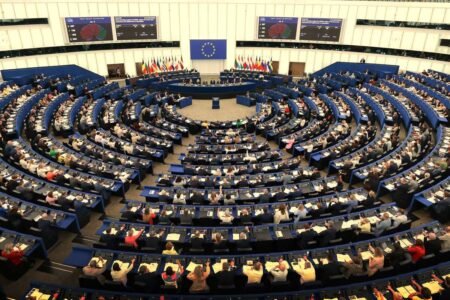
    The conclusion of interinstitutional negotiations on the first Omnibus package today, marks a major setback for the EU’s corporate sustainability framework, with a decision to weaken the Corporate Sustainability Reporting Directive (CSRD) and the Corporate Sustainability Due Diligence Directive (CSDDD).

    Plastic packaging waste - Image by Pete Linforth from Pixabay

    “This outcome reflects a troubling trend in the European Parliament, where the conservative bloc has increasingly aligned with far-right agendas, legitimising polarising demands and pushing aside science-based evidence and warnings,” said Mariana Ferreira, Sustainable Finance Policy Officer at WWF European Policy Office. 

    The process, which was initiated by the European Commission in early 2025, has been defined by unnecessary urgency and, as concluded recently by the European Ombudsman, ‘maladministration’ and lack of evidence. This approach has now resulted in the significant weakening of the legal framework and comes in sharp contrast with the years of careful work, thorough consultations, and evidence-based decision-making that built it in the first place. 

    Throughout the year, Commission officials assured the public that the Omnibus package intended to simplify without deregulating, but as the chapter closes, it is evident that co-legislators have dismantled core elements of the CSDDD and the CSRD. Among the major casualties are the mandatory Climate Transition Plans, comprehensive scopes of application, and a harmonised civil liability regime. 

    “Under the guise of easing regulatory burdens, the EU engaged in a race to the bottom, rushing to undo necessary safeguards that were set in place to protect our nature and climate, as well as to secure future economic prosperity. Instead of focusing on the successful implementation of the laws, decision-makers shifted their focus to short-term political gains, ignoring the strong evidence showing that corporate climate targets are not only feasible, but make a lot of sense for companies,” said Sebastien Godinot, Senior Economist at WWF European Policy Office. 

    The Science-Based Targets initiative (SBTi) shows that setting 1.5°C-aligned targets is both realistic and widely adopted, with 12,000 companies across 104 countries, including all EU Member States, already on board. Climate transition plans are also going mainstream globally, notably driven by the International Sustainability Standards Board (ISSB) disclosure standards. 

    In an attempt to achieve simplicity and clarity, the Commission opened a Pandora’s box that sets a clear precedent for all future omnibus “simplification” packages. The first omnibus had a rough start, with the Commission proposing a weakening of key provisions in the EU’s corporate sustainability framework. Following that, each step of the decision-making process gutted the laws further, brushing aside scientific evidence, lowering environmental and human rights protections, and establishing a climate of regulatory uncertainty for businesses. The final result demonstrates a set of laws that lack any ambition and represent the end of EU leadership on corporate sustainability.  

    “After years of positioning itself as a sustainability leader, it is disappointing to see the EU stepping back and ignoring the science meant to guide decision-making,” added Sebastien Godinot. 

    Strong corporate sustainability rules remain essential for resilient, responsible business conduct. The EU must reconsider this course and restore the ambition required to support corporate sustainability in an era of escalating climate, environmental, and social crises.


    Add A Comment
    Leave A Reply Cancel Reply

    You must be logged in to post a comment.

    eub2
    • Website

    eub2 is the default publisher for EUbusiness.

    Related Content

    Wheat seeds - Image by Rudi Arlt from Pixabay

    80 per cent of European citizens say NO to patents on seeds

    Sponsor: No Patents on Seeds!14 April 2026
    Climate change - Image by Satheesh Sankaran from Pixabay

    Commission’s attempt to ‘simplify’ the EU Taxonomy risks creating a weaker but not simpler framework

    Sponsor: WWF14 April 2026
    Packaging recycling - Image by Gerd Altmann from Pixabay

    PPWR Guidance: Remaining questions for retailers and wholesalers highlight the need for greater clarity

    Sponsor: EuroCommerce12 April 2026
    Green jobs - Photo by Gustavo Fring on Pexels

    Green jobs in EU grow by 2.2 million over last decade

    Business conference - Image by SNCR GROUP from Pixabay

    Retail and wholesale take centre stage in European Parliament with first-ever dedicated European week

    Sponsor: EuroCommerce7 April 2026
    Chemical production nature clouds - Image by andreas N from Pixabay

    Commission to halt Omnibus packages as environmental rules reach “optimal simplicity”

    Sponsor: WWF2 April 2026
    LATEST EU NEWS
    Chocolate - Image by jacqueline macou from Pixabay

    Brussels carries out antitrust raids in chocolate confectionery sector

    14 April 2026
    Pharmaceuticals - Photo by Laurynas Me on Unsplash

    EU has EUR 221 bn trade surplus on medicinal & pharma products

    14 April 2026
    Steel melting pool - Photo by Kateryna Babaieva on Pexels

    Deal reached on measures to protect EU steel market

    14 April 2026
    Entry exit system - Warsaw - Photo by MART PRODUCTION on Pexels

    EU’s Entry/Exit System fully operational at Schengen borders

    12 April 2026
    Trade in cars - Photo by Tom Fisk on Pexels

    EU trade deficit with China EUR 359.8 bn in 2025

    10 April 2026

    Subscribe to EUbusiness Week

    Get the latest EU news

    CONTACT INFO

    • EUbusiness, 117 High Street, Chesham Buckinghamshire, HP5 1DE, United Kingdom
    • +44(0)20 8058 8232
    • service@eubusiness.com

    INFORMATION

    • About Us
    • Advertising
    • Contact Info

    Services

    • Cookie Policy
    • Terms
    • Disclaimer

    SOCIAL MEDIA

    Facebook
    eubusiness.com © EUbusiness Ltd 2026

    Type above and press Enter to search. Press Esc to cancel.

    Manage Consent
    To provide the best experiences, we use technologies like cookies to store and/or access device information. Consenting to these technologies will allow us to process data such as browsing behavior or unique IDs on this site. Not consenting or withdrawing consent, may adversely affect certain features and functions.
    Functional Always active
    The technical storage or access is strictly necessary for the legitimate purpose of enabling the use of a specific service explicitly requested by the subscriber or user, or for the sole purpose of carrying out the transmission of a communication over an electronic communications network.
    Preferences
    The technical storage or access is necessary for the legitimate purpose of storing preferences that are not requested by the subscriber or user.
    Statistics
    The technical storage or access that is used exclusively for statistical purposes. The technical storage or access that is used exclusively for anonymous statistical purposes. Without a subpoena, voluntary compliance on the part of your Internet Service Provider, or additional records from a third party, information stored or retrieved for this purpose alone cannot usually be used to identify you.
    Marketing
    The technical storage or access is required to create user profiles to send advertising, or to track the user on a website or across several websites for similar marketing purposes.
    • Manage options
    • Manage services
    • Manage {vendor_count} vendors
    • Read more about these purposes
    View preferences
    • {title}
    • {title}
    • {title}

    Sign In or Register

    Welcome Back!

    Login to your account below.

    Lost password?