Close Menu
    Latest Category
    • Finance
    • Tech
    • EU Law
    • Energy
    • About
    • Contact
    EUbusiness.com | EU news, business and politicsEUbusiness.com | EU news, business and politics
    Login
    • EU News
    • Focus
    • Guides
    • Press
    • Jobs
    • Events
    • Directory
    EUbusiness.com | EU news, business and politicsEUbusiness.com | EU news, business and politics
    Home » Drought of ambition: ENVI Committee sets low bar for EU water resilience

    Drought of ambition: ENVI Committee sets low bar for EU water resilience

    eub2eub211 April 2025 Environment
    — Filed under: Press
    Share
    Facebook Twitter LinkedIn Pinterest Email

    The European Parliament’s Environment Committee has voted on a draft report outlining its position on the upcoming EU Water Resilience Strategy.

    Flood - Image by Joseph Thomas from Pixabay

    Despite the growing threats of droughts, floods, and worsening water pollution across Europe, conservative and far-right members introduced and secured amendments that severely weakened the emphasis on Nature-based Solutions (NbS) and ecosystem restoration, favouring instead an increased reliance on grey infrastructure and techno-fixes.

    The draft report put forward by Maltese S&D Member of the European Parliament, Thomas Bajada, originally proposed NbS as the foundation of the strategy, alongside strict enforcement of EU water laws, particularly the Water Framework Directive (WFD). 

    However, following the vote today, the text has been significantly watered down. The main highlights include:

    • NbS have been placed on equal footing with grey infrastructure, such as dams, dikes, and water reservoirs, and ‘techno-fixes’, such as river flow regulation systems, desalination, smart metering, AI and data centres. While some of these tools can be useful in certain contexts, they cannot replace ecosystem restoration – the only measure capable of truly repairing broken water cycles and supporting both climate mitigation and adaptation.
    • Strong enforcement of EU water laws has now been replaced with calls for generic implementation and monitoring under the WFD, without specifying the 2027 deadline for its implementation or limiting exemptions that could weaken the Directive. Nature restoration and conservation objectives under the EU Biodiversity Strategy – as well as alignment with international conventions – have also been weakened.
    • The text omits binding targets for water abstraction for industrial use, including for agriculture.
    • Policy coherence across sectors, particularly agriculture and energy, has been weakened to vague integration language, with no reference to subsidy reform or conditionality.
    • It fails to address water pollution and water scarcity driven by agriculture and industrial run-offs by diluting the ‘precautionary principle’ and the ‘polluter pays principle’, and not committing to stronger enforcement of existing regulations, including the WFD, Urban Wastewater Treatment Directive, Nitrates Directive, and the Pesticides Use Regulation. 
    • Despite increasing concerns over water pollution, the position for the full phase-out of PFAS, known as “forever chemicals”, has also been weakened, arguing that “essential uses” must be guaranteed.

    Commenting on the vote, the Living Rivers Europe NGO coalition said: 

    “The most powerful and cost-effective tool we have to address the water crisis – nature – is so diluted that it’s nearly impossible to find it in the report. Instead, conservative MEPs are turning to grey infrastructure and techno-fixes, which are merely bandages. Without nature-based solutions, citizens will face increased pollution and reduced protection against floods, droughts, and other climate events. Some MEPs are distorting the competitiveness discourse, misusing it to delay the implementation of environmental laws, but this will cost us dearly.”

    On a more positive note, today’s vote is a step forward for ocean health. However, the EU must go further to stop pollution at its source: over 70% of marine litter originates on land, making it crucial to improve wastewater and runoff management. By emphasising the importance of the Ocean Pact, MEPs showed political willingness to adopt a “source-to-sea” approach to tackle major threats to ocean health, such as plastic pollution, BPAs, pharmaceuticals, and heavy metals. But to truly protect our seas, the EU needs a coordinated approach. That means strengthening the Marine Strategy Framework Directive by giving Member States better tools to set quantitative targets and monitor progress over time, while holding them accountable for marine protection.  

    The fight is not over: the draft report will be put to a plenary vote in May. The final text is expected to inform the European Commission’s Water Resilience Strategy, which is scheduled for launch on 4 June. This strategy aims to serve as the foundation for developing a cross-sectoral plan to address water efficiency, scarcity, and pollution.

    The Living Rivers Europe’s NGO coalition will follow the process closely and work to ensure EU water laws are implemented, and that NbS are at the core of the EU’s strategy to make Europe truly water resilient.


    Add A Comment
    Leave A Reply Cancel Reply

    You must be logged in to post a comment.

    eub2
    • Website

    eub2 is the default publisher for EUbusiness.

    Related Content

    European Council - Photo © European Union 2026

    EU leaders manage to avoid shooting themselves in the foot

    Sponsor: WWF21 March 2026
    Renewable energy - Image by Maria Maltseva from Pixabay

    47 pct of EU’s electricity came from renewables in 2025

    EUnited logo

    Environment & Sustainability Officer, European Engineering Industries Association, EUnited

    Pollution - Image by ivabalk from Pixabay

    Leading environmental NGOs warn: Deregulation push threatens Europe’s long-term competitiveness, security and public health

    Sponsor: WWF17 March 2026
    Bioeconomy - farmer ploughing field - Photo by Frank Molter © European Union 2017

    EU adopts strategy for sustainable bioeconomy

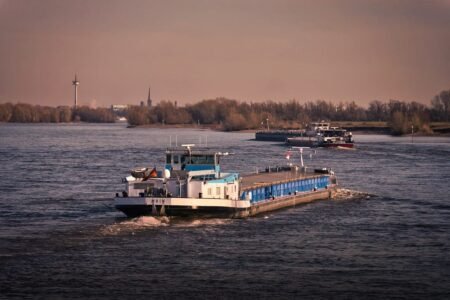
    Cargo Ship on Rhine River - Photo by Wolfgang Vrede on Pexels

    New state aid rules to boost sustainable transport in EU

    LATEST EU NEWS
    Trade port cargo - Image by Pexels from Pixabay

    Landmark deal for reform of EU Customs Union

    27 March 2026
    E-commerce - Photo by Antoni Shkraba Studio on Pexels

    1 in 3 online traders in Europe incorrectly displayed discounts on Black Friday and Cyber Monday

    26 March 2026
    Trade - Image by Markus Kammermann from Pixabay

    EU trade in goods surplus down to EUR 128 bn in 2025

    26 March 2026
    Internet safety children - Photo by Jonathan Borba on Pexels

    Porn sites failing to block minors from accessing services, says EU

    26 March 2026
    Fitto - Mînzatu - Photo © European Union 2026

    EUR 34.6 bn cohesion funds reallocated to EU’s strategic priorities

    25 March 2026

    Subscribe to EUbusiness Week

    Get the latest EU news

    CONTACT INFO

    • EUbusiness, 117 High Street, Chesham Buckinghamshire, HP5 1DE, United Kingdom
    • +44(0)20 8058 8232
    • service@eubusiness.com

    INFORMATION

    • About Us
    • Advertising
    • Contact Info

    Services

    • Cookie Policy
    • Terms
    • Disclaimer

    SOCIAL MEDIA

    Facebook
    eubusiness.com © EUbusiness Ltd 2026

    Type above and press Enter to search. Press Esc to cancel.

    Manage Consent
    To provide the best experiences, we use technologies like cookies to store and/or access device information. Consenting to these technologies will allow us to process data such as browsing behavior or unique IDs on this site. Not consenting or withdrawing consent, may adversely affect certain features and functions.
    Functional Always active
    The technical storage or access is strictly necessary for the legitimate purpose of enabling the use of a specific service explicitly requested by the subscriber or user, or for the sole purpose of carrying out the transmission of a communication over an electronic communications network.
    Preferences
    The technical storage or access is necessary for the legitimate purpose of storing preferences that are not requested by the subscriber or user.
    Statistics
    The technical storage or access that is used exclusively for statistical purposes. The technical storage or access that is used exclusively for anonymous statistical purposes. Without a subpoena, voluntary compliance on the part of your Internet Service Provider, or additional records from a third party, information stored or retrieved for this purpose alone cannot usually be used to identify you.
    Marketing
    The technical storage or access is required to create user profiles to send advertising, or to track the user on a website or across several websites for similar marketing purposes.
    • Manage options
    • Manage services
    • Manage {vendor_count} vendors
    • Read more about these purposes
    View preferences
    • {title}
    • {title}
    • {title}

    Sign In or Register

    Welcome Back!

    Login to your account below.

    Lost password?