Close Menu
    Latest Category
    • Finance
    • Tech
    • EU Law
    • Energy
    • About
    • Contact
    EUbusiness.com | EU news, business and politicsEUbusiness.com | EU news, business and politics
    Login
    • EU News
    • Focus
    • Guides
    • Press
    • Jobs
    • Events
    • Directory
    EUbusiness.com | EU news, business and politicsEUbusiness.com | EU news, business and politics
    Home » Financing for Development

    Financing for Development

    inadiminadim30 September 2009 development
    Share
    Facebook Twitter LinkedIn Pinterest Email
    — last modified 02 October 2009

    The 2002 Monterrey Consensus is the partnership between developed and developing countries to find ways of financing development that will meet the Millennium Development Goals. The EU, which provides over half of all official development assistance worldwide, made a number of commitments to achieve this consensus.


    Advertisement


    EU Commitments:

    • The EU agreed to increase its official development assistance to achieve 0.39% of gross national income (GNI) by 2006 (as a step towards the 0.7% target set by the UN). This collective pledge was based on individual promises by some member countries to donate at least 0.33% and others to maintain their already high(er) aid levels.
    • Other commitments concerned innovative sources of financing, more predictable and stable aid mechanisms, debt relief, aid effectiveness, untying aid, aid for trade, reform of international financing institutions and global public goods.

    In 2005 the EU made additional commitments to collectively reach official development assistance of 0.56% of GNI by 2010, underpinned by an individual target of 0.17% for the 12 newest member countries and 0.51% for the others, with those countries that have already reached their targets keeping higher aid levels. The new commitments include helping mitigate external shocks that cause poverty, and making aid more predictable.

    In its joint position for the Doha Follow-up International Conference on Financing for Development the EU has further broadened its commitments, which now also cover areas like good governance in the tax area, customs cooperation, fight against corruption and illegal financial flows, the development impact of remittances and the financing of new, especially environmental challenges, namely climate change.

    The Doha conference while preserving the commitments of the Monterrey Consensus, aimed to evaluate progress and find ways to face new challenges and emerging issues, as reflected in the Doha Declaration 2008 that was adopted by consensus. The conference also decided the organisation of the UN Conference on the World Financial and Economic Crisis and Its Impact on Development (June 24-26, 2009), for which the EU adopted a framework for a joint position.

    EU Performance: Doing More, Better, Faster

    Since 2003, the Commission has been tracking Europe’s performance on these commitments in an annual Monterrey Report. Europe is for the most part meeting its commitments: aid levels increased by more than 30% from 2004 to 2005, and the target of 0.39% GNI in 2006 was exceeded with a record €47.7 billion in official development assistance (0.41% GNI), or €100 per European citizen. After a decline in 2007 (€45.7 bn; 0.37% of GNI) EU aid increased again to €49.5 bn in 2008 (0.40%) and – according to forecasts and despite the prospect of economic contraction – should further rise in 2009. Reaching the aid levels (collective and individual) pledged for 2010, will be a major challenge and require determined action of EU Member States. While several European countries have consistently increased their aid since 2002, others show ups and downs and Greece, Italy and Portugal are still below the minimum commitment foreseen for 2006.

    Based on existing commitments, OECD forecasts suggest that the EU will contribute 76% of the global increase in official development aid from 2008 to 2010. The EU will also provide more than 75% of the G8 pledge for Africa (2004-10).

    Europe also supports innovative sources of finance for development, including:

    • air ticket taxes,
    • the international drug purchase facility (UNITAID),
    • advanced market commitments (AMCs),
    • the international finance facility for immunisation (IFFImm).

    It has made considerable progress on aid effectiveness and aid for trade commitments.

    Source: European Commission

    Add A Comment
    Leave A Reply Cancel Reply

    You must be logged in to post a comment.

    inadim

      Related Content

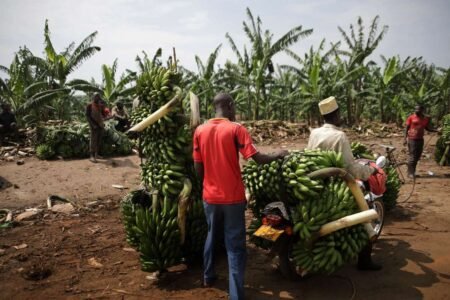
      Banana trade Uganda - Image by Beat Roth from Pixabay

      Generalised Scheme of Preferences

      New European Consensus on Development

      2016 Official EU Development Assistance

      Female Genital Mutilation/Cutting (FGM/C)

      EU development cooperation links with climate action

      EU-Afghanistan relations

      LATEST EU NEWS
      Population commuters - Image by Pexels from Pixabay

      EU’s population projected to drop by 11.7pct by 2100

      16 April 2026
      Google search - Photo by Firmbee.com on Unsplash

      Google must share search data with competitors, says EU

      16 April 2026
      BEAK UAV drone made by Origin Robotics - Photo by Gints Ivuskans © European Union 2025

      EU spends EUR 1.07 bn on 57 defence projects supporting European Readiness Flagships

      15 April 2026
      O'Sullivan - Minzatu - Photo © European Union 2026

      EU and UK take decisive step towards Erasmus+ association in 2027

      15 April 2026
      Euro - ECB-Photo by Mika Baumeister on Unsplash

      April currency outlook – Euro currency news

      15 April 2026

      Subscribe to EUbusiness Week

      Get the latest EU news

      CONTACT INFO

      • EUbusiness, 117 High Street, Chesham Buckinghamshire, HP5 1DE, United Kingdom
      • +44(0)20 8058 8232
      • service@eubusiness.com

      INFORMATION

      • About Us
      • Advertising
      • Contact Info

      Services

      • Cookie Policy
      • Terms
      • Disclaimer

      SOCIAL MEDIA

      Facebook
      eubusiness.com © EUbusiness Ltd 2026

      Type above and press Enter to search. Press Esc to cancel.

      Manage Consent
      To provide the best experiences, we use technologies like cookies to store and/or access device information. Consenting to these technologies will allow us to process data such as browsing behavior or unique IDs on this site. Not consenting or withdrawing consent, may adversely affect certain features and functions.
      Functional Always active
      The technical storage or access is strictly necessary for the legitimate purpose of enabling the use of a specific service explicitly requested by the subscriber or user, or for the sole purpose of carrying out the transmission of a communication over an electronic communications network.
      Preferences
      The technical storage or access is necessary for the legitimate purpose of storing preferences that are not requested by the subscriber or user.
      Statistics
      The technical storage or access that is used exclusively for statistical purposes. The technical storage or access that is used exclusively for anonymous statistical purposes. Without a subpoena, voluntary compliance on the part of your Internet Service Provider, or additional records from a third party, information stored or retrieved for this purpose alone cannot usually be used to identify you.
      Marketing
      The technical storage or access is required to create user profiles to send advertising, or to track the user on a website or across several websites for similar marketing purposes.
      • Manage options
      • Manage services
      • Manage {vendor_count} vendors
      • Read more about these purposes
      View preferences
      • {title}
      • {title}
      • {title}

      Sign In or Register

      Welcome Back!

      Login to your account below.

      Lost password?