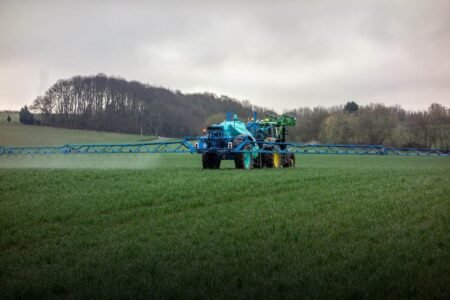
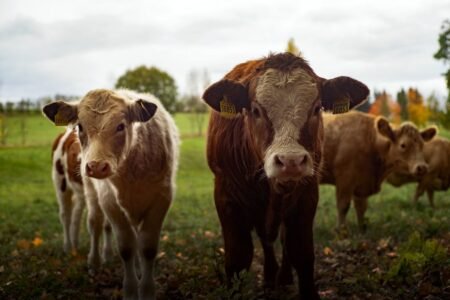
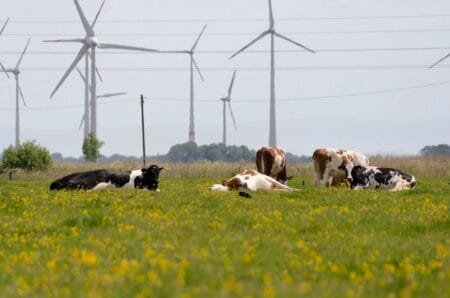
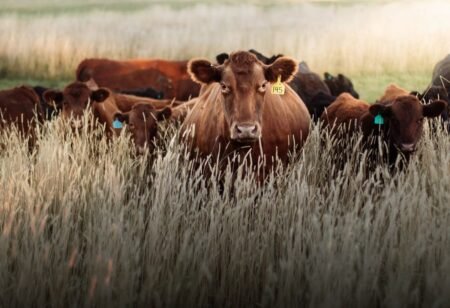
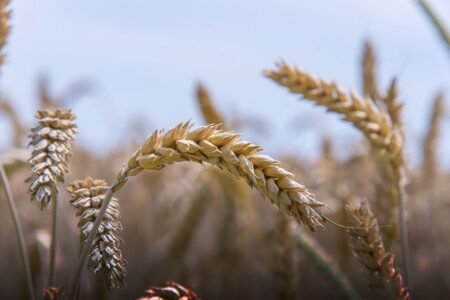
The aim of the common agricultural policy is to provide farmers with a reasonable standard of living, consumers with quality food at fair prices and to preserve our rural heritage. The policy has evolved to meet societys changing needs, so that food safety, preservation of the environment, value for money and agriculture as a source of crops to convert to fuel have acquired steadily growing importance.
Advertisement
Moving with the times
Established fifty years ago when the founder members of the EU were emerging from a decade or more of food shortages, the Common Agricultural Policy (CAP) began by subsidising production of basic foodstuffs in the interests of self-sufficiency and food security. As the most fully integrated of EU policies, the CAP takes a large share of the EU budget. Nevertheless, this has dropped from a peak of nearly 70 per cent of the EU budget several decades ago to 36 per cent of the budget, reflecting cost savings from reforms, a shift of some agricultural spending into rural development and expansion of the EU’s other responsibilities.
Beef and butter mountains, milk and wine lakes have been a thing of the past for two decades as a result of a first wave of reforms. As a result of further reforms since the beginning of the decade, subsidies on quantities produced have largely been replaced by payments to farmers to guarantee they receive a decent income and linked to compliance with broader objectives. These include environmental, food safety, animal and plant health, and animal welfare standards, and expectations on keeping farmland in good condition in order to preserve traditional rural landscapes, and bird and wild life.
Paying increasing amounts of attention to hygiene, food quality and animal welfare addresses concerns that more intensive farming and animal husbandry were to blame for ‘mad cow disease’, dioxin in milk, artificial hormones in meat and other food-related health scares.
The shift from subsidies for production to direct payments to farmers represents the most radical change to the CAP since it was created in 1958. It is being phased in and extended to products not included during the last major series of reforms in 2003. These include cotton, hops, tobacco and sugar. As a result of reforms in the sugar sector agreed in 2005, the EU will switch from being the world’s second largest exporter to a net importer. However, changes in society’s needs are opening up new opportunities for farmers to grow sugar – as well as cereals and other crops – for biofuel for vehicles and biomass for power generation.
Moving from support for products to support for farmers is in the interests of fairer world trade as support for the farmers who need it most reduces the risk that trade will be distorted by EU subsidies for export of additional production. These changes thus prepared the EU for the ‘Doha’ round of international trade liberalisation talks, where the EU has agreed to eliminate export subsidies altogether by 2013. However, even without further liberalisation, the EU is already the world’s largest importer of food and the biggest market for Third World foodstuffs.
The next steps are:
- to simplify the rules governing agriculture by overhauling the laws which have grown up piecemeal over the last five decades
- to replace different market organisations and rules for different products with a single common market organisation and a uniform set of rules
- to work with national governments to cut the red tape farmers face in qualifying for EU support.
More drivers of change
Worries about the cost of the CAP and fewer fears about food security were not the only drivers of change. As agriculture modernised and the EU economy became more service-oriented, the number of people working on the land dropped to 7% now compared to more than 20% half a century ago. Even though 10.4 million people still work in agriculture and more than 40% of the area of the EU is used for agriculture, survival of rural economies can no longer be taken for granted.
Rural development was accorded special recognition as part of the EU’s ‘Agenda 2000’ agricultural reform package. In 2006, spending on rural development will account for almost 10% of the EU budget. Taking a comprehensive approach to the rural economy is resulting in greater importance being attached to forestry, the recreational importance of the countryside, biodiversity, diversification of the rural economy, environmental protection in rural areas, and job creation.
The challenge of enlargement
The 2003 reforms also equipped the CAP for enlargement in May 2004, when the 15 became 25 and the number of farmers in the EU increased by nearly 70%. Farmers and food processors in the new member countries received funding to modernise even prior to enlargement. Over the first three years of membership, a special funding package tailored specifically to the needs of these farmers is providing 5.8 billion to help early retirement, less favoured areas, environmental protection, afforestation, semi-subsistence farms, producer groups and compliance with EU food, hygiene and animal welfare standards. Some CAP rules are being phased in gradually to allow time for adjustment.
Addressing consumer concerns
The EU promotes the production of quality – and internationally competitive – foodstuffs through financial assistance to innovation in farming and food processing and the use of voluntary quality labels. These include labels to designate foodstuffs coming entirely from one area of the EU using recognised know-how, for well-known foods with a clear geographic tie to a certain part of the EU, foods made of traditional ingredients or using traditional methods and a label for organic foods.
The EU not only has rules defining organic foods, but also on what constitutes an organic farm. Recognising the importance consumers now attach to organic foods, it is promoting this type of farming still further with an Action Plan for Organic Food and Farming. The European Commission in late 2005 also proposed new rules to make it clearer to consumers what they are buying and to farmers what rules they must follow if they claim their crop or produce is organic.
EU Agriculture web links
European Commission Agriculture DG
EU Agriculture Grants and Loans
Summaries of EU Legislation in Force
Recent case-law of the Court of Justice and the Court of First Instance
Other EU Agriculture web links on Europa