Close Menu
    Latest Category
    • Finance
    • Tech
    • EU Law
    • Energy
    • About
    • Contact
    EUbusiness.com | EU news, business and politicsEUbusiness.com | EU news, business and politics
    Login
    • EU News
    • Focus
    • Guides
    • Press
    • Jobs
    • Events
    • Directory
    EUbusiness.com | EU news, business and politicsEUbusiness.com | EU news, business and politics
    Home » Navigating the EU’s New Ecommerce Rules

    Navigating the EU’s New Ecommerce Rules

    npsnps9 February 2020Updated:4 July 2024
    — Filed under: Focus
    Share
    Facebook Twitter LinkedIn Pinterest Email

    As the ecommerce marketplace continues to grow, the European Union has made some significant and much-needed changes to the way it regulates the industry.

    Whether you’re an entrepreneur, ecommerce business owner, or online shopper, it’s imperative that you understand what these changes are so that you know how they impact you.

    Exploring and Applying the New Changes

    In 2018, the EU made reform of ecommerce rules one of its major priorities. Since then, numerous changes and improvements have been put into law through new directives, regulations, and requirements.

    The European Commission’s stated objective is to establish a more harmonized set of rules to help facilitate the supply and sale of digital content and online good across the EU, as well as to make it less costly and difficult for online companies to engage in international commerce. It also touches on the rights of EU consumers and provides additional protections that didn’t previously exist.

    Here are a few of the changes that have already been initiated, as well as some that will be implemented in the months to come:

    1. Putting an End to Unjustified Geoblocking

    Ecommerce works best when it’s unrestricted. This is why many online entrepreneurs move from restrictive platforms to self-hosted domains (which allow them to profit from their sites). But up until recently, the EU was imposing restrictive laws that prevented these same entrepreneurs from reaching consumers across national borders.

    Prior to December 2018, many European businesses had systems in place that re-routed and restricted online traffic in order to bolster profit margins. But with recent changes, unjustified geoblocking is no longer allowed. Online sellers are required to treat all EU consumers equally, regardless of where they shop. This gives European consumers a wider selection of products and services to choose from.

    2. Cheaper Cross-Border Parcel Delivery

    One of the biggest reasons for geoblocking is the fact that cross-border parcel delivery prices are as much as 3-to-5-times higher than domestic delivery costs. But have no fear, the EU has also implemented changes that are intended to make these cross-border deliveries less expensive for businesses and consumers alike.

    While the EU has failed to put any caps on delivery prices, they have increased transparency. Prices must be disclosed earlier on in the shopping process and consumers can consult parcel delivery prices directly from the European Commission’s website.

    “National authorities will collect information every year from parcel delivery companies. Where parcel delivery is subject to a universal service obligation, national regulatory authorities will also be required to assess where tariffs are unreasonably high,” The Commission explains.

    3. Changes to VAT Rules

    While the EU clears more than ?602 billion in Value-Added Tax (VAT) each year, VAT fraud reportedly costs member states as much as ?50 billion annually. One of the causes is the fact that VAT rules are often applied differently in each country.

    In 2019, the European Council adopted new rules that have made it easier for online companies to comply with VAT obligations. The rule states that, when selling as a European business to an EU consumer, online businesses must take distance selling rules into account. These rules tell businesses precisely how to apply VAT taxes based on predetermined thresholds.

    Doing Business the Right Way

    At the end of the day, the EU’s ecommerce rules and regulations aren’t intended to be restrictive, oppressive, or challenging to navigate. In fact, it’s quite the opposite. These changes are designed to restructure and reorient the way business is done. They’re intended to encourage businesses to operate in an appropriate manner that helps protect their own interests, as well as the interests of consumers. Ecommerce organizations that respond the right way will see their businesses grow. Those that reject these new rules will become obsolete.


    Add A Comment
    Leave A Reply Cancel Reply

    You must be logged in to post a comment.

    nps
    • Website

    Related Content

    Euro coins and notes - Photo by Pixabay

    Eurozone Economic Calendar

    Casino - Image by Mariakray from Pixabay

    How Is Business Looking for Netherlands iGaming Brands? Compared to Other Key EU Countries

    Single market - lorry delivery - Image by Maickel Althuizen from Pixabay

    Better regulation starts with putting the ‘Think Small First’ principle into practice

    Sponsor: SMEunited30 April 2026
    Sustainable finance - Image by Nattanan Kanchanaprat from Pixabay

    Largest companies in France still unprepared for nature transition, finds WWF

    Sponsor: WWF30 April 2026
    Fishing boat

    EU Fisheries Policy evaluation confirms the framework works – now Member States must deliver

    Sponsor: WWF30 April 2026
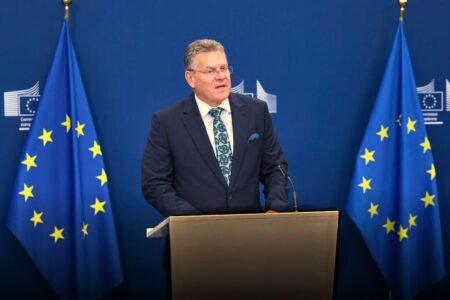
    Mercosur signing - Maros Sefcovic - Photo © European Union 2026

    EU-Mercosur interim trade deal to enter into provisional application

    LATEST EU NEWS
    Mercosur signing - Maros Sefcovic - Photo © European Union 2026

    EU-Mercosur interim trade deal to enter into provisional application

    30 April 2026
    Pet dog at vet - Image by Tima Miroshnichenko on Pexels

    Green light for first EU rules to protect cats and dogs

    28 April 2026
    Rice sacks trade - Image by Thilina Alagiyawanna on Pexels

    Renewed EU trade instrument for development set for 2027

    28 April 2026
    Artificial intelligence - Image by Kohji Asakawa from Pixabay

    Brussels consults on Google measures to give Android users choice on AI services

    28 April 2026
    Car crash - Image by Rico Lob from Pixabay

    Road fatalities in the EU down 2.2 pct in 2024

    27 April 2026

    Subscribe to EUbusiness Week

    Get the latest EU news

    CONTACT INFO

    • EUbusiness, 117 High Street, Chesham Buckinghamshire, HP5 1DE, United Kingdom
    • +44(0)20 8058 8232
    • service@eubusiness.com

    INFORMATION

    • About Us
    • Advertising
    • Contact Info

    Services

    • Cookie Policy
    • Terms
    • Disclaimer

    SOCIAL MEDIA

    Facebook
    eubusiness.com © EUbusiness Ltd 2026

    Type above and press Enter to search. Press Esc to cancel.

    Manage Consent
    To provide the best experiences, we use technologies like cookies to store and/or access device information. Consenting to these technologies will allow us to process data such as browsing behavior or unique IDs on this site. Not consenting or withdrawing consent, may adversely affect certain features and functions.
    Functional Always active
    The technical storage or access is strictly necessary for the legitimate purpose of enabling the use of a specific service explicitly requested by the subscriber or user, or for the sole purpose of carrying out the transmission of a communication over an electronic communications network.
    Preferences
    The technical storage or access is necessary for the legitimate purpose of storing preferences that are not requested by the subscriber or user.
    Statistics
    The technical storage or access that is used exclusively for statistical purposes. The technical storage or access that is used exclusively for anonymous statistical purposes. Without a subpoena, voluntary compliance on the part of your Internet Service Provider, or additional records from a third party, information stored or retrieved for this purpose alone cannot usually be used to identify you.
    Marketing
    The technical storage or access is required to create user profiles to send advertising, or to track the user on a website or across several websites for similar marketing purposes.
    • Manage options
    • Manage services
    • Manage {vendor_count} vendors
    • Read more about these purposes
    View preferences
    • {title}
    • {title}
    • {title}

    Sign In or Register

    Welcome Back!

    Login to your account below.

    Lost password?