
From energy storage to medical technologies, Japan faces challenges that create opportunities for European innovation. Here are five areas where European SMEs could find demand – and potential business partners – in 2027.
Japan’s industrial transformation is opening opportunities for specialised technologies. Its Green Transformation (GX) strategy aims to mobilise over JPY 150 trillion (appr. €850 billion) in public and private investment over ten years from fiscal year 2023. Meanwhile, an ageing population and pressure on healthcare services are driving demand for more efficient medical solutions.
For European SMEs, the opportunity lies in identifying specific market needs and the Japanese companies working to address them.The EU Business Hub programme helps European businesses explore these opportunities through dedicated business missions to Japan and the Republic of Korea, facilitating market access and connections with potential partners.
- Making Renewable Energy More Reliable
Japan is expanding renewable energy while addressing challenges related to grid stability and energy security. Integrating variable solar and wind generation requires greater flexibility in electricity networks.
Where European SMEs fit: Battery storage systems, smart-grid technologies, energy management software and demand-response solutions.
Potential partners: Utilities, electricity network operators, energy developers and industrial system integrators.
- Decarbonising Industrial Processes
Japan’s GX strategy is encouraging investment in lower-carbon industrial technologies. Hydrogen, energy efficiency and cleaner production processes are among the areas receiving attention. For European suppliers, opportunities extend beyond hydrogen production to technologies that help industrial customers reduce emissions and improve operational efficiency.
Where European SMEs fit: Hydrogen components, electrolysers, industrial heat recovery, energy-efficient equipment and emissions-monitoring solutions.
Potential partners: Industrial manufacturers, engineering contractors, energy companies and hydrogen technology developers.
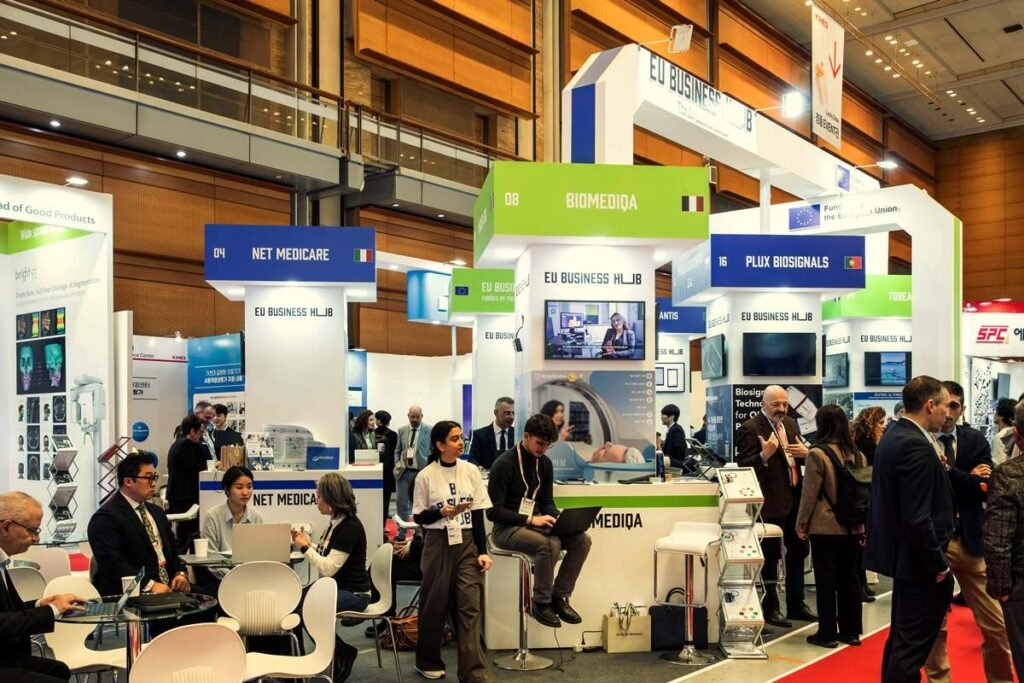
European companies active in these areas can explore the Japanese market through EU Business Hub @ Smart Energy Week Spring 2027, taking place in Tokyo on 22-26 March 2027. The EU-funded mission offers exhibition opportunities, targeted matchmaking and meetings with potential Japanese partners. Applications close on 27 November 2026.
- Supporting an Ageing Population
With approximately 29% of its population aged 65 or over, Japan faces growing demand for healthcare and long-term care services. Technologies that help older people maintain independence, support rehabilitation and reduce the workload of care professionals are increasingly relevant.
Where European SMEs fit: Assistive devices, rehabilitation equipment, remote patient monitoring, mobility technologies and home-care solutions.
Potential partners: Medical device distributors, hospitals, rehabilitation providers, care facilities and healthcare technology companies.
- Improving Healthcare Efficiency
Japan’s healthcare system must respond to growing demand for services while managing workforce pressures and healthcare expenditure. Digital technologies can help healthcare providers streamline workflows, improve diagnostics and monitor patients more efficiently. However, successful adoption depends on clinical evidence, integration with existing systems and regulatory compliance.
Where European SMEs fit: AI-assisted diagnostics, medical imaging software, connected medical devices, digital monitoring and clinical workflow solutions.
Potential partners: Hospitals, medical equipment manufacturers, healthcare IT providers and specialised distributors.
For European healthcare companies, EU Business Hub @ Medical Japan 2027 Tokyo, taking place on 24-28 May 2027, provides an opportunity to showcase solutions, understand market requirements and connect with Japanese industry stakeholders. Applications close on 29 January 2027.
- Finding Technologies That Fit Existing Systems
Japan’s established industrial and healthcare ecosystems offer opportunities for European SMEs that can complement existing products and processes. Rather than entering the market with a standalone solution, companies may find opportunities by supplying specialised components, software or technologies to Japanese manufacturers and service providers.
Where European SMEs fit: Technologies that improve performance, reduce costs, enable automation or address gaps in existing product portfolios.
Potential partners: Manufacturers, distributors, R&D teams and system integrators seeking complementary technologies.
Turning Market Needs into Business Opportunities
Identifying demand is only the first step. European SMEs also need to understand local technical requirements, validate their commercial proposition and build relationships with potential customers.
Through its business missions, the EU Business Hub – Japan and the Republic of Korea programme helps selected European SMEs and startups take these steps with market intelligence, pre-arranged business meetings, interpretation and tailored support.
For companies developing clean-energy or healthcare technologies, the upcoming missions offer a practical opportunity to explore where their solutions could meet Japan’s evolving needs.