

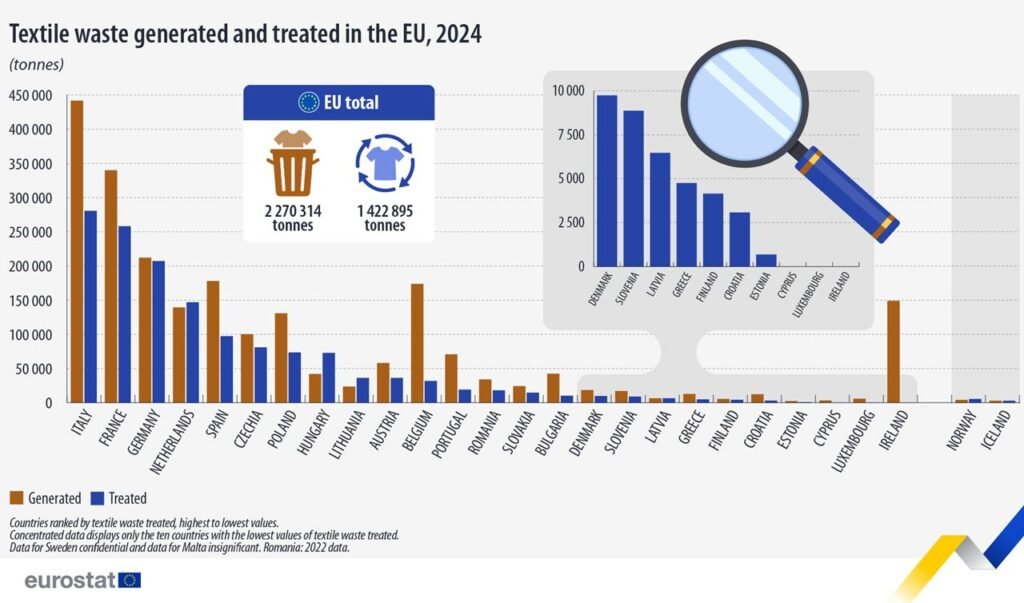
2.3 million tonnes of textile waste were generated in the EU in 2024, according to the EU’s statistics agency Eurostat, with household disposal accounting for over half of this amount.

During the same year, Eurostat finds that 1.4 million tonnes of textile waste were treated, corresponding to 63% of all textile waste generated that year.
Italy was the biggest producer of textile waste with 441,736 tonnes, and it also registered the biggest amount of textile waste treated and recycled (280,680 tonnes). Italy was followed by France (339,965 tonnes generated; 258,129 tonnes treated) and Germany (212,107 tonnes generated; 207,156 tonnes treated).
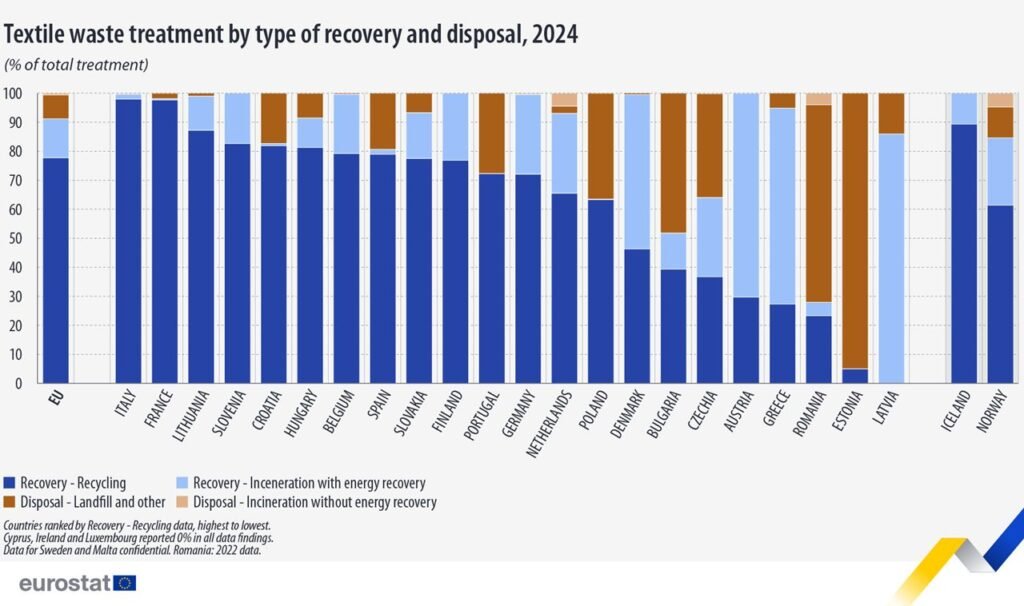
Regarding the type of waste treatment, 91% of textiles in the EU were treated in recovery operations. Recycling accounted for 78% of the total treated waste and incineration with energy recovery for 13%. Another 8% of textile waste treatment was landfilled, while incineration without energy recovery accounted for only 1%.
Italy and France reported the highest share of recycled textile waste (both 98%), followed by Lithuania (87%) and Slovenia (83%). At the other end of the scale, Latvia (0%), Estonia (5%) and Romania (23%; 2022 data) had the lowest levels of textile recycling.